Have you ever driven past a green field and spotted a few goats grazing calmly and thought, “Could that actually be a serious business?” The answer is yes, and more people across Pakistan are turning to goat farming as a reliable source of income every single year. Whether you have a small plot of land or access to open grazing areas, goats are one of the most adaptable livestock you can raise.
The beauty of goats is that they don’t require you to reinvent the wheel. This is a centuries-old trade, and in Pakistan especially, demand for goat meat, milk, and even skin has never gone down. If anything, it keeps climbing, particularly around Eid ul Adha and during wedding seasons.
In this article, you’ll learn exactly what goes into starting and running a goats farming business, from picking the right breed to managing your costs and turning a real profit.
Why Goats Are One of the Smartest Livestock Choices
Let’s be honest: goats have a reputation for being stubborn. But in farming terms, that independence is actually an advantage. Goats are browsers, meaning they eat a wide variety of plants, shrubs, and grasses, unlike cows or buffaloes that need specific feed. This makes them considerably cheaper to raise, especially if you have land with natural vegetation.
Goats are also more disease-resistant compared to many other animals, and they reproduce quickly. A healthy doe can give birth to twins or even triplets, which means your herd can grow faster than you might expect. For a small farmer looking to scale up without massive capital investment, that’s a genuine edge.
Here’s something many people overlook: goats produce both meat and milk, which gives you two income streams from one animal. In many rural areas of Punjab, families earn steadily from daily goat milk sales alone, separate from what they make when they sell animals at market.
Choosing the Right Goat Breed for Your Business
Not all goats are built the same, and picking the wrong breed for your goals is one of the most common early mistakes. In Pakistan, you’ll encounter several well-known breeds, each suited to different purposes.
Beetal goats are a top choice for meat and milk production in Punjab. They’re large, hardy, and well-adapted to the local climate. Barbari goats are smaller but known for producing quality milk and are popular in Sindh and southern Punjab. Nachi goats, bred in the Multan and Jhang region, are prized for their distinctive dancing gait and command high prices during Eid.
If your focus is purely on meat production, Teddy goats are a popular option because they’re small, fast-reproducing, and easy to manage. Think of it like choosing between a crop that grows fast but small versus one that takes longer but sells at a premium. Both can work, but the right choice depends on your market and your starting budget.
Setting Up Your Goat Farm: What You Actually Need
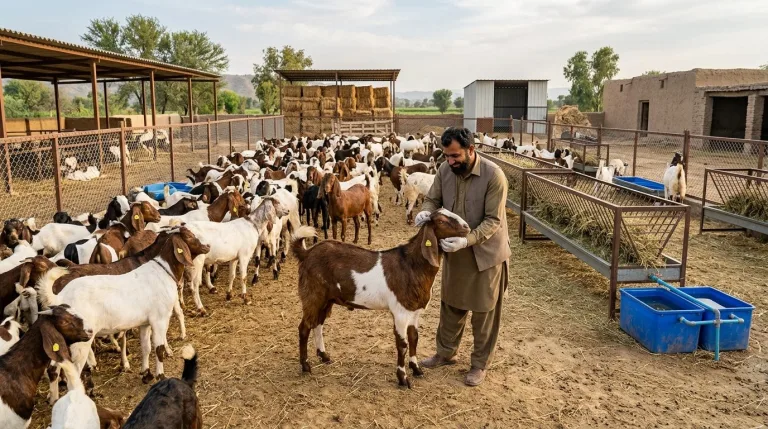
Starting a goats farming business doesn’t require expensive infrastructure, but a few basics are non-negotiable. The first is shelter. Goats need a clean, dry space to sleep and rest, especially during the monsoon season. A simple pucca or semi-pucca shed works well, as long as it’s ventilated and raised slightly above ground level to prevent moisture buildup.
Water access is critical. Goats drink surprisingly large amounts of water, especially nursing does and young kids. If your water source is inconsistent, invest in storage tanks before you invest in more animals.
Feed management is where most new farmers either get it right or lose money unnecessarily. Goats can graze, but supplemental feed like dry fodder, bran, and mineral salts keeps them healthy and productive. Think of it the way you’d think about maintaining a vehicle: basic fuel keeps it running, but regular upkeep keeps it running well.
The Numbers: Understanding Costs and Returns
One reason the goats farming business appeals to small-scale farmers is the relatively low startup cost. A pair of quality Beetal goats in Pakistan can cost anywhere between Rs. 15,000 to Rs. 40,000 depending on age, size, and breed. Shed construction, feed setup, and basic veterinary supplies might add another Rs. 20,000 to Rs. 50,000 for a modest operation.
Returns depend heavily on how you manage the herd and when you sell. Goats sold close to Eid ul Adha can fetch two to three times their regular market price. A well-fed Beetal or Nachi goat weighing 40 to 50 kilograms can sell for Rs. 60,000 or more during peak demand periods.
Milk income adds another layer. A productive Beetal doe produces around one to two liters of milk daily. Multiply that across a small herd and you have a consistent daily income even outside of Eid season. The point is, goats give you multiple ways to earn, and that flexibility makes the business model genuinely resilient.
Common Mistakes New Goat Farmers Make
Every business has its pitfalls, and goat farming is no different. One of the biggest is overcrowding. Keeping too many animals in a small space leads to stress, disease outbreaks, and poor weight gain. A solid rule of thumb is to start small, observe, learn, and then expand once you’re confident in your management.
Skipping veterinary care is another costly error. Goats are generally hardy, but they’re prone to respiratory infections, internal parasites, and foot rot if left unchecked. Regular deworming, vaccination, and basic health monitoring can prevent losses that would otherwise wipe out months of profit.
Many farmers also underestimate the importance of record-keeping. Knowing which goat was vaccinated and when, which doe is pregnant, and what your monthly feed costs are makes the difference between guessing and actually managing your operation. Even a simple notebook tracking key dates and expenses puts you well ahead of the majority of small-scale farmers.
Is a Goats Farming Business the Right Move for You?
If you have access to land, water, and even a basic shed, the barriers to entry are genuinely low. Goat farming rewards patience, observation, and consistency more than it rewards large capital or fancy equipment. It’s the kind of business where small, steady improvements compound into meaningful income over time.
Pakistan’s growing urban population, rising meat prices, and consistent demand around religious occasions all point to a market that isn’t going anywhere. Whether you’re looking to supplement your existing income or build a full-scale livestock operation, the goats farming business offers a realistic and proven path forward.
Ready to take the next step? Visit Multanfarms.com for more practical guides on livestock farming, animal care, and building a sustainable agricultural business in Pakistan.