Ever planted a handful of dhania seeds, waited patiently, and ended up with nothing but a few sad, scraggly sprouts? Chances are, the seeds weren’t the problem. The timing was. Sowing coriander on the wrong date is like turning up to a cricket match after the final over has been bowled.
The ideal coriander sowing time in most of Pakistan is from mid-October to November, when the weather cools down and the soil is pleasantly warm. A second, smaller window opens in February and early March in cooler areas.
In this guide, we’ll go through the best months to sow, why temperature matters so much, how to prepare your seeds, and the simple mistakes that spoil a crop before it even starts.
The Best Months to Sow Coriander
Coriander is a cool-season crop, which means it grows best when days are mild and nights are chilly. In Pakistan, that points straight to October and November. Sow in these months and you’ll be cutting fresh leaves roughly 30 to 45 days later.
Here’s a quick cheat sheet:
- Mid-October to November: The main sowing window. Best for strong, leafy growth.
- December to January: Still possible, but growth is slower in the cold, and heavy frost can damage young plants.
- February to early March: A decent second chance, especially in cooler regions, though the plants may bolt sooner.
- April to September: Not recommended. The heat will fight your plants at every step.
Why Temperature Decides Everything
Think of coriander seeds like sleepy teenagers on a school morning. They won’t get going unless the conditions feel just right. For coriander, that sweet spot is roughly 15 to 25°C.
When it’s too hot, seeds struggle to sprout, and young plants rush to flower instead of growing leaves. This early flowering is called bolting, and it leaves you with thin, bitter leaves and not much to eat.
When it’s far too cold, the opposite happens. Seeds sit in the soil for ages and may never wake up. That’s why timing your sowing between these two extremes makes such a big difference.
Sowing Time in Multan and South Punjab
Multan is famous for scorching summers, so patience is the name of the game here. Even in early October, afternoons can feel warm. Many growers wait until the nights start feeling properly cool before they sow.
A smart trick is to watch the weather, not just the calendar. If daytime temperatures are settling below the early thirties and evenings feel fresh, you’re ready to go.
Winters in South Punjab are generally mild and sunny, which is perfect for coriander. Just keep an eye out for the coldest nights of January, since a sudden frost can nip tender seedlings.
Getting Your Seeds Ready Before Sowing
Coriander seeds are a bit like small walnuts. Each round seed is actually two halves stuck together, and each half can grow into a plant. Gently rolling the seeds under your palm, or pressing them lightly with a rolling pin, splits them open.
After that, soak the seeds in plain water for 12 to 24 hours. This softens the tough outer shell and helps them sprout faster, usually within one to two weeks.
Always use fresh, good-quality seeds. Old or stale seeds sprout poorly, no matter how perfect your timing is.
A Simple Step-by-Step Sowing Guide
Once the weather is right, here’s how to sow:
- Prepare the soil. Choose loose, well-drained soil in a spot with four to six hours of sunlight.
- Make shallow rows. Draw lines about 20 centimeters apart and about one to two centimeters deep.
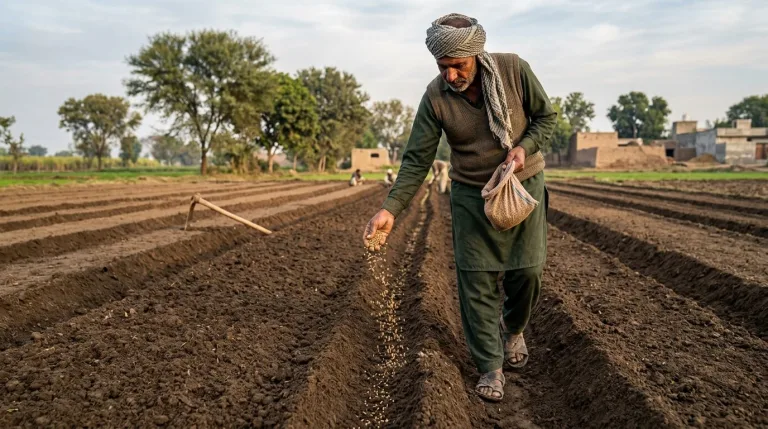
- Scatter the seeds. Spread them thinly along the rows, then cover them lightly with soil.
- Water gently. Keep the soil damp, not soggy, like a wrung-out sponge.
- Thin the seedlings. When they’re two to three inches tall, remove a few so the rest have space to grow.
Growing in a pot instead? Pick one at least eight inches deep, and the same steps will work just as well.
Staggered Sowing for Fresh Leaves All Winter
Here’s a clever idea: don’t sow everything at once. If you plant all your seeds on one day, you’ll get a big pile of coriander in the same week, and then nothing.
Instead, sow a small batch every two weeks from mid-October. Think of it like a school canteen that bakes fresh rolls every hour instead of all at 8 a.m. You’ll always have a new batch ready to harvest.
This works wonderfully for kitchen gardens, balconies, and even small family farms.
Common Sowing Mistakes to Avoid
A few small slips can ruin a good crop, so watch out for these:
- Sowing too early, while the weather is still hot
- Planting seeds too deep, so they can’t push through the soil
- Overwatering, which makes seeds rot
- Crowding the seeds, so plants fight over space and food
Final Thoughts
Coriander sowing time really comes down to one idea: wait for the cool weather. Aim for mid-October to November, prepare your seeds well, sow shallow, and plant in small batches. Do that, and you’ll enjoy fresh, fragrant dhania all through winter.
Want more simple farming guides and traditional food knowledge? Visit Multanfarms.com and keep learning. So, will you be sowing your first batch this October?