Have you ever bitten into a juicy mango and wondered where it came from? That soft, golden fruit didn’t just appear in a shop. It started its journey in a place called a mango estate.
If you’ve explored Multanfarms.com, you already know that mango farming is something truly special. But what exactly is a mango estate? Is it just a big farm, or is there something more to it? Let’s find out together.
What Is a Mango Estate?
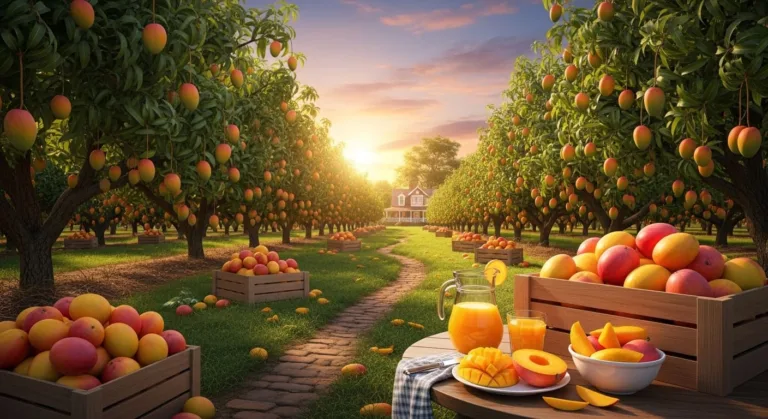
A mango estate is a large piece of land where mango trees are planted, grown, and cared for in an organized way. Think of it like a small town, but instead of houses and streets, there are neat rows of mango trees.
Each tree is planted carefully so it gets enough sunlight, water, and space to grow. Farmers don’t just randomly put trees anywhere. They plan everything, just like you might plan the layout of your room to fit your bed, desk, and cupboard.
Some mango estates have hundreds or even thousands of trees. That means during harvest season, they can produce tons of mangoes.
How Do Mango Trees Grow?
Growing mangoes takes patience. It’s not like planting a seed today and eating fruit tomorrow. A mango tree can take several years before it starts giving fruit.
Here’s how the process usually works:
- Farmers plant young trees called saplings.
- They water them regularly and protect them from harmful insects.
- The trees grow bigger and stronger each year.
- After a few years, the trees begin to produce mangoes.
It’s a bit like raising a child. You feed, protect, and care for them for years before they grow up. Mango trees also need love and attention to produce sweet fruit.
Some mango trees can live for more than 50 years. That means one tree can provide mangoes for generations.
Why Location Matters So Much
Not every place is good for a mango estate. Mango trees love warm weather and lots of sunshine. That’s why places like Multan are famous for mango farming.
The soil is also very important. Good soil is full of nutrients, which are natural substances that help plants grow. If the soil is poor, the mangoes may not grow properly.
Imagine trying to study without eating food all day. You wouldn’t have enough energy to focus. In the same way, mango trees need rich soil to grow healthy fruit.
Water is another key factor. Farmers often use irrigation systems, which are ways to deliver water to plants. This helps make sure each tree gets the right amount of water, especially during hot weather.
What Happens During Harvest Season?
Harvest season is the most exciting time in a mango estate. This is when the mangoes are ripe and ready to be picked.
Workers carefully collect the fruit so it doesn’t get damaged. If mangoes fall or get bruised, they can spoil quickly. That’s why harvesting requires skill and care.
After picking, the mangoes are:
- Sorted by size and quality
- Cleaned properly
- Packed into boxes
- Sent to markets or exported to other countries
It’s almost like preparing a gift. Each mango must look fresh and perfect before it reaches customers.
During harvest season, many people get jobs on the estate. This helps support families and strengthens the local community.
How Does a Mango Estate Help the Economy?
A mango estate doesn’t just grow fruit. It also helps the economy. When mangoes are sold, many people benefit.
For example:
- Farmers earn money from selling the mangoes.
- Workers earn wages for harvesting and packing.
- Truck drivers transport mangoes to markets.
- Shopkeepers and exporters sell them to customers.
It’s like a chain reaction. One mango estate can create opportunities for hundreds of people.
Websites like Multanfarms.com show how important mango estates are for agriculture and business. Mangoes from these estates are not only enjoyed locally but sometimes sent to other countries as well.
What Makes a High Quality Mango Estate?
Not all mango estates are the same. Some focus on producing top quality fruit by following better farming practices.
Here are a few things that make a mango estate successful:
- Proper spacing between trees
- Regular pruning, which means trimming branches
- Protecting trees from pests and diseases
- Careful harvesting methods
Think of it like a sports team. If players train regularly and follow good strategies, they perform better. In the same way, a well-managed mango estate produces sweeter and healthier mangoes.
Some modern estates even use advanced methods like drip irrigation, which slowly sends water directly to the roots. This saves water and keeps trees healthy.
Challenges Faced by Mango Estates
Even though mango estates sound amazing, they also face problems. Weather can change suddenly. Too much rain can damage fruit, while extreme heat can stress the trees.
Insects and plant diseases can also cause trouble. Farmers must regularly check their trees and act quickly if they see a problem.
It’s similar to preparing for exams. You study hard, but unexpected questions can still appear. Mango estate owners must always be ready for surprises.
Why Should You Care About Mango Estates?
You might be thinking, what does this have to do with me? The answer is simple. Every time you eat a mango, you are connected to a mango estate somewhere.
That fruit represents years of care, planning, and teamwork. It represents farmers waking up early, workers harvesting carefully, and families depending on the success of the crop.
Understanding mango estates helps you appreciate where your food comes from. Food doesn’t magically appear in stores. It begins on farms and estates where people work hard every single day.
Conclusion: Could You Run Your Own Mango Estate?
A mango estate is much more than a big farm. It’s a carefully managed space where mango trees grow, workers cooperate, and communities benefit. From planting saplings to harvesting ripe fruit, every step requires patience and effort.
Through platforms like Multanfarms.com, you can learn how these estates play an important role in agriculture and business. They provide delicious fruit, create jobs, and support many families.
Next time you enjoy a sweet mango slice, pause for a moment. Imagine the rows of trees and the hardworking people behind that fruit. If you had your own mango estate, how would you take care of your trees to grow the sweetest mangoes of all?