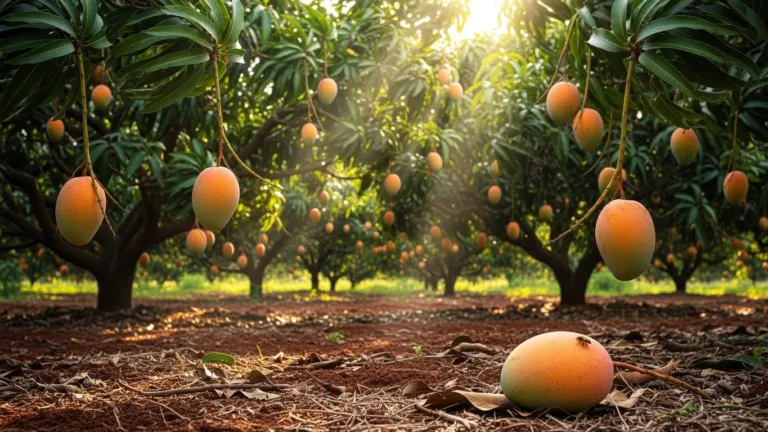
Close your eyes and imagine walking through rows and rows of tall trees, their branches heavy with golden-yellow mangoes swaying gently in the breeze. The sweet, tropical smell fills the air, and you can almost taste the juicy fruit just by breathing it in. Sounds amazing, right? That’s what it’s like to visit a mango orchard, and Pakistan happens to have some of the best ones in the entire world!
If you’ve ever bitten into a perfectly ripe mango on a hot summer day, you know there’s nothing quite like it. But have you ever wondered where these delicious fruits come from and how they grow? Well, they don’t just magically appear in fruit baskets! They come from special farms called orchards, where skilled farmers dedicate their time and knowledge to growing the best mangoes possible. Places like Multanfarms.com are keeping this incredible tradition alive right here in Pakistan.
Get ready to discover why mango orchards are so special, how they work, and why Pakistan is basically the mango capital of the world. Trust me, after reading this, you’ll never look at a mango the same way again!
What Exactly Is a Mango Orchard?
Let’s start with the basics. An orchard is basically a farm that specializes in growing fruit trees. A mango orchard is a piece of land where mango trees are planted in organized rows, kind of like how desks are arranged in your classroom, but way more spread out! Each tree needs plenty of space to grow its roots underground and stretch its branches toward the sky.
Think of a mango orchard as a fruit factory, but instead of machines and assembly lines, you’ve got nature doing all the work. The farmers are like managers who make sure everything runs smoothly. They plant the trees, care for them throughout the year, protect them from diseases, and harvest the mangoes when they’re perfectly ripe.
What makes mango orchards different from regular farms? Well, fruit trees take years to mature and start producing fruit. A mango tree might take three to five years before it gives you your first harvest! That means farmers need patience and long-term thinking. It’s not like planting tomatoes where you get results in a few months. This is more like a long-term investment that keeps giving back year after year.
Why Pakistan Is Mango Heaven
Here’s something to be proud of: Pakistan is one of the world’s top mango producers! We grow over 1.8 million tons of mangoes every year. That’s enough mangoes to fill hundreds of thousands of trucks! But it’s not just about quantity, Pakistani mangoes are famous worldwide for their incredible taste and quality.
The secret is in our geography and climate. Pakistan has hot summers, warm springs, and just enough winter chill to make mango trees happy. Areas like Punjab and Sindh, especially regions around Multan, Rahim Yar Khan, and Mirpur Khas, are perfect for mango orchards. The soil is rich, the temperatures are right, and farmers have been perfecting their techniques for generations.
Pakistani mango orchards grow varieties that people around the world dream about. You’ve probably heard of Sindhri, Chaunsa, Anwar Ratol, and Langra. Each variety has its own unique flavor, texture, and sweetness level. It’s like how there are different flavors of ice cream, each mango variety offers a different delicious experience! Farms like Multanfarms.com often grow multiple varieties so people can enjoy different tastes throughout the mango season.
The Life Cycle of a Mango Tree in an Orchard
Let’s follow a mango tree’s journey from start to finish. It all begins with planting, either from a seed or, more commonly, from grafting. Grafting is a cool technique where farmers attach a branch from a really good mango tree onto a young tree’s rootstock. This way, the new tree will produce the same high-quality mangoes as the parent tree. It’s kind of like copying and pasting the best traits!
Once planted, the young tree spends its first few years just growing and getting strong. During this time, farmers water it regularly, add nutrients to the soil, and protect it from pests. It’s similar to how your parents took care of you when you were little, the tree needs attention to grow healthy and strong.
When the tree matures, something magical happens. Small flowers appear on the branches, usually between January and March in Pakistan. These flowers eventually turn into tiny mangoes! Over the next few months, those little green fruits grow bigger and bigger. By summer, usually between May and August, the mangoes are ready to harvest. The farmers can tell when they’re ripe by their color, smell, and how easily they come off the branch.
A Day in the Life of a Mango Orchard
So what actually happens in a mango orchard every day? Way more than you might think! During the growing season, farmers wake up early to inspect their trees. They’re looking for any signs of problems like insects, diseases, or water stress. It’s like being a detective, you need to spot the clues before small problems become big ones.
Irrigation, which means watering the trees, is super important. In Pakistan’s hot climate, mango trees need regular water, but not too much! Too little water and the mangoes won’t grow properly. Too much water and the roots can rot. Farmers use various methods like drip irrigation, where water slowly drips right at the tree’s roots. This is much smarter than just flooding the whole orchard because it saves water and delivers it exactly where it’s needed.
Pruning is another important job. That’s when farmers carefully cut away dead or extra branches. This helps the tree focus its energy on producing the best fruit possible. Think of it like organizing your backpack, when you remove the stuff you don’t need, you have more room for the important things! Modern orchards like Multanfarms.com use scientific methods to decide exactly when and how to prune for the best results.
The Harvest: When Hard Work Pays Off
Harvest time is the most exciting period in a mango orchard! This is when all the year’s hard work finally pays off. In Pakistan, mango season typically runs from May through August, and it’s a busy, exciting time for everyone involved.
Harvesting mangoes is actually a skill. You can’t just yank them off the tree! Farmers use long poles with baskets or bags attached to gently pick the mangoes. Each mango needs to be handled carefully because bruising can make it spoil faster. It’s kind of like handling water balloons, you need a gentle touch or things get messy!
After picking, the mangoes are sorted by size, quality, and ripeness. The best ones might be exported to other countries where people pay premium prices for Pakistani mangoes. Others go to local markets. Some orchards even let visitors come and pick their own mangoes, which is super fun! Imagine getting to choose your own mangoes right from the tree.
The mangoes are then packed in special boxes with padding to protect them during transport. Within days, they could be on someone’s table in Karachi, Lahore, Islamabad, or even in Dubai, London, or New York! Pakistani mangoes are that famous and sought-after.
How Modern Orchards Are Changing the Game
Mango orchards today are way more high-tech than you might imagine. Farms like Multanfarms.com are using modern technology alongside traditional wisdom to grow better mangoes more efficiently. For example, some orchards use soil sensors that tell farmers exactly when the trees need water. It’s like having a smart watch, but for farming!
Many Pakistani orchards are also going organic, which means they avoid using synthetic chemicals and pesticides. Instead, they use natural methods to keep pests away and help trees grow strong. This is healthier for the environment, the farmers, and the people who eat the mangoes. Plus, organic mangoes often taste even better because the trees grow more naturally!
Another cool development is better storage and transportation. Special cold storage facilities help keep mangoes fresh for longer, which means Pakistani mangoes can reach more people around the world. Some orchards are even using apps and websites to sell directly to customers. You could potentially order mangoes online and have them delivered to your door straight from the orchard!
Why Mango Orchards Matter Beyond Just Fruit
Mango orchards aren’t just about producing delicious fruit. They’re actually super important for Pakistan’s economy and environment. The mango industry provides jobs for millions of people, from the farmers who grow the fruit to the workers who pack and transport it, to the people who sell it in markets.
Mango orchards also help the environment in cool ways. Trees absorb carbon dioxide and release oxygen, which helps keep our air clean. A large orchard with thousands of trees is like having a natural air purifier! The trees also provide shade and homes for birds and other wildlife.
For rural communities, especially in Punjab and Sindh, mango orchards can be a source of pride and prosperity. Successful orchards mean better schools, roads, and opportunities for people living in those areas. When you buy Pakistani mangoes, you’re supporting these communities and helping them thrive!
Bringing It All Together
So there you have it! A mango orchard is way more than just a bunch of trees. It’s a carefully managed ecosystem where science, traditional knowledge, and hard work come together to produce one of the world’s most beloved fruits. From the careful planting and years of nurturing to the exciting harvest season, every step requires dedication and skill.
Pakistan’s mango orchards, including innovative farms like Multanfarms.com, represent the best of our agricultural heritage while embracing modern techniques. They’re keeping our country on the map as a top mango producer and making sure people everywhere can enjoy the incredible taste of Pakistani mangoes.
Next time you bite into a juicy, sweet mango, take a moment to think about the orchard where it grew. Think about the farmer who cared for that tree, the rich Pakistani soil that nourished it, and the perfect climate that made it so delicious. Pretty amazing, isn’t it? So here’s a question for you: would you like to visit a mango orchard someday and see this whole process in action? There’s nothing quite like picking a mango straight from the tree and tasting summer at its sweetest!