Have you ever wondered why your grandmother always tells you to eat your vegetables? Well, in Pakistan, vegetables, or “sabzian” as they’re called in Urdu, aren’t just something you’re forced to eat at dinner. They’re actually a huge part of what makes Pakistani food so delicious and what keeps millions of people healthy and strong!
Think about your favorite Pakistani meal. Maybe it’s crispy samosas, or a warm plate of rice with curry. Chances are, vegetables are hiding somewhere in there, making everything taste better. Pakistan is experiencing rapid growth as a vegetarian country, with many people choosing to eat more vegetables for health reasons. But sabzian in Pakistan are more than just a health trend. They’re part of the country’s history, culture, and even its economy! Ling
In this article, we’ll explore the colorful world of Pakistani vegetables, from the farms where they grow to the dinner tables where families share meals together. You’ll discover why these humble plants are absolute superstars in Pakistani life!
What Exactly Does “Sabzian” Mean?
Let’s start with the basics. In Urdu, “sabzian” means vegetables, and the singular form is “sabzi.” It’s kind of like how we say “child” and “children” in English. When you’re talking about just one vegetable, like a tomato, you’d call it a sabzi. But when you’re talking about multiple vegetables, like carrots, peas, and potatoes together, that’s sabzian! Ling
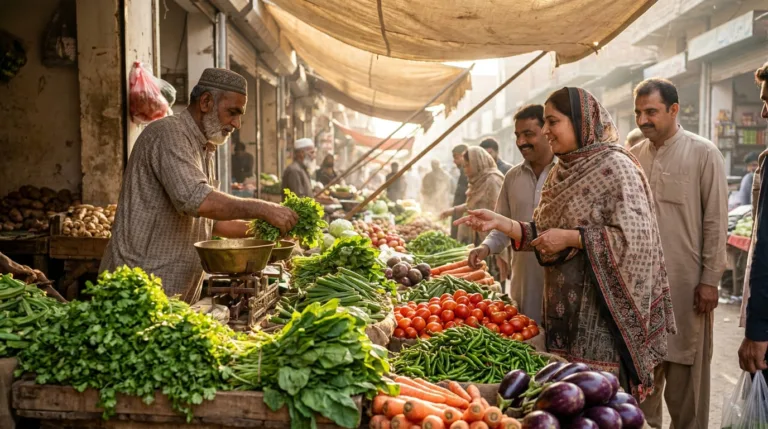
Here’s something cool: in many Pakistani cities, there are special markets called “sabzi mandi” where fresh vegetables are sold. Imagine a bustling marketplace filled with colorful vegetables piled high, vendors calling out their prices, and the smell of fresh produce everywhere. It’s like a treasure hunt for food! Ling
The word “sabzi” is also used to describe vegetable dishes in Pakistani cooking. When someone says they’re making “mix sabzi,” they’re talking about a yummy curry made with different vegetables mixed together. It’s basically a party of vegetables all cooked in one pot with amazing spices!
The Vegetables That Feed a Nation
Pakistan grows an incredible variety of vegetables throughout the year. The country is one of the leading producers of vegetables in South Asia, with crops such as tomatoes, onions, potatoes, and okra being grown in abundance. That’s like being the top student in a really competitive class! Agricom
Up to nine million tonnes of vegetables are grown annually on around 630,000 hectares of land. To help you picture this, nine million tonnes is about the weight of 1.5 million elephants! That’s a LOT of vegetables. And they’re not all grown in one place either. Punjab and Sindh are the biggest vegetable-growing regions, accounting for 70% and 13% of production respectively. CABICABI
Different vegetables grow during different seasons in Pakistan. Winter vegetables include cabbage, cauliflower, broccoli, carrot, potato, onion, lettuce, radish, turnip, peas, spinach, fenugreek, beets, mustard, coriander, mint, and garlic. That’s quite a lineup! Summer brings its own special vegetables like tomatoes, eggplants, bottle gourd, and cucumbers. Agrinfobank
What’s really interesting is that from the fertile plains of Punjab to the valleys of Khyber Pakhtunkhwa, farmers use techniques passed down through generations, mixed with modern methods, to grow everything from okra to onions. It’s like combining your grandma’s secret recipes with the latest cooking gadgets! Multan Farms
How Pakistani Families Cook Their Sabzian
Now here’s where things get really delicious! Pakistani cooking has transformed the simple vegetable into something absolutely mouthwatering. Vegetable curry, known as “sabzion ka salan,” is one of the most popular dishes in Pakistan, made by mixing different vegetables together. Ling
One of the most loved vegetable dishes is “mix sabzi.” The most basic version of Pakistani-style mixed sabzi uses peas, carrots, and potatoes in an onion and tomato base. But here’s the fun part: every family has their own special version! Some add eggplant, others might throw in cauliflower or green beans. It’s like a choose-your-own-adventure book, but with food! Fatima Cooks
The cooking process is pretty smart too. When making vegetable dishes, it’s best to avoid adding excess water because the vegetables release their own moisture as they cook. This keeps the vegetables from getting soggy and maintains all those wonderful flavors. Professional chefs and home cooks alike know this secret trick! Fatima Cooks
Pakistani vegetable dishes aren’t bland or boring either. They’re packed with spices like turmeric, cumin, coriander, and red chili powder. These spices don’t just add flavor, they also have health benefits that have been known for thousands of years!
The Farmers Behind Your Food
Millions of farmers wake up before sunrise every single day to grow the vegetables that feed over 220 million people. That’s dedication! Most vegetable farmers in Pakistan are what we call “smallholders.” The vast majority of farmers operate family smallholdings comprising less than five acres of land, and for many of these families, vegetables are a major source of household income. Multan FarmsCABI
Imagine running a business on a piece of land smaller than five football fields, and from that small space, you’re helping feed an entire nation. That’s what these farmers do every single day!
However, farming vegetables in Pakistan isn’t easy. Farmers face challenges like water scarcity, weather extremes, pest infestations, and the need for modern farming techniques. It’s kind of like trying to finish your homework when the power keeps going out, your little brother won’t stop bothering you, and you can’t find your favorite pencil. Tough, right? But these farmers keep going because they know how important their work is. Agricom
Key vegetable-producing regions often experience crop losses due to weather extremes and inefficient agricultural practices. Sometimes there’s too much of one vegetable, and sometimes there’s not enough. It’s a constant balancing act! Agricom
The Future of Vegetables in Pakistan
The good news? Things are getting better! More farmers are adopting organic farming methods, which means growing vegetables without synthetic chemicals, and this is healthier for both people and the planet. It’s like choosing to walk or bike instead of always taking a car, it’s better for everyone! Multan Farms
Climate-smart agriculture is becoming essential as weather patterns become less predictable, with farmers learning to grow drought-resistant vegetable varieties and use water more efficiently. Some innovative farmers are even experimenting with vertical farming, where vegetables grow in stacked layers indoors. Imagine a building full of vegetables growing on shelves, one on top of another, like a vegetable apartment complex! Multan Farms
Education is playing a huge role too. Organizations and agricultural universities are teaching young farmers about modern techniques, business management, and sustainable practices. The next generation of farmers will have knowledge and tools that seem like science fiction compared to what their grandparents had. Multan Farms
Why Should You Care About Sabzian?
You might be thinking, “Okay, vegetables are important, but why should I care?” Here’s the thing: every time you eat vegetables, you’re supporting Pakistani farmers, helping the environment, and taking care of your own health all at the same time. That’s pretty powerful for something that grows from a tiny seed!
About 68% of Pakistan’s population is engaged in farming, either directly or indirectly. That means when you choose to eat your sabzian, you’re connected to millions of hardworking people across the country. You’re part of a chain that starts in a farmer’s field and ends on your dinner plate. Mnfsr
Plus, vegetables are what make Pakistani food so unique and delicious. Without sabzian, there would be no samosas filled with spiced potatoes, no palak paneer, no aloo gobi, and definitely no mix sabzi to go with your warm roti! Pakistani cuisine wouldn’t be the same without these colorful, nutritious vegetables.
Your Connection to the Land
Next time you sit down for a meal with vegetables on your plate, take a moment to think about the journey those sabzian took to reach you. They started as tiny seeds in the soil, were carefully tended by hardworking farmers, traveled through markets and kitchens, and finally arrived at your table, cooked with love and spices.
So, here’s a question for you: How will you look at vegetables differently now that you know their important story in Pakistan? Will you appreciate that bite of potato curry a little more? Will you thank the farmers who make it all possible? The choice is yours, but remember, every vegetable has a story, and you’re part of it!