Have you ever cracked open a sunflower seed at a baseball game or munched on them as a snack? Those little striped seeds might seem simple, but they’re actually tiny powerhouses packed with amazing benefits! At Multanfarms.com, we know that sunflower seeds (often misspelled as “sonf seeds”) are way more interesting than most people think. Whether you’re looking at the towering sunflower plants swaying in the breeze or holding a handful of seeds in your palm, there’s a whole world of fascinating facts hiding inside those small shells.
You might be surprised to learn that sunflower seeds aren’t just a tasty snack. They’re used in cooking oils, bird feed, and even in making biodiesel fuel! From the fields where they grow to your kitchen table, sunflower seeds have traveled an incredible journey. Let’s dive into everything you need to know about these amazing little seeds and discover why farmers and food lovers alike can’t get enough of them.
Where Do Sunflower Seeds Actually Come From?
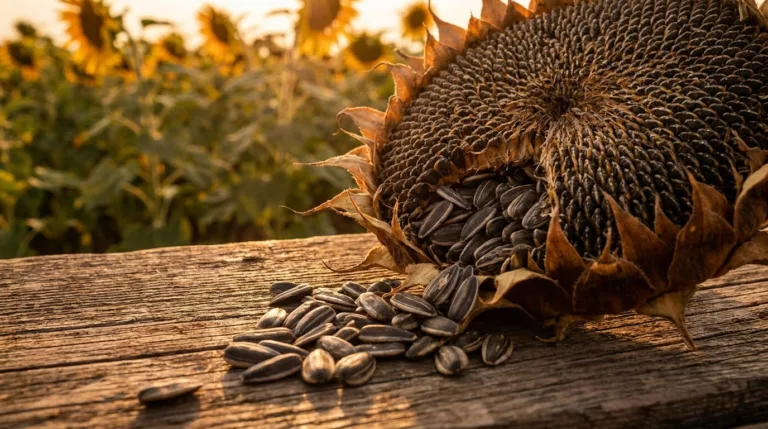
Picture this: a massive flower head, sometimes as big as a dinner plate, filled with hundreds or even thousands of tiny seeds arranged in a mesmerizing spiral pattern. That’s where sunflower seeds begin their journey! The sunflower plant (Helianthus annuus, if you want to sound fancy) is native to North America, and it can grow incredibly tall, sometimes reaching over 10 feet high. That’s taller than your bedroom ceiling!
When you see a sunflower in full bloom, those bright yellow petals everyone loves aren’t actually where the seeds come from. The seeds develop in the large circular disk at the center of the flower. As the flower matures and the petals fall away, those seeds ripen and turn into the striped black-and-white seeds we recognize. Farmers at places like Multanfarms.com carefully monitor their sunflower crops, waiting for just the right moment to harvest when the seeds are perfectly ripe.
What’s Actually Inside a Sunflower Seed?
When you crack open that striped shell (which botanists call a hull), you’re getting to the good stuff, the kernel inside. This kernel is where all the nutrition lives! Think of the hull like a protective armor, keeping the valuable seed safe from birds, insects, and weather until it’s ready to either grow into a new plant or become someone’s snack.
The kernel itself is loaded with nutrients that your body loves. It contains healthy fats (the good kind that actually help your heart), protein to build strong muscles, fiber to keep your digestive system happy, and tons of vitamins and minerals. In fact, just a small handful of sunflower seeds gives you a big dose of vitamin E, which acts like a shield protecting your cells from damage. Pretty impressive for something so tiny, right?
Why Do Farmers Love Growing Sunflowers?
If you’ve ever driven past a field of sunflowers, you know it’s an incredible sight, thousands of bright yellow faces all turned toward the sun. But farmers don’t just grow them because they’re beautiful (although that’s definitely a bonus!). Sunflowers are actually pretty easy to grow compared to some other crops, and they’re tough plants that can handle different weather conditions.
Here’s something cool: sunflowers actually help improve the soil where they grow. Their deep roots break up hard, compacted soil and bring nutrients up from deep underground. When the plants eventually decompose, they add organic matter back into the soil, making it healthier for the next crop. It’s like they’re doing the farmer a favor while they grow! At Multanfarms.com, we understand that sunflowers are what farmers call a “win-win” crop, good for the land and good for business.
Sunflowers also don’t need as much water as crops like corn or cotton, which makes them perfect for areas where water is scarce. In places like Pakistan, where Multanfarms.com operates, being water-smart is really important. Plus, sunflowers grow relatively quickly, going from seed to harvest in about 3-4 months.
How Do Sunflower Seeds Get From Farm to Snack?
The journey from a sunflower field to your local store is pretty fascinating. First, farmers have to wait until the back of the flower head turns yellow-brown and the seeds are plump and firm. If they harvest too early, the seeds won’t be fully developed. If they wait too long, birds might eat them all first! (Birds absolutely love sunflower seeds, which is why they’re in so many bird feeders.)
Once harvested, the seeds go through a cleaning process to remove any plant debris, dirt, or damaged seeds. Then they’re sorted by size and quality. Some seeds head off to become cooking oil, others get roasted and salted for snacking, and some are saved to plant next year’s crop. The whole process requires careful attention to detail to make sure only the best seeds make it to consumers.
What Can You Actually Do With Sunflower Seeds?
You might think sunflower seeds are just for eating straight from the shell, but they’re way more versatile than that! Bakers add them to bread for extra crunch and nutrition. They’re a key ingredient in granola and trail mix. You can sprinkle them on salads, blend them into smoothies, or grind them into sunflower seed butter (which is an awesome alternative if you’re allergic to peanuts).
In many countries, including Pakistan where Multanfarms.com is based, people use sunflower oil for cooking because it’s light, healthy, and doesn’t overpower the flavor of food. The oil has a high smoke point, which means you can cook at high temperatures without it breaking down or smoking up your kitchen. Even the leftover parts of the sunflower plant aren’t wasted! The stalks can be turned into paper, and the seed hulls can be used as fuel or animal bedding.
Are Sunflower Seeds Really That Healthy?
Let’s talk about why nutritionists and health experts are big fans of sunflower seeds. Remember that vitamin E we mentioned earlier? Your body uses it to protect your cells, kind of like how sunscreen protects your skin from sun damage. Sunflower seeds are one of the best natural sources of vitamin E you can find!
They’re also packed with selenium, a mineral that helps your immune system fight off germs and keeps your thyroid gland working properly. Plus, they contain magnesium, which your body needs for over 300 different processes, from keeping your heartbeat steady to helping your muscles relax after gym class. The protein in sunflower seeds helps build and repair your tissues, and the healthy fats give your brain the fuel it needs to help you focus during that tough math test.
But here’s the thing, like most good things in life, moderation is key. While sunflower seeds are super nutritious, they’re also pretty calorie-dense, meaning a little bit packs a lot of energy. A small handful (about a quarter cup) is a perfect serving size.
What’s the Deal With Different Types of Sunflower Seeds?
Not all sunflower seeds are created equal! There are actually several different varieties, and they’re grown for different purposes. Oil-type sunflowers have small black seeds that are mostly used for making sunflower oil. These seeds have thin hulls and are rich in oil content, making them perfect for pressing.
Confection-type sunflowers produce the larger striped seeds you see in stores, the ones you eat as snacks. These have thicker hulls that make them easier to crack open with your teeth. They’re grown specifically for the snack food market and for bird feed.
Some farmers even grow special sunflower varieties just for their huge, beautiful flowers that end up in bouquets and arrangements. These varieties focus on flower size and petal quality rather than seed production. At Multanfarms.com, understanding these differences helps farmers choose the right variety for their specific goals and market needs.
Why Should You Care About Where Your Sunflower Seeds Come From?
You might wonder, why does it matter where my sunflower seeds come from? Well, sustainable farming practices make a huge difference! When farmers use responsible methods to grow sunflowers, they protect the environment, conserve water, and ensure that the land stays healthy for future generations.
Quality also varies depending on growing conditions, harvest timing, and processing methods. Seeds from farms that care about quality, like Multanfarms.com, tend to be fresher, tastier, and more nutritious. Supporting farms that use good practices also means you’re supporting farmers who treat their workers fairly and care about their communities.
Plus, knowing the story behind your food just makes it more interesting! The next time you’re munching on sunflower seeds, you can think about the tall plants swaying in the fields, the careful harvesting process, and the journey those little seeds took to reach you.
Wrapping It All Up: The Mighty Sunflower Seed
From towering plants with faces that follow the sun to tiny seeds packed with nutrition, sunflowers are truly remarkable. Whether you’re grabbing a handful as an after-school snack, adding them to your mom’s salad, or watching birds flock to a feeder filled with them, sunflower seeds play a bigger role in our world than most people realize. They feed us, fuel us, and even help keep our farmland healthy.
At Multanfarms.com, we believe that understanding where your food comes from makes every bite more meaningful. Sunflower seeds aren’t just a snack, they’re a connection to the earth, to farmers who work hard to grow quality crops, and to thousands of years of agricultural history. So the next time you crack open a sunflower seed, take a moment to appreciate the amazing little powerhouse you’re holding. What other “simple” foods in your life might have equally fascinating stories hiding beneath the surface?