Have you ever noticed that strawberries taste absolutely amazing in the summer but kind of bland and disappointing in the winter? Or that pumpkins seem to be everywhere in the fall but nearly impossible to find in spring? There’s actually a pretty cool reason for this, and it all comes down to something called seasonal eating. When you choose vegetables (and fruits!) that are in season right now, you’re not just getting better taste, you’re also saving money, helping the environment, and eating healthier food!
Here’s the thing: even though you can find almost any vegetable at the grocery store year-round, that doesn’t mean they’re all at their best right now. Some vegetables are shipped from thousands of miles away or grown in special heated greenhouses just so stores can sell them all year. But when you buy vegetables that are naturally growing in your region during the current season, everything changes. They’re fresher, tastier, and often way cheaper too!
So what vegetables are actually in season right now? And how can you figure out what to buy when you’re shopping at places like Multanfarms.com or your local farmer’s market? Let’s dig into the world of seasonal vegetables and discover why eating with the seasons is one of the smartest food choices you can make!
Understanding What “In Season” Actually Means
When we say a vegetable is “in season,” we mean it’s growing naturally in your area during the current time of year. Think of it like this: just like you wouldn’t wear a heavy winter coat in July or shorts in December (well, in most places!), vegetables have their own preferred times to grow based on the weather and sunlight.
Different vegetables thrive in different conditions. Cool-weather vegetables like broccoli, lettuce, and carrots love the crisp temperatures of spring and fall. They actually taste sweeter after a light frost! On the flip side, heat-loving vegetables like tomatoes, peppers, and zucchini need those long, hot summer days to grow properly. It’s all about matching the plant to the weather it loves best.
Here’s something interesting: the same vegetable can be in season at different times depending on where you live! If you’re in Florida, you might be harvesting tomatoes in winter, while someone in Maine is buried under snow. That’s why it’s important to know what’s seasonal in your specific region, not just in general.
What Vegetables Are in Season Right Now?
Okay, so what can you actually eat seasonally today? Well, that depends on what time of year you’re reading this and where you live! Let’s break it down by seasons so you’ll always know what to look for.
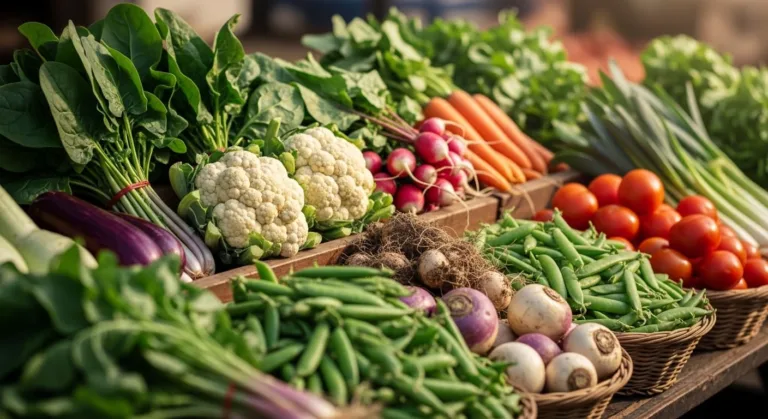
Spring vegetables (March through May) include fresh greens like spinach, lettuce, and arugula. You’ll also find asparagus, peas, radishes, and spring onions popping up. These vegetables love the mild temperatures and increasing daylight. If you’ve ever had fresh asparagus in April compared to January, you know the difference is incredible!
Summer vegetables (June through August) are what most people think of when they picture a garden. Tomatoes, cucumbers, zucchini, bell peppers, corn, and green beans are all summer superstars. This is also when you’ll find eggplant, summer squash, and fresh herbs growing like crazy. Summer is basically vegetable paradise!
Fall vegetables (September through November) include hearty options like pumpkins, sweet potatoes, winter squash, Brussels sprouts, and cauliflower. You’ll also find root vegetables like beets, turnips, and parsnips. These vegetables can handle cooler temperatures and actually develop better flavors as the weather gets chillier.
Winter vegetables (December through February) might surprise you! Even in cold weather, you can find kale, cabbage, leeks, and hardy root vegetables. In warmer regions, you might also get citrus fruits and winter greens. It’s amazing what can still grow when it’s cold outside!
Why Does Buying Seasonal Vegetables Make a Difference?
You might be thinking, “So what? I can buy tomatoes whenever I want at the store!” And you’re totally right, you can. But here’s why choosing seasonal vegetables is actually a game-changer.
First up, flavor! Seasonal vegetables taste so much better because they’re picked at the peak of ripeness. When vegetables are grown out of season or shipped from far away, they’re often picked early (while they’re still hard and not fully developed) so they can survive the long journey. It’s like comparing a pizza fresh out of the oven versus one that’s been sitting in your fridge for three days. Both are pizza, but one is definitely better!
Second, price. When vegetables are in season locally, there’s usually a lot of them available, and that means lower prices. It’s basic supply and demand, the same reason why school supplies are cheaper in July than in September. During peak season, farmers at Multanfarms.com and other local sources can offer better deals because they’re harvesting tons of produce.
Third, nutrition. Vegetables start losing nutrients the moment they’re picked. A tomato that traveled 2,000 miles to your plate has lost way more vitamins than one that came from a farm 20 miles away. Seasonal, local vegetables often pack a bigger nutritional punch because they’re fresher.
The Environmental Impact You Probably Haven’t Thought About
Here’s something that might blow your mind: choosing seasonal vegetables is actually one of the easiest ways you can help the environment! When you buy vegetables that are out of season, they often have to be transported from other countries or continents. We’re talking about vegetables traveling on trucks, planes, and ships, burning fuel the whole way.
This transportation creates what scientists call a “carbon footprint,” basically the amount of pollution released into the air. A tomato grown locally in summer has a tiny carbon footprint, maybe just a short truck ride. But a tomato flown in from another continent in winter? That’s like comparing walking to school versus taking a cross-country road trip!
Plus, growing vegetables out of season often requires heated greenhouses, which use tons of energy. Seasonal vegetables growing outside in their natural time don’t need all that extra energy input. They’re just doing what nature designed them to do, which is way more efficient and eco-friendly.
How to Find Out What’s Seasonal in Your Area
So how do you actually figure out what’s in season where you live? It’s easier than you might think! One of the best ways is to check out local farmers markets. The vegetables you see there are almost always seasonal because local farmers are selling what they’re currently harvesting. It’s like a real-time guide to what’s growing right now!
Websites like Multanfarms.com often highlight their seasonal offerings, making it super easy to know what’s fresh. Many also include a seasonal calendar or guide that shows you what to expect month by month. Some even send out newsletters or social media updates when new vegetables come into season, kind of like getting a notification when your favorite show drops a new episode!
You can also just ask! Seriously, farmers and produce sellers love talking about their vegetables. Ask them what’s fresh, what just came in, or what they’re excited about this week. Most of the time, they’ll give you the inside scoop on what’s at its absolute best right now.
Another cool trick is to notice what’s on sale or what’s really abundant at the store. If there are mountains of zucchini everywhere and it’s super cheap, that’s a pretty good sign it’s in season! Stores tend to feature and discount whatever they have a lot of, which usually means it’s growing locally in large quantities.
Making Seasonal Eating Work in Real Life
Okay, so eating seasonally sounds great in theory, but how do you actually make it happen when you’re used to eating whatever you want whenever you want it? The good news is, you don’t have to be perfect! Even small changes make a difference.
Start by choosing just one or two meals a week where you focus on seasonal vegetables. Maybe Sunday dinner always features whatever’s in season, or perhaps you make it a goal to buy at least half your vegetables from the seasonal section. It’s like leveling up in a game, you don’t have to master everything at once!
Get creative with recipes that celebrate seasonal vegetables. In summer, make fresh tomato sauce or cucumber salads. In fall, try roasted root vegetables or pumpkin soup. Winter is perfect for hearty vegetable stews, and spring is ideal for fresh salads and stir-fries with crisp vegetables. There are tons of recipes online specifically designed around seasonal ingredients.
Also, don’t be afraid to try new vegetables! Seasonal eating is a great excuse to experiment with something you’ve never cooked before. See a weird-looking root vegetable at Multanfarms.com? Give it a shot! You might discover your new favorite food.
The Bottom Line on Seasonal Vegetables
Eating vegetables that are in season right now isn’t just some trendy food movement, it’s actually a smart choice that benefits you, your wallet, and the planet. You get better-tasting, more nutritious vegetables at lower prices, and you reduce your environmental impact without even trying that hard. Pretty awesome, right?
The next time you’re shopping for vegetables, whether online at Multanfarms.com or at a local store, take a moment to think about what’s actually growing right now in your area. Choose those vegetables when you can, and notice the difference in taste, freshness, and maybe even your grocery bill! Nature has a pretty good system going when it comes to what should be eaten when.
What’s your favorite seasonal vegetable? Have you ever noticed a huge difference between a vegetable in season versus out of season? Next time you bite into a perfectly ripe, in-season vegetable, you’ll know exactly why it tastes so incredible!