Have you ever bitten into a juicy tomato and wondered where it came from? Or maybe you’ve helped your family pick out fresh vegetables at the market and noticed labels saying “locally grown.” Well, if you’re in Pakistan or curious about South Asian agriculture, you’re in for a treat. Pakistan is actually a vegetable-growing powerhouse, producing an incredible variety of fresh veggies that feed millions of people every single day.
Here’s something that might surprise you: Pakistan’s farmers grow everything from the potatoes in your french fries to the spinach in your favorite dish. The country’s unique geography, with its mix of climates and rich soil, creates perfect conditions for growing dozens of different vegetables. From the cool northern mountains to the warm southern plains, each region has its own vegetable superstars.
In this article, we’ll explore which vegetables thrive in Pakistan’s diverse landscape, when they’re grown throughout the year, and why certain veggies do better in some regions than others. By the end, you’ll have a whole new appreciation for the vegetables on your plate and the hard work that goes into growing them.
Pakistan’s Secret Weapon: Climate Diversity
Before we dive into specific vegetables, let’s talk about why Pakistan is such a great place for growing them. Imagine if your neighborhood had every type of weather possible, from snowy winters to scorching summers. That’s basically what Pakistan has, but on a much larger scale.
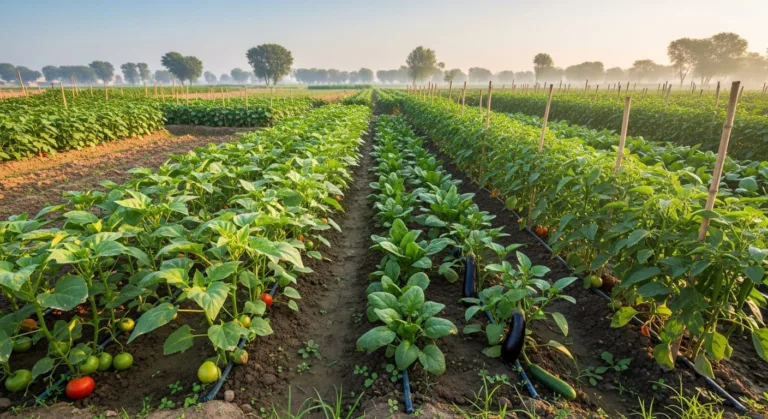
The country stretches from high mountain ranges in the north (where it gets pretty cold) all the way down to coastal areas in the south (where it stays warm most of the year). This means farmers can grow cool-weather vegetables like cauliflower in one region while others are harvesting heat-loving crops like okra. It’s like having multiple growing zones all in one country.
The soil quality matters too. Thanks to major river systems like the Indus River, many farming areas have rich, fertile soil that’s been nourished by river sediments for thousands of years. Think of it like nature’s fertilizer, constantly renewing the earth and making it perfect for crops.
The All-Stars: Pakistan’s Most Popular Vegetables
Let’s start with the vegetables you’d find in almost every Pakistani kitchen. These are the crops that farmers rely on year after year because they grow well and people love eating them.
Potatoes are absolutely huge in Pakistan. They’re grown mainly in Punjab and Sindh provinces, and the country produces millions of tons every year. Farmers typically plant them in the cooler months (October to December) because potatoes don’t like extreme heat. When the weather is just right, these tubers grow underground, storing up energy and nutrients until they’re ready to harvest.
Onions are another superstar crop. Can you imagine cooking without onions? In Pakistan, they’re essential to almost every dish. They grow best when planted in winter and harvested in spring. The cool weather helps them develop that strong, sharp flavor we recognize. Places like Multanfarms.com and other agricultural operations focus on growing quality onions because the demand is always high.
Tomatoes might seem simple, but they’re actually quite picky about their growing conditions. In Pakistan, they’re grown in both summer and winter varieties. The winter tomatoes tend to be sweeter and firmer because they grow more slowly in cooler temperatures. Summer tomatoes grow faster but need lots of water to stay juicy in the heat.
The Leafy Greens That Love Pakistani Soil
Now let’s talk about the green stuff, the vegetables your parents always tell you to eat more of!
Spinach (or “palak” as it’s called locally) absolutely thrives in Pakistan’s winter months. It’s a cool-season crop that grows quickly and doesn’t need too much fuss. Farmers love it because they can harvest it multiple times from the same plant. Just cut the leaves, and more will grow back. It’s like the gift that keeps on giving!
Cabbage and cauliflower are winter champions too. These vegetables belong to the same family (scientists call them “brassicas,” but you can just think of them as cousins). They need cool weather to form those tight heads or florets we eat. In Pakistan, they’re typically planted in late summer and harvested throughout the winter months when the weather is mild and perfect for their growth.
Lettuce might not be as traditional in Pakistani cuisine, but it’s becoming more popular, especially in cities. It grows best in the cooler months and is super sensitive to heat. On a hot day, lettuce basically gives up and turns bitter. But in Pakistan’s pleasant winter weather, it grows crisp and fresh.
Summer Superstars: Vegetables That Love the Heat
While some vegetables run away from summer heat, others absolutely love it. These warm-season crops need lots of sunshine and warmth to produce their best harvests.
Okra (also called “bhindi”) is the ultimate summer vegetable in Pakistan. It actually needs hot weather to grow well. The hotter it gets, the happier okra plants become. They produce those green, finger-like pods that many people love to cook. Okra plants can handle temperatures that would make other vegetables wilt and die.
Eggplant or “baingan” is another heat-lover. These purple beauties need warm soil and lots of sunshine to develop properly. In Pakistan, they’re grown mainly from spring through fall. The plants can get quite large and produce fruit for several months if they’re taken care of properly.
Peppers and chilies of all kinds grow amazingly well in Pakistan’s summer heat. From sweet bell peppers to fiery hot chilies, these plants soak up the sunshine and turn it into flavorful fruits. (Yes, technically peppers are fruits, even though we eat them like vegetables!) The warm nights and hot days create perfect conditions for developing that spicy kick.
The Year-Round Champions
Some vegetables are so adaptable that farmers can grow them almost any time of year with the right techniques. These are the vegetables that always seem to be available at the market.
Carrots are surprisingly flexible. While they prefer cooler weather, Pakistani farmers have figured out how to grow them in different seasons by choosing the right varieties and planting times. The orange color actually comes from beta-carotene, which the carrot produces as it grows. The cooler the weather, the sweeter the carrot tends to be.
Peas are another versatile crop. In Pakistan, they’re mainly a winter vegetable, but in cooler northern areas, farmers can grow them even in early summer. Fresh peas taste completely different from frozen ones, way sweeter and more flavorful.
Cucumbers and gourds can be grown in different seasons depending on the variety. Some types like cool weather, while others thrive in heat. Pakistani farmers grow several types of cucumbers and various gourds that are staples in local cooking.
Regional Superstars: Where Certain Vegetables Shine
Different parts of Pakistan are famous for specific vegetables. It’s not just about what grows there, but what grows there REALLY well.
The Punjab province is often called Pakistan’s breadbasket, but it’s also a vegetable powerhouse. The combination of good soil, irrigation systems, and experienced farmers means Punjab produces huge quantities of potatoes, onions, tomatoes, and more.
Sindh, with its warmer climate, excels at growing vegetables that love heat. This region produces excellent chilies, okra, and eggplant. The long growing season means farmers can sometimes get multiple crops in a single year.
The northern areas, like Khyber Pakhtunkhwa and Gilgit-Baltistan, have cooler climates perfect for vegetables that need a chill. These regions grow amazing cabbage, cauliflower, and other cool-season crops that benefit from mountain air and clean water.
Why This Matters to You
You might be wondering why you should care about which vegetables grow where in Pakistan. Well, understanding where your food comes from connects you to the larger world in a really meaningful way.
First, it helps you appreciate the work that goes into feeding a nation. Farmers at places like Multanfarms.com and countless other farms work year-round, timing their planting and harvesting to match the seasons and weather patterns. Every vegetable on your plate represents months of careful attention and hard work.
Second, knowing about seasonal vegetables can help you eat better and more sustainably. When you buy vegetables that are in season locally, they’re usually fresher, tastier, and better for the environment because they didn’t have to travel as far.
Finally, agriculture is a huge part of Pakistan’s economy and culture. Millions of people depend on vegetable farming for their livelihoods. Understanding and appreciating this helps us value the connection between the land, the people who work it, and the food we eat every day.
Growing Forward
Pakistan’s vegetable farming isn’t stuck in the past. Modern farms are using new techniques like drip irrigation (which saves water by delivering it directly to plant roots) and greenhouse growing (which protects crops from harsh weather). These innovations help farmers grow more food while using resources wisely.
So the next time you’re eating a meal with fresh vegetables, take a moment to think about the journey those veggies took to reach your plate. Whether it’s a crispy cucumber, a sweet carrot, or a spicy chili, each one has a story that involves soil, sunshine, water, and the skill of farmers who understand their land.
What vegetable are you most curious about now? Maybe you could try growing some yourself and see firsthand what it takes to turn a tiny seed into food on your table!