Have you ever noticed that golden, almost magical-looking ingredient that some families use in their cooking? The one that makes everything smell absolutely incredible and taste even better? That’s desi ghee, and it’s been a superstar ingredient in South Asian kitchens for literally thousands of years! While it might look similar to butter at first glance, desi ghee is actually quite different, and once you understand what makes it special, you’ll see why people have been obsessed with it for centuries.
Here’s something pretty wild: in ancient India, ghee wasn’t just food, it was considered so valuable that people used it in religious ceremonies, as medicine, and even as a way to show respect to important guests. Imagine if someone gave you a jar of butter as a precious gift today! But back then, and even now in many cultures, desi ghee is treated like liquid gold. It’s rich, flavorful, and packed with nutrients that your body can actually use.
So what exactly is desi ghee, and how is it different from the regular butter you might spread on your toast? Why do some people swear it’s healthier than butter, while others think they’re basically the same thing? And why does it cost more at the store? In this article, we’re going to dive deep into the world of desi ghee, exploring everything from how it’s made to why it’s become so popular even outside South Asian communities. Get ready to become a ghee expert, because this journey is going to be delicious!
The Transformation: How Butter Becomes Desi Ghee
Let’s start with the basics. Desi ghee actually begins its life as regular butter! But here’s where things get interesting. To make ghee, you take butter and heat it slowly over low heat for a long time, kind of like how you’d simmer soup to make the flavors more intense. As the butter heats up, something really cool happens: the water inside it starts to evaporate (turn into steam and disappear), and the milk solids (tiny white particles) separate from the pure butterfat.
After a while, those milk solids sink to the bottom of the pot and start to turn golden brown, giving off an amazing nutty aroma that’s hard to describe but impossible to forget. It’s like the smell of toasted bread mixed with caramel, but even better! Once all the water has evaporated and the milk solids have separated, you’re left with pure, golden ghee that you can pour through a strainer to remove those browned bits. What you end up with is a clear, beautiful fat that’s shelf-stable, which means it doesn’t need to be refrigerated and can last for months without going bad.
This whole process might seem simple, but it actually requires patience and attention. If you heat the butter too quickly or at too high a temperature, you’ll burn it and ruin the whole batch. Traditional families often make ghee at home, treating it as an important ritual that’s been passed down through generations. Companies like Multanfarms.com take this traditional process seriously, ensuring their desi ghee is made with care and quality ingredients to capture that authentic taste and nutritional value that makes ghee so special.
Butter vs. Desi Ghee: What Makes Them Different?
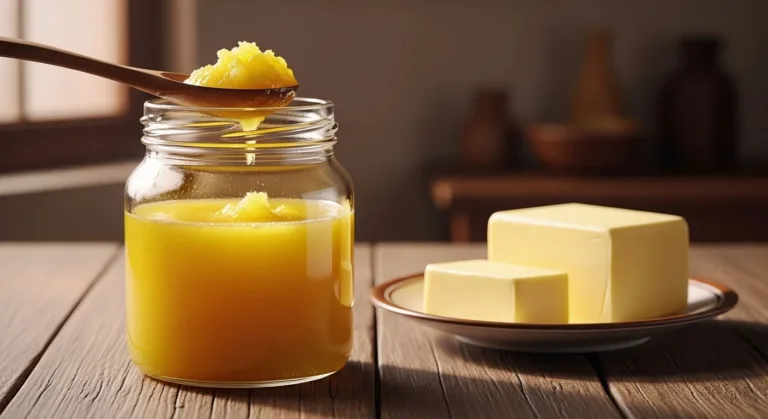
Now you might be wondering, “If ghee starts as butter, why not just use butter?” Excellent question! While they’re related, butter and desi ghee have some pretty significant differences that affect both how they taste and how your body processes them. First off, let’s talk about what they contain. Regular butter is about 80% fat, with the rest being water and milk solids. Desi ghee, on the other hand, is basically 100% pure fat because all that water and those milk solids have been removed.
This difference is actually a big deal. Those milk solids in butter contain something called lactose (milk sugar) and casein (milk protein), which some people have trouble digesting. Ever met someone who’s lactose intolerant and can’t drink milk without getting a stomachache? Well, because ghee has had almost all the lactose and casein removed, many people who can’t handle butter can actually enjoy ghee without problems! It’s like ghee is butter’s more digestible cousin.
Another major difference is the smoke point, which is basically the temperature at which a fat starts to burn and smoke. Butter has a relatively low smoke point (around 350°F), which means it can burn easily when you’re cooking at high heat. Ghee, however, has a much higher smoke point (around 485°F), making it perfect for frying, sautéing, and other high-heat cooking methods. Think of it this way: butter is like a sprinter who tires out quickly, while ghee is like a marathon runner that can handle the heat for much longer without breaking down!
The Flavor Factor: Why Ghee Tastes So Amazing
Let’s talk about taste, because this is where ghee really shines! Remember those milk solids that get toasted during the ghee-making process? They’re the secret behind ghee’s incredible, nutty flavor. When you heat milk solids, they undergo something called the Maillard reaction (don’t worry, you don’t need to remember that term), which is basically a fancy way of saying they caramelize and develop deep, complex flavors. It’s the same process that makes bread turn golden and delicious when you toast it!
This nutty, slightly sweet flavor makes desi ghee incredibly versatile in cooking. You can drizzle it over rice, use it to make fluffy scrambled eggs, spread it on warm naan bread, or even stir it into your oatmeal for a rich, comforting breakfast. In South Asian cuisine, ghee is used in both savory dishes (like dal and biryani) and sweet treats (like halwa and ladoos). The flavor it adds is irreplaceable, it’s what makes authentic South Asian food taste, well, authentic!
Regular butter has a milder, creamier taste that’s great for some things, but it doesn’t have that deep, toasted quality that ghee brings to the table. Some people describe ghee’s flavor as more “concentrated” than butter, kind of like how orange juice from concentrate tastes more intense than fresh-squeezed juice. Once you start cooking with ghee, you’ll notice how it elevates even simple dishes. A plain piece of toast with ghee is completely different from toast with butter, it’s richer, nuttier, and somehow just more satisfying!
The Health Debate: Is Desi Ghee Really Better for You?
Okay, here’s where things get interesting and maybe a little controversial. For a long time, people thought all saturated fats (the kind found in butter and ghee) were bad for your heart. But modern research has shown that the story is way more complicated than that. Desi ghee contains certain types of fats that might actually be beneficial for your body in moderation, including something called conjugated linoleic acid (CLA), which some studies suggest could have health benefits.
Ghee is also rich in fat-soluble vitamins, especially vitamins A, D, E, and K. “Fat-soluble” just means these vitamins need fat to be absorbed by your body, and guess what? Ghee provides exactly that! Vitamin A helps your eyes stay healthy, vitamin D strengthens your bones, vitamin E acts as an antioxidant (protecting your cells from damage), and vitamin K helps your blood clot properly when you get a cut. It’s like ghee comes with its own delivery system for these important nutrients.
But here’s the thing: even though ghee has some potential health benefits, it’s still a fat, which means it’s high in calories. A little bit goes a long way! Think of ghee like you’d think of hot sauce, it’s great for adding flavor and benefits to your food, but you don’t need to dump tons of it on everything. Traditional wisdom in South Asian cultures has always been to use ghee in moderation, appreciating its flavor and benefits without going overboard. When you get quality ghee from trusted sources like Multanfarms.com, you’re getting a pure product without unnecessary additives, which is always the best choice for your health.
Cultural Significance: More Than Just a Cooking Ingredient
Desi ghee isn’t just about cooking and nutrition, it’s deeply woven into the cultural fabric of South Asian communities. In Ayurveda (an ancient Indian system of medicine that’s been around for over 3,000 years!), ghee is considered a healing food that balances your body’s systems and promotes overall wellness. Some people even use ghee in traditional remedies, mixing it with herbs to create natural medicines. While we should always talk to doctors for serious health issues, it’s pretty cool that ghee has been trusted as a health supporter for thousands of years!
In Hindu culture, ghee plays an important role in religious ceremonies and festivals. It’s used to light lamps during celebrations like Diwali (the festival of lights), and it’s offered to deities in temples as a symbol of purity and devotion. During weddings and other important life events, serving food cooked in pure ghee is a way of showing respect to guests and celebrating the special occasion. It’s kind of like how some Western cultures use champagne for toasting at celebrations, except ghee is way more versatile!
Even today, in modern South Asian households around the world, the presence of good-quality desi ghee in the kitchen is a point of pride. Grandmothers often insist on making ghee at home using traditional methods, claiming (probably correctly!) that homemade ghee tastes better than anything you can buy. When families share meals cooked with ghee, they’re not just eating food, they’re connecting with centuries of tradition and cultural heritage. That’s pretty powerful for something that looks like simple melted butter!
Making Smart Choices: What to Look for in Quality Ghee
If you’re interested in trying desi ghee or your family already uses it, how do you know you’re getting good quality stuff? First, check the color. Quality ghee should have a rich, golden yellow color (kind of like honey), not pale white or overly dark. The consistency should be smooth, not grainy or separated. When you open a jar of good ghee, it should smell nutty and pleasant, not sour or off-putting.
Read the ingredients list too! Real desi ghee should have exactly one ingredient: butter (or sometimes it might say “clarified butter from milk”). If you see a long list of ingredients with words you can’t pronounce, that’s a red flag. Some products marketed as “ghee” are actually vegetable oil-based substitutes, which aren’t the real deal at all. It’s like the difference between real maple syrup and pancake syrup, they might look similar, but they’re definitely not the same thing!
The source of the ghee matters too. Ghee made from grass-fed cow’s milk tends to be richer in beneficial nutrients like omega-3 fatty acids and CLA. It also typically has a deeper color and more complex flavor. Companies that care about quality, like Multanfarms.com, are transparent about where their milk comes from and how their ghee is made. Don’t be afraid to ask questions or do a little research about the brands you’re considering, your taste buds and your body will thank you!
Wrapping It Up: The Golden Goodness of Ghee
So what have we discovered about desi ghee? It’s way more than just clarified butter, it’s a ingredient with thousands of years of history, a unique nutty flavor that can transform ordinary dishes into something special, and potential health benefits that have made it a treasured food in South Asian cultures. From its high smoke point that makes it perfect for cooking to its cultural significance in ceremonies and celebrations, ghee is truly in a class of its own.
Whether you’re curious about trying new ingredients, interested in learning about different cultures’ foods, or just want to understand what makes some ingredients special, desi ghee is definitely worth exploring. Maybe you’ll convince your family to try cooking with it, or perhaps you’ll appreciate it more next time you eat at a South Asian restaurant. The rich history and unique properties of this golden goodness make it a fascinating subject that connects food science, cultural tradition, and culinary art all in one beautiful package.
Next time you see a jar of golden desi ghee, whether at a store or on Multanfarms.com, you’ll know you’re looking at something pretty special. You’re seeing an ingredient that’s been refined over thousands of years, one that transforms simple butter into something more complex, flavorful, and potentially more nutritious. Pretty amazing what a little heat and patience can create, right? Will you give desi ghee a try and taste the difference for yourself?