Have you ever carved a jack-o-lantern for Halloween, eaten pumpkin halwa during winter, or seen those massive orange pumpkins piled up at vegetable markets? Pumpkins are pretty amazing when you think about it. They can grow from a tiny seed into a fruit so large that some champion pumpkins weigh over 1,000 kilograms! But here’s something that might surprise you: growing pumpkins in Pakistan isn’t as simple as throwing seeds in the ground and waiting. You need to plant them at exactly the right time, or they’ll struggle to survive.
Pakistan’s climate is tricky when it comes to pumpkins. We’ve got scorching summers that can fry plants, unpredictable monsoons that flood fields, and winters that vary wildly depending on where you live. So when’s the perfect time to grow these orange giants? And why do farmers at places like Multanfarms.com seem to know the secret to getting healthy, beautiful pumpkins year after year?
In this article, we’re going to unlock the mystery of pumpkin growing seasons in Pakistan. You’ll discover when to plant pumpkin seeds for the best results, why timing matters so much, and what happens when you get it wrong. Whether you’re thinking about starting your own garden, you’re curious about where your food comes from, or you just want to understand Pakistani agriculture better, this guide will give you all the answers you need.
Understanding Pakistan’s Unique Climate and Why It Matters for Pumpkins
Before we talk about specific planting times, let’s understand why pumpkins are so picky about when they grow. Pumpkins originally come from Central America, where the climate is warm but not blazing hot. They’re what farmers call “warm-season crops,” which means they love warmth but can’t handle extreme heat or freezing cold. Think of pumpkins like Goldilocks, they need conditions that are just right, not too hot and not too cold.
Pakistan’s climate is all over the map, literally. In the northern areas like Gilgit-Baltistan, winters can be freezing with snow covering the ground. Down in Karachi along the coast, it stays warm almost year-round. Central Punjab, where many farms including Multanfarms.com operate, experiences hot summers, mild winters, and monsoon rains. Each of these climate zones has different ideal times for planting pumpkins.
Here’s what makes timing so critical: pumpkins need about 90 to 120 days to grow from seed to harvest. That’s roughly three to four months of growing time. During those months, the plants need consistent warmth (but not extreme heat), regular water (but not flooding), and gradually cooling temperatures as the pumpkins mature. If you plant at the wrong time, your pumpkin plants might grow leaves but never produce fruit, or the fruits might start growing but then rot before they’re ready to harvest.
The soil temperature is just as important as the air temperature. Pumpkin seeds won’t even sprout if the soil is too cold, they’ll just sit there underground doing nothing until eventually rotting. But if the soil is too hot, the seeds might germinate but the young seedlings could get scorched. Most experts agree that pumpkin seeds germinate best when the soil temperature is between 20 and 30 degrees Celsius.
The Two Main Pumpkin Growing Seasons in Pakistan
Now let’s get to the exciting part, when should you actually plant pumpkins in Pakistan? The answer is there are actually two main planting seasons, and smart farmers use both to maximize their pumpkin production. These seasons work because they align with Pakistan’s natural climate patterns, giving pumpkins the conditions they need to thrive.
The first and most popular season is late winter to early spring planting, specifically from late January through March. This is when most Pakistani farmers plant their pumpkin seeds. Why this timing? Because when you plant in February or March, the seeds sprout during the mild spring weather when temperatures are climbing but not yet extreme. The plants then grow vigorously during April and May when it’s warm and sunny. By the time the brutal summer heat of June arrives, your pumpkins are nearly mature and can handle the stress better.
Here’s how the timeline works: plant seeds in February, watch seedlings emerge within 7 to 10 days, see flowers appear in April, and harvest mature pumpkins in May or early June. It’s like a perfectly choreographed dance between the plant’s life cycle and Pakistan’s weather patterns. Farmers in regions like Multan, where farms like Multanfarms.com operate, have perfected this spring planting schedule over generations.
The second season is late summer to early autumn planting, specifically from late July through early September. This season is less common but works beautifully in many parts of Pakistan. When you plant during this window, the plants grow during the monsoon season when there’s plenty of natural rainfall. Then, as autumn arrives and temperatures drop, your pumpkins mature during the cooler, drier months of October and November. This autumn harvest is especially popular for pumpkin varieties that are sold during winter months.
Regional Differences: Where You Live Changes When You Plant
Here’s where things get really interesting, Pakistan is such a diverse country that the “perfect” planting time varies depending on where you are. What works in Islamabad might be totally wrong for Hyderabad. Let’s break it down by region so you can understand what farmers in different areas are doing.
In Punjab and central Pakistan (places like Lahore, Faisalabad, and Multan), the February to March planting window is king. The winters here get cool but rarely freezing, and summers get extremely hot. By planting in late winter, farmers ensure their pumpkins are ready before the peak summer heat. The harvest usually happens in late May or early June, just as temperatures start climbing past 40 degrees Celsius. Some adventurous farmers also do late August plantings to catch the monsoon moisture and harvest in November.
Sindh province (including Karachi and Hyderabad) has a different story. Winters here are much milder, barely getting cool at all. This means farmers can push their planting window earlier, sometimes starting as early as late December or January. The coastal climate also allows for more flexible planting throughout the year, though the summer months (May through July) are generally avoided because it’s just too hot for seedlings to survive.
Up in Khyber Pakhtunkhwa and northern areas, the growing season is shorter because winters are harsh and spring arrives later. Farmers here typically plant later, around March or even April, because planting earlier would mean seeds sitting in cold soil that’s not warm enough for germination. The harvest then happens in late summer or early autumn, taking advantage of the pleasant mountain weather.
Balochistan presents its own unique challenges because of its arid climate and temperature extremes. Pumpkin farming here requires careful water management and usually follows the spring planting schedule, but farmers must be extra careful about irrigation since rainfall is unpredictable.
What Happens During Each Stage of Pumpkin Growth
Understanding the pumpkin’s life cycle helps explain why timing is so important. Let’s walk through what happens from the moment a seed goes into the ground until you have a fully grown pumpkin ready to harvest. It’s actually pretty fascinating how much happens in those three to four months.
Week 1-2: Germination and emergence. This is when the magic starts. The seed absorbs water from the soil and swells up. Then a tiny root breaks through the seed coat and pushes down into the soil, anchoring the plant. Soon after, the first leaves, called cotyledons (which is just a fancy word for “seed leaves”), push up through the soil toward the sunlight. At this stage, the seedling is super vulnerable to temperature extremes, pests, and diseases.
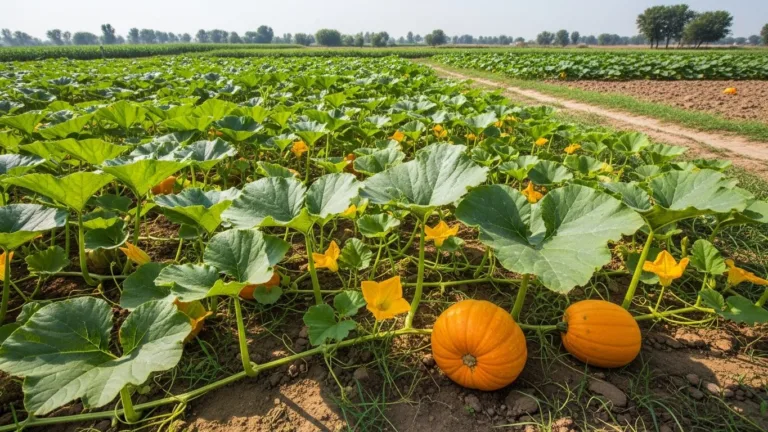
Week 3-6: Vegetative growth. Now the pumpkin plant really kicks into gear. It starts producing those large, distinctive leaves that everyone recognizes. The stem grows longer and longer, eventually turning into vines that spread across the ground. This is when the plant needs lots of sunlight, water, and nutrients from the soil. Think of it like a teenager going through a growth spurt, the plant is building all the structures it will need later to produce fruit.
Week 7-10: Flowering and pollination. This is when things get exciting. The plant produces bright yellow or orange flowers, and here’s something cool: pumpkin plants have both male and female flowers. The male flowers appear first, then the female flowers show up (you can tell them apart because female flowers have a tiny pumpkin-shaped swelling at their base). Bees and other insects visit the flowers, carrying pollen from male flowers to female flowers. Without this pollination, you don’t get pumpkins!
Week 11-16: Fruit development and ripening. After successful pollination, that tiny swelling at the base of female flowers starts growing into a pumpkin. At first, it’s small and green, but week by week it expands, sometimes adding several kilograms of weight each week. The pumpkin gradually changes color from green to orange (for most varieties) as it ripens. During this final stage, consistent watering is important, but too much water can cause the pumpkins to split or rot.
Common Mistakes Pakistani Farmers Make with Pumpkin Timing
Even experienced farmers sometimes mess up pumpkin planting schedules, so let’s talk about the most common timing mistakes and how to avoid them. Learning from other people’s errors is way easier than making all these mistakes yourself!
The biggest mistake is planting too early in winter. Some enthusiastic farmers think, “Hey, if February is good, then December must be even better, right?” Wrong! When you plant pumpkin seeds in December or early January in most parts of Pakistan, the soil is too cold. The seeds either won’t germinate at all, or they’ll sprout super slowly and the seedlings will be weak and sickly. Remember, pumpkins need that Goldilocks zone of warmth to get started.
Another common error is planting too late in spring. If you wait until April or May to plant pumpkins in central or southern Pakistan, you’re setting yourself up for trouble. Sure, the seeds will sprout quickly in the warm soil, but then your plants have to face the brutal summer heat of June and July while they’re still young and vulnerable. It’s like asking someone to run a marathon on their first day of training, the plants just aren’t ready for that kind of stress.
Many farmers also make the mistake of ignoring local weather patterns. They might follow a general guideline about “planting in February” without checking whether that specific February is unusually cold or if an early heatwave is predicted. Weather forecasts aren’t perfect, but they can give you valuable hints about whether to plant a week earlier or later than usual. Smart farmers, like those at Multanfarms.com, pay close attention to both traditional farming wisdom and modern weather predictions.
Finally, some people mess up by not thinking about their harvest timing. If you’re growing pumpkins for a specific market or purpose, you need to work backwards from when you need them ready. Want pumpkins for sale during winter holidays? Then you need to plant in the late summer season. Want them for early summer markets? Spring planting is your answer. It sounds obvious, but you’d be surprised how many people plant whenever they feel like it and then wonder why their harvest timing is all wrong.
Practical Tips for Successfully Growing Pumpkins in Pakistan
Okay, so you know when to plant pumpkins in Pakistan, but let’s talk about some practical strategies that will boost your chances of success. These are the kind of tips that separate farmers who get a few scraggly pumpkins from those who get abundant, healthy harvests.
First, prepare your soil ahead of time. Don’t wait until planting day to think about soil quality. At least two to three weeks before you plan to plant, work compost or well-rotted manure into your soil. Pumpkins are heavy feeders, which means they suck up lots of nutrients as they grow. Rich, well-prepared soil is like a fully stocked pantry, it gives your plants everything they need. The soil should also drain well because pumpkins hate having “wet feet” (constantly soggy roots).
Second, start with healthy seeds from reliable sources. Not all pumpkin seeds are created equal. Some varieties are better suited to Pakistan’s climate than others. Local varieties that have been grown in Pakistan for years are usually your safest bet because they’ve adapted to our conditions. When buying seeds, check that they’re fresh (seeds from the current or previous year) and store them in a cool, dry place until planting time.
Third, give your pumpkins plenty of space. This is crucial! Each pumpkin plant needs at least 2 to 3 meters of space in all directions. Yes, that’s a lot of room, but pumpkin vines spread out like crazy. If you crowd them together, the plants will compete for sunlight, water, and nutrients, and you’ll end up with smaller pumpkins or no pumpkins at all. Think of it like students taking a test, everyone needs their own desk space to do their best work.
Fourth, water deeply but not too frequently. Pumpkins need consistent moisture, especially during flowering and fruit development. But the trick is to water deeply (so the water reaches way down into the soil) rather than giving shallow, frequent waterings. Deep watering encourages roots to grow down deep, making plants more drought-resistant. Most farmers water pumpkins every 3 to 5 days, depending on weather conditions and soil type.
Why Understanding Growing Seasons Makes You a Smarter Consumer
At this point, you might be wondering why any of this matters if you’re not planning to become a farmer. Well, understanding pumpkin growing seasons actually makes you a smarter consumer and helps you appreciate the food you eat. Let me explain why this knowledge is valuable even if you never plant a single seed.
When you know that pumpkins are typically harvested in May-June or October-November in Pakistan, you can make better shopping decisions. Pumpkins bought during these peak harvest times are fresher, cheaper, and tastier than pumpkins bought off-season that might have been stored for months or imported from somewhere else. Fresh, locally grown pumpkins have better flavor and nutritional value, plus buying them supports local farmers like those at Multanfarms.com.
Understanding growing seasons also helps you appreciate the work that goes into your food. That pumpkin curry or pumpkin halwa you enjoy didn’t just magically appear. A farmer had to plant seeds at exactly the right time, water and care for the plants for three to four months, protect them from pests and diseases, and then carefully harvest the pumpkins at the perfect moment of ripeness. When you understand all that effort, you’re less likely to waste food and more likely to be grateful for what you have.
Plus, knowing about growing seasons connects you to the natural world and the changing seasons. In our modern lives with air conditioning and imported foods available year-round, it’s easy to lose touch with nature’s rhythms. But plants like pumpkins remind us that everything has its proper time. There’s something beautiful about eating foods when they’re naturally in season, when the weather and the plant’s life cycle line up perfectly.
Wrapping It All Up: Timing Is Everything for Pakistani Pumpkins
So what have we learned about pumpkin growing seasons in Pakistan? The key takeaway is that timing is absolutely critical for success. Plant too early or too late, and your pumpkins will struggle or fail completely. But plant during the sweet spot, either late winter to early spring (February-March) or late summer to early autumn (July-September), and you’re working with nature instead of against it.
We’ve also learned that Pakistan’s diverse climate means different regions have slightly different ideal planting times. What works in Multan might need adjustment for Peshawar or Karachi. Smart farmers pay attention to local conditions, traditional knowledge, and weather forecasts to pick the perfect moment to plant. They understand the pumpkin’s life cycle and make sure each stage of growth happens during favorable weather conditions.
Whether you’re dreaming of growing your own pumpkins, you’re curious about where your food comes from, or you simply want to understand Pakistani agriculture better, knowing about growing seasons opens up a whole new way of seeing the world around you. The next time you see a pile of orange pumpkins at the market, you’ll know exactly what time of year those seeds were planted and what kind of journey they took to get there.
So here’s my question for you: now that you understand when and why pumpkins are grown at specific times in Pakistan, will you pay more attention to seasonal foods? Will you try growing your own pumpkins using this knowledge? Or maybe you’ll just have a newfound appreciation for the farmers who time everythin