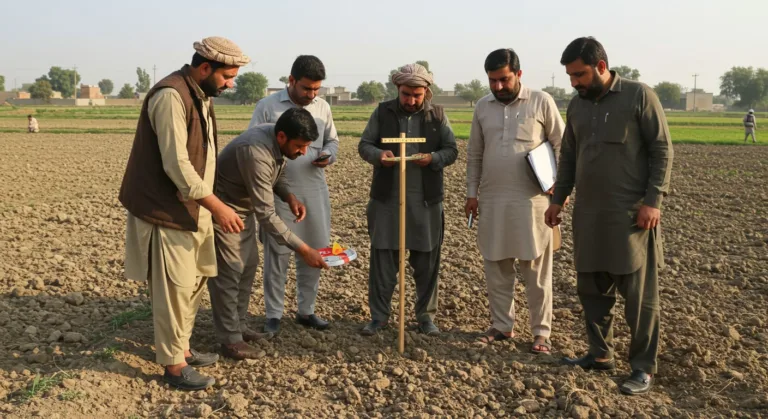
Have you ever noticed how your favorite fruits and vegetables appear in markets at certain times of the year? There’s a fascinating reason behind this timing that goes back thousands of years! Pakistani farmers don’t just randomly throw seeds in the ground and hope for the best. Instead, they follow an incredibly precise schedule that’s like nature’s own calendar, telling them exactly when to plant different crops for the best results.
Imagine if you had to plan your entire year’s meals based on when you could grow your own food. That’s exactly what farmers do, except they’re planning for millions of people! There are two principal crop seasons in Pakistan namely Kharif, with sowing beginning in April and harvest between October and December and Rabi beginning in October-December and ending in April-May. It’s like having two completely different school semesters, each with its own subjects and schedule.
By the time you finish reading this article, you’ll understand how Pakistani farmers use the changing seasons like a perfectly timed dance, planting different crops at exactly the right moments to feed the entire nation. Get ready to discover the amazing science behind Pakistan’s planting seasons!
The Great Seasonal Split: Kharif vs. Rabi Seasons
Pakistani farming is like having two different games with completely different rules, and farmers have mastered both! There are two main crop growing seasons in Pakistan. The winter crops (Rabi meaning spring) are sown during October-December and are harvested during March-April. Think of it like this: if farming were a sport, Pakistan would have both a summer league and a winter league, each with different star players.
Rabi crops are the winter warriors that love cool weather. Crops that are grown in the winter season, from November to April are called Rabi Crops. Some of the important rabi crops are wheat, barley, peas, gram and mustard. These crops are like students who study better in air-conditioned classrooms, they absolutely thrive when the weather is cool and comfortable.
Kharif crops, on the other hand, are the summer champions that need heat and monsoon rains to grow properly. Rice, sugar cane, cotton, maize and millet are Kharif crops, while wheat, gram, tobacco, [are Rabi crops]. Kharif crops, on the other hand, are sown in the monsoon season, between June to July, and harvested in the autumn season, between September to October. It’s like having friends who love swimming in summer while others prefer ice skating in winter, each crop has its perfect season!
The timing is absolutely crucial because these crops have evolved over thousands of years to work with Pakistan’s natural weather patterns. If you planted a Kharif crop during winter, it would be like trying to grow a sunflower in a freezer, it simply wouldn’t work!
The Summer Squad: Kharif Crops and Their Perfect Timing
The Kharif season is like nature’s own summer camp, where certain crops absolutely love the heat and humidity. The sowing season of summer crops (Kharif meaning autumn) is generally longer. It starts in February for sugarcane, March-May for cotton, June-July for rice and July-August for maize crop. Each crop has its own special enrollment date for this summer camp!
Sugarcane is the early bird that gets planted as early as February. Think of sugarcane as the student who shows up to summer camp before anyone else because it needs almost a full year to grow into those tall, sweet stalks we see towering over fields.
Cotton joins the party between March and May. Cotton plants are like teenagers who need warm weather to grow properly but don’t want it too hot too fast. They need time to establish their roots before the intense summer heat arrives.
Rice waits until June and July, timing its planting perfectly with the monsoon rains. In other regions like Maharashtra, the west coast of India, and Pakistan, which receive rains in June, Kharif crops are sown in May, June and July. Rice is like that friend who only wants to go swimming when the pool is perfectly warm, it needs lots of water to grow properly.
Maize is fashionably late to the Kharif party, getting planted in July and August. Maize doesn’t mind being the last to arrive because it grows quickly and can still catch up with the others by harvest time in autumn.
The Winter Warriors: Rabi Crops and Cool Weather Champions
While Kharif crops are soaking up summer sun, the Rabi crops are getting ready for their turn to shine during Pakistan’s cooler months. These crops are like athletes who perform better in cool weather, they actually need the winter temperatures to develop properly.
Wheat is the superstar of Rabi season and Pakistan’s most important food crop. Farmers plant wheat between October and December, and it grows slowly and steadily through the cool winter months. It’s like a marathon runner who paces themselves perfectly, wheat takes its time to build strong roots and then produces grain when the weather starts warming up in spring.
Barley, peas, gram, and mustard are wheat’s companions in the winter fields. These crops work together like a perfectly coordinated team, each one taking advantage of the cool temperatures and winter moisture to grow strong and healthy.
What’s really amazing is that these winter crops actually need the cold weather to trigger certain growth processes. It’s like how some people need a good night’s sleep to perform well the next day, these crops need cool temperatures to develop properly and produce the best yields.
The harvesting of Rabi crops happens during March and April, just as the weather starts getting warmer. It’s perfect timing because the crops have had months of ideal growing conditions and are ready to be harvested before the summer heat becomes too intense.
Regional Variations: Different Areas, Different Schedules
Pakistan is a huge country with different climate zones, so planting seasons can vary depending on where you live. This document provides a crop calendar for major crops grown in different provinces and regions of Pakistan. It lists the months when crops like wheat, cotton, sugarcane, rice, potato, onion, and maize are cultivated and harvested in Punjab, Sindh, KP, and Balochistan provinces. The calendar details varying cultivation and harvesting periods for each crop based on the region within each province.
Think of Pakistan like a giant school with different grades that start classes at slightly different times. Punjab, with its fertile plains, might plant wheat in November, while farmers in Balochistan’s mountainous areas might wait until December because their winter comes later and stays longer.
Sindh province, being closer to the coast, has a different climate pattern that affects when farmers can plant their crops. The coastal areas stay warmer longer, so some crops can be planted later than in the northern areas.
Khyber Pakhtunkhwa (KP), with its mountainous terrain, has unique microclimates where farmers might need to adjust their planting schedules based on altitude and local weather patterns. It’s like having different rules for the same game depending on which playground you’re using!
This regional variation is actually a strength for Pakistan because it means the country can produce food throughout different times of the year, ensuring a steady supply of fresh crops for the entire nation.
The Science Behind the Schedule: Why Timing Matters So Much
You might wonder why farmers can’t just plant whenever they want, but there’s serious science behind these planting schedules! These crops are dependent on the quantity of rainwater and specific temperature ranges to grow properly.
Temperature is like the thermostat setting for plant growth. Just as you need your bedroom to be the right temperature for a good night’s sleep, crops need specific temperature ranges to germinate, grow, and produce food. Kharif crops love temperatures between 25-35°C, while Rabi crops prefer cooler temperatures between 15-25°C.
Water availability is another crucial factor. The monsoon rains that arrive in June and July provide natural irrigation for Kharif crops, while Rabi crops rely on winter moisture and irrigation from Pakistan’s river systems.
Daylight hours also play a role. Some crops need longer days to flower and produce seeds, while others prefer shorter winter days. It’s like how some people are morning persons and others are night owls, different crops have different preferences for sunlight.
The amazing thing is that farmers have figured out these patterns through thousands of years of experience, long before modern science could explain why certain timing works best!
Modern Challenges and Smart Solutions
Even though Pakistani farmers have been following these seasonal patterns for generations, modern challenges like climate change are making them adapt their traditional schedules. It’s like when your favorite TV show changes its time slot, you have to adjust your schedule to keep watching!
Weather pattern changes sometimes mean that the monsoons arrive late or early, forcing farmers to be more flexible with their planting dates. Smart farmers now use weather forecasts and climate data to make better decisions about when to plant.
New crop varieties developed by agricultural scientists can sometimes grow in slightly different seasons than traditional varieties. It’s like having new apps on your phone that can do things the old apps couldn’t do.
Technology is helping farmers be more precise with their timing. Weather stations, soil sensors, and mobile apps now help farmers know exactly when conditions are perfect for planting their crops.
Despite these changes, the basic principle remains the same: working with nature’s rhythms rather than against them is still the key to successful farming in Pakistan.
Conclusion: Nature’s Perfect Symphony
Understanding Pakistan’s planting seasons reveals something beautiful about the relationship between humans and nature. For thousands of years, Pakistani farmers have learned to dance with the seasons, planting different crops at exactly the right times to create a year-round supply of food for the nation.
The next time you eat wheat bread, rice, or cotton clothes, remember that they all started as seeds planted at precisely the right moment according to Pakistan’s ancient seasonal wisdom. These planting seasons represent one of humanity’s greatest achievements: learning to work with natural cycles to feed entire populations.
Have you ever thought about what it would be like to plan your entire year around the changing seasons like farmers do? What do you think would be the most challenging part of timing your crops perfectly with Pakistan’s climate patterns?