Have you ever carved a jack-o-lantern for Halloween or tasted delicious kaddu ka halwa at a family dinner? If so, you’ve experienced the wonder of pumpkins! These big, orange vegetables (yes, they’re technically vegetables, even though many people think they’re fruits) are pretty amazing when you think about it. A tiny seed can grow into a massive plant that produces pumpkins weighing anywhere from a few pounds to over 100 pounds. That’s heavier than most kids your age!
But here’s something interesting: while pumpkins are super popular in Western countries during fall, they grow at completely different times in Pakistan. The weather patterns, seasons, and farming traditions in Pakistan create a unique pumpkin-growing schedule that might surprise you. If you’ve ever wondered when farmers in Pakistan plant and harvest these orange giants, or why you see fresh kaddu (that’s what we call pumpkin in Urdu) at certain times of the year, you’re about to find out!
In this article, we’re going to explore everything about pumpkin season in Pakistan. You’ll learn when these vegetables grow best, why Pakistani weather is perfect for them during certain months, and how farmers like those at Multanfarms.com successfully grow these versatile vegetables. By the end, you’ll have a whole new appreciation for that kaddu sitting in your kitchen!
Understanding Pakistan’s Weather and Pumpkin Growing
Before we dive into when pumpkins grow, let’s talk about Pakistan’s weather patterns. Unlike countries that have four distinct seasons, Pakistan basically has three main seasons: winter (November to February), summer (March to June), and monsoon (July to September). Each season brings different temperatures, rainfall amounts, and growing conditions for crops.
Pumpkins are what farmers call “warm-season crops,” which means they love warm weather but not extreme heat. Think of pumpkins like that friend who enjoys sunny days but complains when it gets too hot. They need temperatures between 18°C and 30°C to grow their best. Too cold, and the seeds won’t even sprout. Too hot, and the plants get stressed and stop producing good pumpkins.
This is why timing is everything when it comes to pumpkin season in Pakistan. Farmers have to plan their planting so that the pumpkins are growing during months with just the right temperature. It’s kind of like Goldilocks and the three bears, but instead of porridge, we’re talking about weather that’s “just right” for pumpkins!
When Pakistani Farmers Plant Pumpkin Seeds
In Pakistan, there are actually two main pumpkin growing seasons, and they vary depending on which part of the country you’re in. Let’s break this down so it makes sense.
The Spring Planting Season happens from late January through March in most parts of Pakistan. During these months, winter is ending and temperatures are starting to warm up. Farmers plant pumpkin seeds in their fields, and the plants grow through spring and early summer. By the time May and June roll around, these pumpkins are ready to harvest. This spring planting season is especially popular in Punjab and upper Sindh, where winters aren’t too harsh and spring comes a bit earlier.
The Monsoon Planting Season is the second opportunity for growing pumpkins. This happens from June through early August in many regions. Now, you might be thinking, “Wait, isn’t that when it’s super hot or rainy?” You’re absolutely right! But here’s the clever part: farmers plant the seeds just as the monsoon rains are beginning. The rain provides natural irrigation (that means watering the plants), and by the time the pumpkins are really growing big, it’s autumn (September through November), which has perfect weather for pumpkin development.
The monsoon planting season is particularly important in areas like Khyber Pakhtunkhwa and parts of Balochistan, where the summer heat is more intense but the autumn weather is absolutely ideal for pumpkins. These pumpkins are usually ready to harvest from September through November.
The Perfect Conditions for Pakistani Pumpkins
So what exactly do pumpkins need to grow successfully in Pakistan? Let’s imagine you’re a pumpkin plant (stick with me here, this will help you understand!). What would you want?
First, you’d want plenty of sunshine. Pumpkin plants are sun-worshippers, they need at least 6-8 hours of direct sunlight every day. Lucky for them, Pakistan has abundant sunshine most of the year! The long, sunny days help the pumpkin plants create energy through photosynthesis, which they use to grow bigger leaves, longer vines, and eventually, those big orange pumpkins.
Second, you’d want consistent watering but not too much. Pumpkin roots don’t like sitting in waterlogged soil, it’s like how your feet feel uncomfortable if you stand in a puddle for too long. Pakistani farmers have mastered the art of irrigation timing. During the spring growing season, they water regularly since there’s less rain. During the monsoon season, nature does most of the work, but farmers still need to make sure water drains properly so the roots don’t rot.
Third, you’d want rich, fertile soil. Pumpkins are what farmers call “heavy feeders,” meaning they suck up lots of nutrients from the soil. Pakistani agricultural areas, especially in Punjab’s canal-irrigated regions and the fertile plains of Sindh, have soil that’s perfect for growing pumpkins. Many farms, including Multanfarms.com, prepare their soil by adding organic matter like compost before planting, which gives pumpkins all the nutrients they need.
Different Pumpkin Varieties Grown in Pakistan
Not all pumpkins are the same! Just like there are different types of mangoes (Sindhri, Chaunsa, Anwar Ratol), there are different varieties of pumpkins grown in Pakistan, and each has its own special characteristics.
Desi Kaddu is the most common variety you’ll find in Pakistani markets. These pumpkins are usually medium-sized, with deep orange flesh and a slightly sweet taste. They’re perfect for making traditional dishes like kaddu ka salan (pumpkin curry) or kaddu ka halwa (sweet pumpkin dessert). Desi kaddu plants are tough and adapted to Pakistani conditions after generations of farming, making them reliable producers.
Bottle-shaped pumpkins are another popular variety, especially in rural areas. These look different from the round pumpkins you might imagine. They’re long and curved, kind of like a bottle or a large butternut squash. These varieties are particularly popular during the autumn harvest season.
Hybrid varieties have become more common in recent years. These are pumpkins that have been specially developed to resist diseases, produce more fruit, or grow in specific conditions. Some Pakistani farmers are experimenting with these varieties to improve their yields (that means getting more pumpkins from the same amount of land).
What’s really cool is that different regions of Pakistan often prefer different varieties. What’s popular in Lahore might be different from what farmers grow in Peshawar or Quetta. It’s like how different cities have their own favorite styles of biryani!
How Long Does It Take for Pumpkins to Grow?
If you planted a pumpkin seed today, how long would you have to wait before you could harvest a big, ripe pumpkin? The answer depends on the variety, but most pumpkins take between 90 to 120 days to grow from seed to harvest. That’s roughly 3 to 4 months!
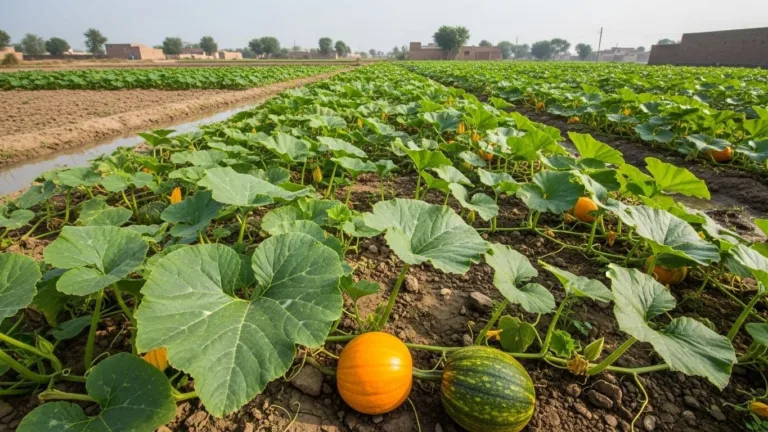
Here’s how the growth process works: In the first two weeks after planting, the seed germinates (sprouts) underground and sends up its first leaves. During weeks 3-6, the plant focuses on growing lots of big leaves and long vines. These vines can spread out 10-15 feet in all directions, taking up a lot of space! This is why pumpkins need room to grow.
Around week 7 or 8, something magical happens. The plant starts producing big, yellow-orange flowers. Some of these flowers are male and some are female (yes, plants have genders too!). Bees and other insects visit the flowers and transfer pollen from male flowers to female flowers. When a female flower gets pollinated, it starts growing a tiny pumpkin at its base. You can actually watch these baby pumpkins grow bigger every single day!
From weeks 8-15, those tiny pumpkins grow and grow and grow. They start out green and gradually turn orange as they ripen. During this time, the plant sends all its energy into making the pumpkins as big and healthy as possible. By the time harvest comes around (weeks 13-17, depending on variety), you’ve got full-sized, ripe pumpkins ready to pick!
The Harvest Season and What Happens to Pakistani Pumpkins
Depending on when they were planted, pumpkins in Pakistan are harvested during two main periods: May-June for spring-planted pumpkins, and September-November for monsoon-planted pumpkins. The autumn harvest (September-November) is usually the bigger of the two, which is why you often see more kaddu in markets during these months.
Harvesting pumpkins isn’t as simple as just picking them. Farmers have to check several things to know if a pumpkin is ready. The skin should be hard (if you can’t easily dent it with your fingernail, it’s ready), the color should be deep and uniform, and the stem should be starting to dry out. If farmers harvest too early, the pumpkins won’t taste as good and won’t store well. If they wait too long, the pumpkins might start rotting in the field.
Once harvested, these pumpkins go on quite a journey. Some are sold fresh in local markets within days of harvest. Others are sent to larger cities through Pakistan’s extensive vegetable distribution network. Farms like Multanfarms.com often sell directly to consumers, ensuring that fresh, high-quality pumpkins reach people’s homes quickly.
One interesting thing about pumpkins is that they can be stored for a surprisingly long time if kept in the right conditions. In a cool, dry place, whole pumpkins can last for 2-3 months! This is why you might see kaddu available in markets even during months when they’re not being actively harvested. Farmers and vendors store them to extend the season.
Why Pumpkin Season Matters for Pakistan
You might wonder why it’s important to know about pumpkin season. Well, pumpkins play a bigger role in Pakistan’s agriculture and food system than you might think! They’re not just about making delicious kaddu ka halwa (though that’s definitely important).
From a farming perspective, pumpkins are what agricultural experts call a “cash crop” for many small farmers. They can earn good money from pumpkin harvests, which helps support their families. Pumpkins also improve soil health because their large leaves shade the ground, preventing erosion and keeping the soil moist. After harvest, farmers often turn the leftover pumpkin vines and leaves back into the soil, which adds organic matter and nutrients for the next crop.
Nutritionally, pumpkins are powerhouses. They’re loaded with vitamin A, which is great for your eyesight and immune system. They also contain fiber, potassium, and antioxidants. In a country like Pakistan, where making sure everyone has access to nutritious food is important, pumpkins provide an affordable and healthy option for millions of families.
There’s also a cultural aspect. Pumpkin dishes are part of Pakistani cuisine traditions, passed down through generations. Whether it’s kaddu gosht (pumpkin with meat), kaddu ki sabzi (pumpkin vegetable curry), or sweet kaddu ka halwa, these recipes connect us to our culinary heritage.
Growing Pumpkins at Home in Pakistan
Feeling inspired to grow your own pumpkins? The good news is that pumpkins can be grown in home gardens if you have enough space! Remember, pumpkin vines spread out a lot, so you’ll need at least a 10×10 foot area. If you have a rooftop garden or a backyard, you’re all set.
The best time to plant pumpkin seeds for a home garden in most parts of Pakistan is either late February (for a summer harvest) or late June (for an autumn harvest). Plant seeds about an inch deep in soil that drains well. Make sure the spot gets full sunlight all day. Water regularly but don’t overwater, the soil should be moist but not soggy.
As your pumpkin plant grows, you’ll need to give it some care. Pull out any weeds that compete for nutrients, and watch for common pests like aphids or squash bugs. If you see the big yellow flowers, that’s a good sign! Just be patient, remember that it takes 3-4 months to get harvestable pumpkins.
Even if you don’t have space to grow pumpkins yourself, supporting local farmers who do is just as important. When you buy pumpkins from local sources like Multanfarms.com or your neighborhood vegetable vendor during peak season (May-June or September-November), you’re getting the freshest product while supporting Pakistani agriculture.
Wrapping Up the Pumpkin Story
So there you have it, the complete story of pumpkin season in Pakistan! These remarkable vegetables have two growing seasons thanks to our country’s unique climate, with planting happening in spring or early monsoon and harvests in early summer or autumn. Pakistani farmers have mastered the art of growing pumpkins in our specific weather conditions, giving us fresh, nutritious kaddu throughout much of the year.
The next time you see pumpkins at the market or taste a delicious pumpkin dish, you’ll know exactly what went into producing it. You’ll understand that farmers carefully timed their planting to match our weather patterns, that the pumpkins took three to four months to grow from tiny seeds into the vegetables on your plate, and that Pakistan’s soil and sunshine created the perfect conditions for these orange wonders to thrive.
Have you ever thought about where your food comes from before it reaches your plate? Now that you know about pumpkin season in Pakistan, maybe you’ll start noticing the seasons for other vegetables too. Who knows, you might even be inspired to grow something yourself!