Have you ever sliced open a beetroot and been amazed by its deep, rich purple color? That vibrant vegetable staining your cutting board isn’t just beautiful, it’s also packed with nutrients and flavor. But here’s something you might not know: getting those perfect, sweet beetroots to your table requires planting them at exactly the right time. In Pakistan, beetroot has a special growing season, and understanding it can make the difference between a thriving garden and a disappointing harvest.
Beetroot, also called “chukandar” in Urdu, is one of Pakistan’s favorite winter vegetables. You’ll find it in salads, juices, and even traditional recipes across the country. But beetroot is pretty picky about when it wants to grow. Plant it at the wrong time, and you might end up with tiny, bitter roots that nobody wants to eat. Plant it during the perfect season, and you’ll get plump, sweet beetroots that are absolutely delicious.
At Multanfarms.com, we’ve learned that timing is everything when it comes to growing vegetables successfully. Whether you’re dreaming of starting your own garden, curious about where your food comes from, or just want to understand agriculture better, knowing about beetroot’s growing season in Pakistan will give you some pretty cool insights. Let’s explore when and why beetroot thrives in Pakistan’s unique climate!
What Makes Beetroot Season Special in Pakistan?
Pakistan’s beetroot season is all about cool weather and perfect timing. Unlike some vegetables that love the blazing heat of summer, beetroot is what farmers call a “cool-season crop.” This means it grows best when temperatures are mild and comfortable, kind of like how you probably prefer studying in a cool, air-conditioned room rather than in scorching heat.
The ideal beetroot season in Pakistan runs from October to February. This period matches up perfectly with Pakistan’s autumn and winter months when the weather cools down after the intense summer heat. During these months, daytime temperatures typically range from 15°C to 25°C (59°F to 77°F), which is basically beetroot paradise!
Why does beetroot love this cooler weather so much? Well, when temperatures are too hot, beetroot plants get stressed. Instead of developing those nice, round, juicy roots underground, they focus all their energy on growing leaves and trying to survive the heat. It’s like when you’re too hot to think straight, you can’t do your best work either. But when the weather is cool and pleasant, beetroot plants relax and put their energy into growing those delicious roots we love to eat.
Here’s something really interesting: different regions of Pakistan have slightly different beetroot seasons because of their varying climates. In Punjab and Sindh, where it gets pretty hot, farmers typically plant beetroot from October onwards. But up in the northern areas where it’s naturally cooler, farmers can sometimes start a bit earlier or extend the season a little longer.
How Do Farmers Know When to Plant Beetroot?
Timing your beetroot planting is like catching a bus, if you’re too early or too late, you’ll miss your ride! Farmers in Pakistan use several clues to know when beetroot season has arrived.
The most important factor is soil temperature. Beetroot seeds need soil temperatures between 10°C to 30°C (50°F to 86°F) to germinate, which is a fancy word for when seeds sprout and start growing. Professional farmers often use soil thermometers to check if conditions are right, but experienced farmers can often tell just by feeling the soil and watching nature’s other signs.
Another indicator is the monsoon season ending. Pakistan’s monsoon rains usually wrap up by September, and farmers wait for the soil to dry out a bit before planting beetroot. Too much water can cause seeds to rot before they even get a chance to sprout. It’s like trying to start a campfire with soaking wet wood, it just won’t work!
Smart farmers at operations like Multanfarms.com also pay attention to the length of daylight. As days get shorter in autumn and winter, it signals to plants that cooler weather is coming. Beetroot actually responds well to these shorter days, using them as a cue that it’s time to grow roots rather than flowers.
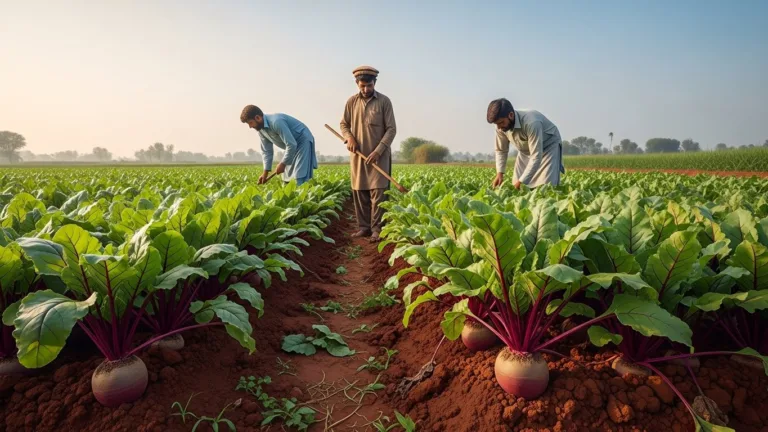
The planting process itself is pretty straightforward. Farmers prepare the soil by making it loose and adding organic matter like compost, which helps the beetroot roots grow nice and straight. Then they plant seeds about 1-2 centimeters deep in rows, spacing them carefully so each plant has room to develop. Within 7-14 days, if conditions are right, tiny green shoots start popping up from the soil!
What Happens During the Growing Season?
Once beetroot is planted during its perfect season, it goes through some fascinating stages of growth. The entire journey from seed to harvest takes about 55-70 days, which is roughly two to two and a half months. That’s faster than many other vegetables!
The First Two Weeks are all about getting established. The seed sprouts, and small green leaves emerge from the soil. At this stage, the plants look tiny and delicate, but underground, roots are starting to form. Farmers need to make sure the soil stays moist but not waterlogged during this crucial period.
Weeks Three to Five are when things get interesting. The beetroot plant develops its distinctive dark green or reddish leaves, and the root starts swelling underground. This is when the actual beetroot bulb begins to form. If you gently brushed away the soil at this point, you’d see a small, marble-sized root starting to develop.
Weeks Six to Eight are the bulking stage. This is when the magic really happens! The root rapidly increases in size, storing up all the sugars and nutrients that make beetroot so tasty and nutritious. The leaves above ground are working overtime through photosynthesis, converting sunlight into energy that gets stored in the root below. Think of it like a plant version of filling up a piggy bank, except instead of coins, it’s storing nutrients!
Throughout the season, farmers need to take care of their beetroot crop. This includes regular watering (beetroot needs consistent moisture), removing weeds that compete for nutrients, and watching out for pests. In Pakistan’s winter climate, pests are usually less of a problem than in summer, which is another reason this season is perfect for beetroot.
Why Does Season Timing Affect Beetroot Quality?
You might wonder if it really matters that much when you plant beetroot. Can’t you just grow it whenever you want? Well, not if you want good results! The season dramatically affects how your beetroot turns out.
Beetroot planted in the correct season develops properly, with sweet, tender roots that have that deep purple-red color everyone loves. The cool weather allows the plant to slowly and steadily develop, which results in better flavor. It’s similar to how slow-cooked food often tastes better than something rushed in the microwave!
Beetroot planted too early, when it’s still hot, faces multiple problems. The heat stresses the plant, causing the roots to become woody and tough instead of tender and juicy. The beetroots often stay small and develop a bitter taste. They might also “bolt,” which means they start flowering and producing seeds instead of growing nice roots. Once a beetroot bolts, the root becomes basically inedible.
Beetroot planted too late, when winter is almost over and temperatures start rising again, also struggles. If the plant hasn’t matured by the time hot weather arrives, it will face the same problems as being planted too early. That’s why farmers plan carefully to make sure their beetroot will be ready to harvest before the weather gets warm again.
Temperature fluctuations also matter. Beetroot can handle light frost, which actually makes the roots even sweeter (cold temperatures cause the plant to convert starches into sugars, kind of like natural candy-making!). However, hard freezes can damage the crop. Pakistan’s winter rarely gets cold enough for hard freezes in most beetroot-growing regions, which is perfect.
Where in Pakistan Grows the Best Beetroot?
Pakistan’s diverse geography means different regions excel at growing beetroot during slightly different times, but all within that general October-to-February window.
Punjab, especially areas around Lahore, Faisalabad, and Multan, is one of the major beetroot-producing regions. The province’s winter climate is ideal, with cool but not freezing temperatures. Farmers here typically start planting in late October or early November and harvest through January and February. The fertile soil of Punjab’s agricultural heartland also helps produce high-quality beetroots.
Sindh, particularly the areas around Karachi and Hyderabad, also grows significant amounts of beetroot. The coastal influence keeps temperatures moderate during winter, creating
Claude is AI and can make mistakes.
Please double-check responses.