Have you ever bitten into a fresh piece of naan bread or enjoyed a warm roti with your dinner? If you live in Pakistan or have tried Pakistani food, you’ve probably eaten wheat in some form almost every single day. Wheat is like the superstar grain of Pakistan, it’s everywhere! But here’s a question that might surprise you: where does Pakistan actually rank when it comes to producing wheat compared to the rest of the world?
Pakistan is actually one of the biggest wheat producers on the planet! That’s right, this country grows massive amounts of wheat every single year, feeding millions of people both at home and sometimes even abroad. Understanding Pakistan’s wheat production ranking isn’t just about numbers and statistics, it’s about understanding how a country feeds its people and contributes to global food security.
In this article, you’ll discover exactly where Pakistan stands in the wheat production rankings, why wheat is so incredibly important to the country, what challenges farmers face, and what the future might hold. At Multanfarms.com, we’re passionate about agriculture and helping people understand the amazing world of farming. So let’s dig into this fascinating topic!
Pakistan’s Global Ranking: The Numbers That Matter
So where exactly does Pakistan rank in wheat production? Pakistan consistently ranks as the 8th largest wheat producer in the world! That’s pretty impressive when you think about it. Out of nearly 200 countries on Earth, Pakistan is in the top ten for growing this essential grain. The country produces around 26 to 27 million metric tons of wheat each year, though this number can go up or down depending on weather conditions and other factors.
To put this in perspective, imagine if all the wheat Pakistan produces in one year was turned into bread. You could make enough loaves to give every person on Earth several loaves each! The top wheat producers include giants like China (which produces the most), India, Russia, and the United States. Pakistan holds its own among these agricultural powerhouses, which is no small achievement.
What makes this ranking even more interesting is that Pakistan isn’t just producing wheat, it’s consuming most of it too. Unlike some countries that grow wheat mainly to export it, Pakistan grows wheat primarily to feed its own population of over 230 million people. Wheat is the staple food for most Pakistani families, making this production absolutely crucial for the nation’s food security.
Why Wheat Rules Pakistan’s Agricultural Scene
You might be wondering, why is wheat such a big deal in Pakistan anyway? Well, wheat isn’t just another crop here, it’s the backbone of the country’s food system. About 70% of Pakistan’s population relies on wheat as their main source of calories and nutrition. It’s used to make roti, naan, chapati, and countless other foods that appear on dinner tables every single day.
Pakistan’s climate and geography make it surprisingly well-suited for wheat cultivation. The country has fertile plains, especially in Punjab and Sindh provinces, where wheat grows beautifully during the cooler months from November to April. Think of these areas as nature’s perfect wheat-growing machines, with the right soil, water from rivers, and temperatures that wheat plants absolutely love.
Wheat farming also supports millions of families across Pakistan. About 70% of Pakistan’s labor force works in agriculture, and wheat farming is a huge part of that. When you buy wheat products at the market, you’re not just buying food, you’re supporting families of farmers, truck drivers, mill workers, and shopkeepers. It’s like a giant chain that connects everyone together.
The Regions Where Wheat Magic Happens
Not all of Pakistan grows wheat equally. The real wheat champion is Punjab province, which produces about 75% of all the wheat grown in Pakistan! Punjab’s fertile soil and access to irrigation from the Indus River system make it the country’s breadbasket. Cities and districts like Faisalabad, Multan, Sahiwal, and many others have vast wheat fields that stretch as far as the eye can see during the growing season.
Sindh province comes in second, contributing about 12-15% of national wheat production. The southern parts of Sindh have irrigation systems that allow farmers to grow healthy wheat crops. Khyber Pakhtunkhwa and Balochistan provinces also grow wheat, though in smaller quantities due to different climate conditions and less available irrigation water.
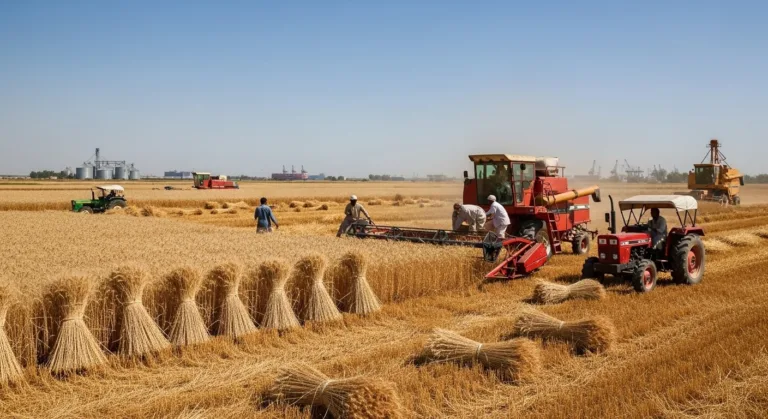
At Multanfarms.com, located in Multan, we’re right in the heart of Pakistan’s wheat-growing region! Multan and the surrounding areas are known for their rich agricultural tradition. Driving through these areas during wheat season, you’ll see field after field of golden wheat swaying in the breeze, it’s truly beautiful and shows the hard work of thousands of dedicated farmers.
Challenges That Keep Farmers Up at Night
Growing enough wheat to feed over 230 million people isn’t easy. Pakistani wheat farmers face several serious challenges that can affect how much wheat gets produced each year. One of the biggest problems is water scarcity. Wheat needs consistent water, especially during key growing periods. But with climate change and competing demands for water, farmers sometimes struggle to irrigate their crops properly.
Another major challenge is outdated farming techniques. While some farmers use modern methods and machinery, many still rely on traditional practices that aren’t as efficient. Imagine trying to compete in a race while everyone else has newer, faster equipment, that’s what it’s like for farmers without access to modern seeds, fertilizers, and machinery.
Pests and diseases also threaten wheat crops. Tiny insects and plant diseases can destroy entire fields if not managed properly. It’s like when one person gets sick at school and suddenly half the class catches the same cold, except with wheat, the consequences mean less food for everyone. Weather extremes, including unexpected rain, hail, or heat waves at the wrong time, can also damage crops and reduce yields dramatically.
How Pakistan Compares to Its Neighbors
Let’s zoom out and see how Pakistan’s wheat production compares to nearby countries. India, Pakistan’s neighbor to the east, is actually the 2nd largest wheat producer in the world, producing around 107 million metric tons annually. That’s about four times more than Pakistan! India has more land, more farmers, and has invested heavily in agricultural technology over the decades.
Looking west, Afghanistan produces much less wheat, around 5 million metric tons per year. Iran produces roughly 14-16 million metric tons. So Pakistan produces significantly more wheat than these neighbors, but considerably less than India. It’s kind of like comparing test scores in a class, everyone’s at different levels based on their resources and circumstances.
What’s interesting is that despite producing less than India, Pakistan actually has higher wheat consumption per person. This means Pakistani people eat more wheat-based foods in their daily diet compared to Indians, who have more dietary diversity including rice and other grains. This makes Pakistan’s wheat production even more critical for feeding its population.
The Future: Can Pakistan Climb Higher in the Rankings?
So what does the future hold for Pakistan’s wheat production? There’s definitely room for improvement and growth! Many agricultural experts believe that with the right investments and policies, Pakistan could significantly increase its wheat yields and possibly move up in the global rankings.
Modern technology is one key to unlocking better wheat production. Things like precision agriculture (using technology to apply water and fertilizer more efficiently), better quality seeds, and improved farming techniques could help farmers grow more wheat on the same amount of land. It’s like upgrading from a flip phone to a smartphone, the possibilities expand dramatically!
Climate-smart agriculture is also becoming super important. Scientists are developing wheat varieties that can tolerate heat, drought, and diseases better than traditional varieties. Farmers who adopt these new seeds and learn to adapt to changing climate conditions will be better positioned to maintain and increase their production. At Multanfarms.com, we’re excited about these innovations and believe they’ll help secure Pakistan’s food future.
Government support and policies play a huge role too. When the government provides farmers with fair prices for their wheat, access to credit for buying equipment, and support for irrigation infrastructure, farmers can invest in their farms and produce more. It’s a team effort between farmers, scientists, businesses, and policymakers.
Why You Should Care About Wheat Rankings
You might be thinking, “Okay, this is interesting, but why should I really care about where Pakistan ranks in wheat production?” Here’s the thing: wheat production affects your daily life more than you might realize. When Pakistan produces a good wheat harvest, bread prices stay stable or even go down. When harvests are poor, prices go up, and families have to spend more money on basic food.
Food security is also about national security and stability. Countries that can’t feed their own people face serious problems, including hunger, poverty, and social unrest. Pakistan’s strong wheat production helps ensure that most people have access to affordable, nutritious food. That’s something worth celebrating and protecting!
Understanding agriculture also helps you appreciate where your food comes from. The next time you enjoy a piece of roti, you’ll know it came from wheat fields in Punjab or Sindh, grown by hardworking farmers, processed in mills, and delivered to your local market. Every bite connects you to this amazing agricultural story.
Your Connection to Pakistan’s Wheat Story
Pakistan’s ranking as the 8th largest wheat producer in the world is something to be proud of, but it’s also a reminder of the ongoing challenges and opportunities in agriculture. From the fertile fields of Punjab to the markets where you buy your daily bread, wheat connects millions of lives across the country. The ranking isn’t just a number, it represents the hard work of countless farmers, the ingenuity of agricultural scientists, and the importance of food security for a growing nation.
As Pakistan continues to develop and modernize, its wheat production will play a crucial role in feeding its people and potentially even contributing more to global food supplies. With climate change, population growth, and technological advances all shaping the future of farming, Pakistan’s wheat story is far from finished. Who knows? Maybe in the coming years, Pakistan could climb even higher in those global rankings!
So the next time you sit down for a meal, take a moment to think about the wheat on your plate and the incredible journey it took to get there. What role do you think you could play in supporting Pakistan’s agricultural future?