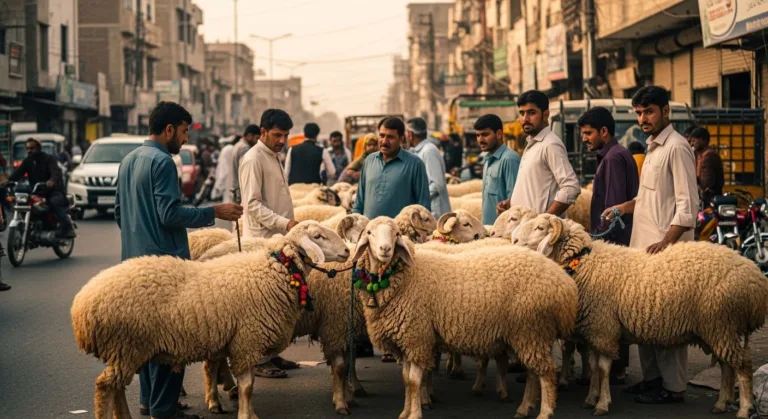
If you’ve ever visited Karachi during Eid al-Adha, you’ve probably seen something pretty amazing. The streets come alive with the sounds of bleating sheep, and neighborhoods transform into temporary livestock markets. But have you ever stopped to wonder why sheep are such a huge part of Karachi’s culture and economy? It’s not just about the religious celebrations, there’s actually a fascinating story behind the sheep trade in Pakistan’s biggest city.
Karachi, with its population of over 16 million people, creates an enormous demand for sheep, especially during festival seasons. From the bustling cattle markets to the farms in nearby regions like Multan that supply these animals, the whole system is like a well-oiled machine. Let’s explore why sheep matter so much to Karachi, where they come from, and what makes this trade so interesting.
The Festival Connection: More Than Just a Celebration
You might already know that Eid al-Adha, also called the “Festival of Sacrifice,” is one of the most important Islamic holidays. During this time, families purchase sheep (or goats, cows, and camels) to sacrifice as part of their religious observance. But here’s what makes Karachi special: the sheer scale is mind-blowing.
During the weeks leading up to Eid, Karachi’s livestock markets, called “maweshi mandis,” pop up all across the city. These aren’t small operations. We’re talking about massive temporary markets where hundreds of thousands of sheep are bought and sold. Families spend days selecting the perfect animal, looking at everything from the sheep’s size and health to the quality of its wool. It’s kind of like shopping for the family car, except it’s a sheep!
The economic impact is enormous. Sellers come from all over Pakistan, bringing their best livestock to get the highest prices. For many farming families, the money they make during this season helps support them for the entire year. It’s their big payday, and they prepare for it months in advance.
Where Do All These Sheep Come From?
Here’s where places like Multan become super important. Multan, located in Punjab province, is one of Pakistan’s major agricultural regions and a significant supplier of livestock to cities like Karachi. The journey these sheep take is actually pretty incredible.
Farmers in areas like Multan raise sheep throughout the year, carefully managing their flocks to ensure they’re healthy and ready for market season. They focus on breeding programs to produce sheep with desirable traits, like good size, healthy coats, and strong builds. Think of it like how plant breeders develop the juiciest tomatoes or the crunchiest apples. These farmers are experts at raising quality livestock.
When market season approaches, the sheep begin their journey to Karachi. Some travel by truck on long highway trips, while others might arrive by train. The logistics are complicated because you’re moving living animals that need food, water, and care during transport. It’s like organizing a field trip for thousands of very woolly students who can’t sit still!
Multanfarms.com represents the kind of modern farming operation that supplies sheep to major markets. These farms use a combination of traditional knowledge passed down through generations and newer techniques to raise healthy, high-quality sheep that meet market demands.
The Economics: It’s All About Supply and Demand
Let’s talk money for a second, because the sheep trade in Karachi is a massive business. During peak season, a single sheep can sell for anywhere from 20,000 to over 100,000 Pakistani Rupees, depending on its size, breed, and quality. That’s a serious chunk of change!
The price isn’t random, it follows the basic economic principle of supply and demand. As Eid approaches, demand skyrockets because millions of people want to buy sheep. When demand goes up and supply stays the same, prices rise. It’s the same reason concert tickets for your favorite band cost more on the day of the show than they do months in advance.
But here’s the interesting part: farmers and traders have to predict demand months ahead of time. They need to decide how many sheep to raise, what breeds to focus on, and when to bring them to market. If they guess right, they make good profits. If they guess wrong, they might lose money. It’s like a high-stakes guessing game based on years of experience and market knowledge.
Different Breeds for Different Needs
Not all sheep are created equal, and Karachi’s markets reflect this diversity. Pakistan has several local sheep breeds, each with its own characteristics. The Kajli breed, for example, is known for its size and is popular in central Punjab. The Lohi breed is famous for its excellent meat quality and adaptability to different climates.
Why does breed matter? Well, different families have different preferences. Some want larger animals because they’re feeding extended family gatherings. Others prefer specific breeds because of tradition or because they believe certain breeds taste better. It’s similar to how some people prefer certain types of apples, some like Granny Smith for their tartness, while others want the sweetness of a Honeycrisp.
Farmers who understand these preferences can target their breeding programs accordingly. If they know Karachi buyers prefer larger sheep, they’ll focus on breeds and feeding programs that produce bigger animals. It’s all about knowing your customer!
The Modern Market: Technology Meets Tradition
You might think the sheep trade is all old-school, but you’d be surprised. Modern technology has changed how the business works. Nowadays, many buyers and sellers use social media and online platforms to advertise their animals before they even reach the market. You can scroll through Facebook or WhatsApp groups and see pictures of sheep for sale, complete with prices and contact information.
Some farmers even post videos showing their sheep running around, proving they’re healthy and active. It’s like online shopping, except instead of adding sneakers to your cart, you’re checking out a woolly sheep! This helps buyers from Karachi connect with sellers from places like Multan without having to travel long distances first.
Payment systems have also modernized. While cash is still king in the livestock markets, mobile banking and digital payments are becoming more common. This makes large transactions safer and more convenient for everyone involved.
Health and Care: Keeping the Flock Healthy
Here’s something really important: raising healthy sheep takes serious knowledge and effort. Farmers need to understand animal nutrition, disease prevention, and proper care techniques. A sick sheep won’t sell well, and disease can spread through a flock quickly, causing major financial losses.
Veterinary care plays a crucial role. Farmers work with vets to vaccinate their sheep against common diseases and to treat any health problems that come up. It’s similar to how you visit the doctor for checkups and vaccines, sheep need that too! Before the animals head to markets in Karachi, they usually get health inspections to ensure they meet basic standards.
The quality of care a sheep receives directly affects its market value. Well-fed, healthy sheep with shiny coats and good body condition will command premium prices. Buyers can spot a well-cared-for animal from across the market, just like you can tell the difference between a fresh apple and one that’s been sitting around too long.
Beyond the Festival: Year-Round Importance
While Eid al-Adha is definitely peak season, sheep are important to Karachi’s economy year-round. The city has a constant demand for mutton (sheep meat) from its restaurants, hotels, and households. This steady demand means there’s always a market, even if prices aren’t as high as during festival season.
Wool is another product, though it’s less emphasized in Pakistan’s hot climate compared to colder countries. Still, some sheep breeds produce wool that gets used in local textile industries. Every part of the animal has value, from the meat to the hide to the organs, nothing goes to waste.
This year-round trade creates permanent jobs for transporters, market workers, butchers, and many others. The sheep industry supports thousands of families across the supply chain, from rural farms to urban markets.
The Environmental Angle: Sustainability Matters
Here’s something you might not have thought about: raising livestock affects the environment. Sheep need grazing land, water, and feed. How farmers manage these resources determines whether their operations are sustainable in the long run.
Progressive farms are adopting better practices. This includes rotational grazing, where sheep move between different pastures so the land has time to recover. It’s like giving your garden a break between planting seasons. They’re also working on water conservation and managing waste more effectively.
These practices matter because Karachi’s demand for sheep isn’t going away. If we want this tradition and industry to continue for future generations, farming needs to be done in ways that don’t deplete natural resources. Smart farmers understand this and are adjusting their methods accordingly.
Looking to the Future
So what’s next for the sheep trade between agricultural regions like Multan and cities like Karachi? The future looks like a blend of tradition and innovation. The cultural and religious importance of sheep will continue, that’s not changing. But how the business operates will keep evolving.
We’re likely to see more use of technology for marketing and sales. Better transportation systems could reduce stress on animals during travel. Improved breeding programs might produce sheep that are more resistant to diseases or better adapted to Pakistan’s climate. The farmers who adapt to these changes while maintaining quality will thrive.
For students interested in agriculture, business, or even technology, the livestock trade offers fascinating career possibilities. Whether it’s veterinary science, agricultural economics, logistics management, or digital marketing for farm products, this industry needs all kinds of skills.
Wrapping It Up
The connection between sheep and Karachi tells a bigger story about tradition, economics, and community. From farms in Multan to markets in Karachi, thousands of people work together to keep this system running. It’s not just about selling animals, it’s about preserving cultural practices, supporting rural livelihoods, and feeding a massive urban population.
Next time you hear about the livestock markets or see sheep being transported during Eid season, you’ll know there’s a complex, fascinating world behind it all. These aren’t just farm animals, they’re part of an economic system that connects rural and urban Pakistan in meaningful ways.
What do you think? Could technology change this traditional trade even more in the coming years, or will the personal, hands-on nature of selecting and purchasing livestock always remain central to the experience?