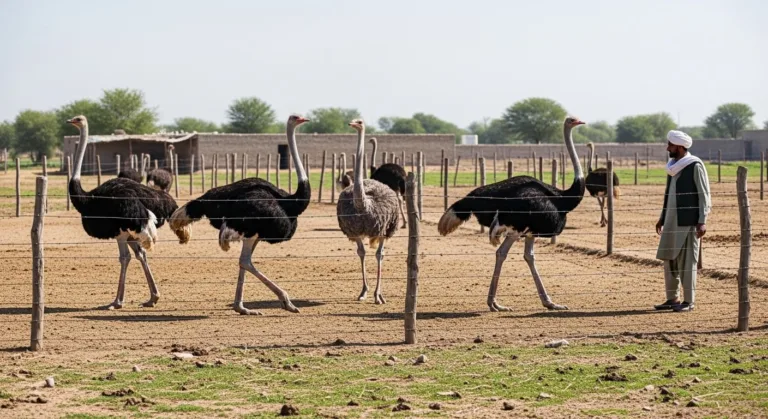
Picture this: you’re driving through the countryside in Pakistan, expecting to see cows, goats, and maybe some chickens. Instead, you spot a bird that’s taller than most adults, has legs like tree trunks, and eyes bigger than its brain. No, you’re not dreaming, you’ve just discovered an ostrich farm! These massive birds, which look like they belong in the African savanna, have actually become surprisingly popular in Pakistan over the past couple of decades.
Ostriches are the world’s largest birds, standing up to nine feet tall and weighing as much as two adult humans combined. They can’t fly, but they can run faster than a car in a school zone, reaching speeds of up to 45 miles per hour. So what are these African giants doing in Pakistan? Well, it turns out that raising ostriches has become a booming business, and farms like Multanfarms are leading the way in showing how these incredible birds can thrive in Pakistani conditions.
In this article, we’ll explore the fascinating world of ostrich farming in Pakistan, from why farmers decided to raise these quirky birds in the first place to what makes them such a valuable addition to Pakistani agriculture. Get ready to learn about one of the most unusual farming trends that’s actually making a lot of sense!
How Did Ostriches End Up in Pakistan?
The story of ostriches in Pakistan is kind of like when your friend introduces you to a new food you’ve never tried before, and suddenly it becomes your favorite. In the late 1990s and early 2000s, some adventurous Pakistani farmers heard about the benefits of ostrich farming from other countries and thought, “Hey, why not give this a shot?”
These birds originally come from Africa, where they roam the hot, dry grasslands. But here’s the cool part: Pakistan’s climate in many regions is actually pretty similar to their natural habitat. The warm temperatures, open spaces, and dry conditions in places like Punjab and Sindh turned out to be perfect for ostriches. It’s like they found a home away from home!
The early farmers faced plenty of skeptics who thought raising giant African birds was a crazy idea. But as the first ostrich chicks hatched and grew into healthy adults, more and more farmers got interested. Today, there are ostrich farms scattered across Pakistan, with operations ranging from small family farms to larger commercial ventures like Multanfarms.
What Makes Ostrich Farming So Special?
You might be wondering, “Why would anyone want to raise a bird that can kick hard enough to seriously hurt a lion?” Great question! It turns out ostriches are kind of like the Swiss Army knife of farm animals, they provide multiple valuable products from a single bird.
Meat That’s Actually Super Healthy
Ostrich meat is the superstar product from these farms. Unlike chicken or beef, ostrich meat is incredibly lean, meaning it has very little fat. Think of it as the athlete of meats, packed with protein but low in calories and cholesterol. It tastes similar to beef but is way healthier for your heart. A single ostrich can provide around 30 to 40 kilograms of meat, which is like getting meat from several chickens all at once!
Leather That’s Tough and Trendy
Ostrich leather is one of the most durable and expensive leathers in the world. Those unique bumps you see on ostrich leather products? Those are actually feather follicles, and they make each piece of leather one-of-a-kind. It’s used to make fancy shoes, handbags, wallets, and belts that can last for decades. Fashion designers around the world pay top dollar for quality ostrich leather, making it a profitable export for Pakistani farms.
Feathers for Fashion and More
Remember those glamorous feather dusters or fancy carnival costumes? Many of those feathers come from ostriches! While feathers aren’t the main money-maker, they’re still valuable for decoration, fashion, and even some industrial uses. It’s like getting a bonus prize with every bird.
The Daily Life on an Ostrich Farm
Running an ostrich farm isn’t like taking care of a few backyard chickens. These birds need special attention and care, but they’re actually less demanding than you might think. At farms like Multanfarms, the day starts early with feeding time. Ostriches are omnivores, which means they eat both plants and occasional insects, kind of like having a garbage disposal with legs!
The birds get a carefully planned diet that includes grains, vegetables, and special feed to keep them healthy and growing strong. Baby ostriches, called chicks, need extra attention during their first few months. They’re about the size of a chicken when they hatch but grow incredibly fast, gaining several pounds every week. It’s like watching a time-lapse video in real life!
One of the trickiest parts of ostrich farming is dealing with their personalities. Ostriches can be curious, stubborn, and sometimes a bit grumpy. Farmers need to understand their behavior and handle them carefully because an angry ostrich is not something you want to mess with. Their powerful legs can deliver a kick strong enough to break bones, so experienced handlers treat them with respect and use proper safety techniques.
The Business Side of Things
Here’s where ostrich farming gets really interesting from an economic perspective. Starting an ostrich farm requires a decent investment upfront, you need land, proper fencing, shelter, and of course, the birds themselves. A breeding pair of ostriches can cost quite a bit, but the potential returns make it worthwhile for many farmers.
One ostrich hen can lay 40 to 100 eggs per year, and each egg is huge, equivalent to about 24 chicken eggs! Not all eggs are sold for eating though. Most are used for hatching new chicks, which grow to market size in about 10 to 14 months. That’s actually pretty quick compared to cattle, which can take years to reach full size.
The profit margins can be impressive when everything goes right. The combination of meat, leather, and feathers means farmers have multiple income streams from the same bird. It’s like planting a tree that gives you apples, shade, and beautiful wood all at once. Pakistani farmers have found that ostrich products sell well both locally and internationally, especially in countries where health-conscious consumers are looking for lean meat options.
Challenges That Farmers Face
Of course, ostrich farming isn’t all sunshine and success stories. Farmers face several challenges that make this business trickier than traditional livestock farming. The biggest hurdle? Knowledge and expertise. Unlike raising goats or chickens, which Pakistani farmers have been doing for centuries, ostrich farming is relatively new. Farmers need to learn about ostrich behavior, breeding, disease prevention, and proper nutrition.
The climate, while generally suitable, can still cause problems during extreme weather. Super hot summers or unexpected cold snaps can stress the birds and affect their health. Farmers have to provide adequate shade in summer and protection during colder months, which means investing in proper housing and facilities.
Marketing can also be tricky. While ostrich meat is gaining popularity, it’s still not as common as chicken or beef in Pakistani markets. Farmers need to educate consumers about the benefits and find reliable buyers for their products. Some farms have gotten creative by offering farm tours, selling directly to restaurants, or creating specialty products to build a customer base.
The Future Looks Bright
Despite the challenges, ostrich farming in Pakistan is growing steadily. More farmers are recognizing the potential, and organizations are providing training and support to help newcomers succeed. Farms like Multanfarms are leading the way by demonstrating best practices and showing that with proper care and management, ostrich farming can be both sustainable and profitable.
The increasing global demand for healthy, lean meat works in Pakistan’s favor. As more people worldwide become health-conscious, ostrich meat is gaining attention as a nutritious alternative to traditional red meat. Pakistani farms are well-positioned to tap into this growing market, both domestically and through exports.
Technology is also making ostrich farming easier. Better incubation systems, improved feed formulas, and modern farming techniques are helping farmers achieve better results with less risk. It’s exciting to think about where this industry might be in another ten or twenty years!
Ostrich farming in Pakistan is a perfect example of how agriculture can evolve and adapt. What started as an experimental idea has grown into a legitimate industry that’s providing jobs, producing valuable products, and showing the world that Pakistani farmers are innovative and willing to try new things. These giant birds might seem out of place at first glance, but they’ve found a welcoming home in Pakistan’s agricultural landscape. Who knows, maybe the next time you’re shopping for a healthy meal or a durable leather product, it might just come from an ostrich farm right here in Pakistan. Would you be brave enough to visit an ostrich farm and meet these amazing birds up close?