Picture this: you bite into a perfectly ripe mango, and suddenly your taste buds are doing a happy dance. The sweet, golden juice drips down your chin, and you think, “This is what summer tastes like!” Now imagine a country where mangoes aren’t just a fruit, they’re a national treasure, an economic powerhouse, and a source of serious pride. Welcome to Pakistan, where mangoes reign supreme!
Pakistan produces over 1.8 million tons of mangoes every year, making it one of the world’s largest mango-growing countries. But it’s not just about quantity. Pakistani mangoes are famous worldwide for their incredible taste, unique varieties, and rich cultural significance. From small family farms to large agricultural operations like those at Multanfarms.com, mango cultivation is a big deal in Pakistan. These golden fruits shape the economy, create jobs for thousands of people, and bring communities together during harvest season.
In this article, we’ll explore why Pakistan’s mangoes are so special, discover the different varieties that make people’s mouths water, learn how farmers grow these amazing fruits, and understand why mangoes matter so much to Pakistan’s culture and economy. Trust me, by the end of this, you’ll be craving a juicy Pakistani mango!
The Mango Belt: Where Magic Happens
Not all of Pakistan is perfect for growing mangoes. These tropical fruits need specific conditions to thrive, kind of like how you need the right environment to do your best work. Too cold? The trees won’t survive. Too dry? The fruits won’t develop properly. Pakistan’s “mango belt” stretches across the southern and central regions, where the climate hits that sweet spot.
Punjab province, especially areas around Multan, is considered the heart of Pakistan’s mango country. Multan is actually nicknamed the “City of Mangoes” because it produces some of the finest varieties in the entire country. The soil here is rich and fertile, temperatures stay warm enough for most of the year, and farmers have generations of experience growing these fruits to perfection.
Sindh province is another mango powerhouse, particularly the areas around Mirpurkhas and Hyderabad. The weather here stays hot for longer periods, which some mango varieties absolutely love. Then there’s Khyber Pakhtunkhwa in the north, where you’ll find unique varieties adapted to slightly cooler conditions.
What makes these regions so special? Think of it like baking cookies. You need the right temperature, the right ingredients, and the right timing. Pakistan’s mango belt has warm temperatures (usually above 75°F during growing season), plenty of sunshine, good irrigation systems, and soil that drains well but holds enough moisture. When all these factors come together, you get mango perfection!
Meet Pakistan’s Superstar Mango Varieties
If you thought a mango is just a mango, prepare to be amazed! Pakistan grows over 250 different mango varieties, each with its own flavor, texture, and fan club. Let’s meet some of the biggest celebrities in Pakistan’s mango world.
Sindhri is like the elegant superstar of mangoes. This variety comes from Sindh province and is known for its large size (some can weigh over a pound!), bright yellow color, and incredibly sweet, fiber-free flesh. When you bite into a Sindhri, it’s smooth and creamy, almost like eating mango-flavored butter. It ripens in late June and July, making it a summer favorite.
Chaunsa is probably the most famous Pakistani mango internationally. Named after the city of Chaunsa in Punjab, this variety has a devoted following. It’s aromatic (meaning it smells absolutely amazing), super sweet, and has a honey-like flavor. Chaunsa season is a big event in Pakistan, running from July to September. People literally count down the days until Chaunsa mangoes hit the markets!
Anwar Ratol is the small but mighty variety. Don’t let its size fool you, this little mango packs an incredible flavor punch! It’s extremely sweet, has a unique aroma, and is considered one of the most premium varieties. Think of it like expensive chocolate, small, but totally worth it.
Langra has an interesting story. The name means “limpy” in Urdu, supposedly because the person who first cultivated it walked with a limp. This variety stays greenish-yellow even when ripe, which can confuse people who expect mangoes to turn bright orange. But bite into a ripe Langra, and you’ll discover why it has fans all over the country. It’s tangy-sweet, juicy, and ripens in July.
From Blossom to Basket: The Mango Growing Journey
Ever wonder how a tiny flower becomes a delicious fruit? The mango-growing process is pretty fascinating and requires patience, skill, and a lot of hard work from farmers.
The flowering stage happens in late winter (February-March in Pakistan). Mango trees produce thousands of tiny flowers, but here’s the thing, only a small percentage of these flowers will actually become mangoes. It’s nature’s way of ensuring only the strongest fruits survive. Bees and other insects pollinate the flowers, starting the fruit development process.
Baby mangoes appear within weeks after pollination. At first, they’re tiny, hard, and green. Farmers carefully monitor these developing fruits, watching for pests and diseases. This is when agricultural operations like Multanfarms.com apply their expertise, using proper irrigation, nutrient management, and pest control to ensure healthy fruit development.
Growing season lasts several months, during which the fruits gradually increase in size. Farmers thin out excess fruits (removing some so others can grow bigger), ensure trees get enough water (but not too much!), and protect the crop from insects and diseases. It’s kind of like raising kids, you need to provide the right care at the right time for them to grow strong and healthy.
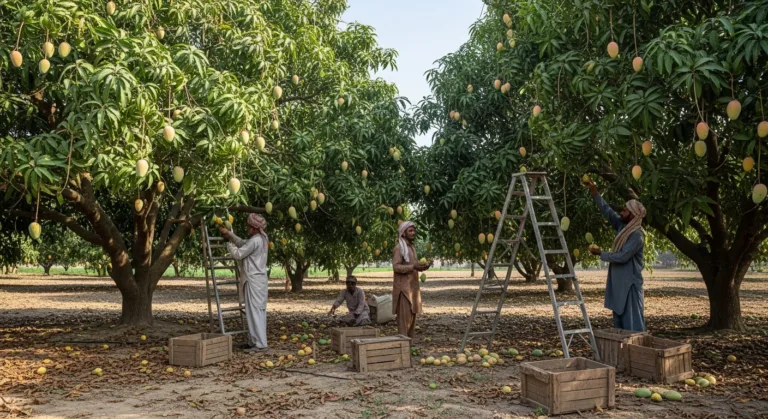
Harvest time is when all the hard work pays off! Different varieties ripen at different times, giving Pakistan a mango season that can stretch from May all the way to September. Harvesting requires skill because mangoes must be picked at exactly the right moment. Too early, and they won’t ripen properly. Too late, and they might be overripe or damaged. Experienced workers can tell by looking and gently feeling the fruit when it’s ready to pick.
Mangoes and Pakistan’s Economy
You might think, “They’re just fruits, how important can they be?” Well, hold onto your hat, because mangoes are actually a huge deal for Pakistan’s economy!
Pakistan exports mangoes to over 40 countries, including the United States, United Kingdom, Canada, and countries across the Middle East and Europe. We’re talking about millions of dollars in revenue every year. When you see a Pakistani mango in a grocery store in New York or London, that represents jobs for farmers, packers, transporters, and exporters back in Pakistan.
Mango farming creates employment for hundreds of thousands of people. There are the farmers who own the orchards, the workers who maintain the trees, the pickers who harvest the fruit, the packers who prepare mangoes for market, the truck drivers who transport them, and the sellers in markets and stores. It’s like a chain reaction, one mango supports multiple families!
Companies like Multanfarms.com are working to modernize mango cultivation and marketing, using better techniques, quality control, and export strategies to get Pakistani mangoes into more international markets. They’re helping small farmers access better resources and teaching sustainable farming practices that protect the environment while producing great fruit.
Value-added products are also growing. Pakistani entrepreneurs are making mango juice, mango pulp (used in smoothies and desserts), dried mango slices, mango pickles, and even mango ice cream! These products can be sold year-round, not just during mango season, creating more economic opportunities.
Mango Culture: More Than Just a Fruit
In Pakistan, mangoes aren’t just food, they’re part of the culture! During mango season, the whole country gets excited. It’s like how people in other countries get pumped for certain holidays, except this celebration revolves around fruit.
Mango parties are a real thing in Pakistan! When mangoes are in season, families and friends gather for “mango parties” where they sit together and enjoy different varieties. People compare flavors, debate which variety is best (these debates can get pretty intense!), and share tips on how to pick the perfect mango. It’s a social event that brings communities together.
Gift-giving tradition involves mangoes too. Sending a box of premium mangoes to friends, family, or business associates is considered a thoughtful and generous gift. Imagine if someone gave you a box of the world’s best chocolates, that’s how Pakistanis feel about receiving a box of top-quality Chaunsa or Sindhri mangoes!
Street vendors create a special atmosphere during mango season. They pile their carts high with colorful mangoes, calling out to customers and offering samples. The sweet smell of ripe mangoes fills the air in markets across the country. Kids beg their parents for mangoes the way you might ask for ice cream on a hot day.
Conclusion
Pakistan’s mangoes represent something beautiful about agriculture and culture coming together. From the sun-soaked orchards of Multan to international grocery stores thousands of miles away, these golden fruits carry the taste of Pakistani summers and the hard work of countless farmers who’ve perfected their craft over generations.
Whether it’s the creamy Sindhri, the aromatic Chaunsa, or the mighty little Anwar Ratol, Pakistani mangoes have earned their reputation as some of the world’s finest. They support livelihoods, boost the economy, and bring joy to millions of people who eagerly await mango season each year. Organizations like Multanfarms.com are ensuring this tradition continues while adapting to modern agricultural challenges and opportunities.
So next time you bite into a delicious mango, think about the journey it took to reach you. Maybe it started as a tiny flower in a Multan orchard, carefully tended by farmers who know their craft inside and out. Pretty amazing for a fruit, right? Have you ever tried a Pakistani mango, and if not, doesn’t it sound like something worth tracking down?