Imagine waking up, walking outside, and collecting a basket full of warm, fresh eggs before breakfast, no grocery store needed. That’s exactly what happens every single day on thousands of farms across Pakistan, where layer hen farming keeps the country swimming in eggs. These aren’t just any chickens; they’re special hens bred to pop out one perfect egg almost every day, like tiny feathered superheroes wearing capes made of fluff.
In Pakistan, layer farming is huge. We produce over 18 billion eggs a year, and places like Multanfarms.com help new farmers start their own mini egg empires. You’ll discover how these birds live, what they eat, how farmers keep them healthy and happy, and even how you could raise a few in your own backyard. Ready to meet the queens of the coop? Let’s go!
Meet the Egg Superstars: Top Layer Breeds in Pakistan
Not all chickens are egg machines. Some are raised for meat, others just look pretty, but layer hens are the MVPs of egg production. The most popular breeds in Pakistan are like the Avengers of the chicken world:
- Hy-Line Brown: Super friendly brown hens that lay big brown eggs, around 320 eggs a year each.
- Bovans Brown: Almost identical twins to Hy-Line, calm and great for hot weather.
- Lohmann Brown: Another brown-egg champ that starts laying at just 18 weeks old.
- ISA Brown: Golden feathers, super gentle, and can hit 300+ eggs a year.
- White Leghorn (for white eggs): Smaller birds, but they lay like crazy and eat less feed.
Think of it like picking a gaming character, each breed has its own stats, but they all crush the egg-laying game. Farmers love brown-egg breeds because customers in Pakistan think brown eggs taste better (spoiler: they taste the same, but brown shells look cooler).
From Fluffy Chick to Egg Machine: The Life of a Layer Hen
A layer hen’s life is one big glow-up. Day-old chicks arrive in boxes, looking like yellow cotton balls with legs. For the first 16–18 weeks, they’re teenagers (called pullets), eating special “starter” and “grower” feed to grow strong bones and feathers.
Then, around week 18, magic happens. The hens get a little more light every day (like tricking them into thinking summer is coming), and boom, the first tiny “pullet eggs” appear. After that, most hens lay one egg every 24–26 hours for about a year. That’s like doing one push-up every day and getting stronger instead of tired!
After 70–80 weeks, egg production slows down, and farmers usually replace the flock with new teenagers again. It’s a cycle, kind of like upgrading your phone when the battery gets weak.
Inside the Coop: Where the Egg Party Never Stops
Modern layer farms in Pakistan come in two main styles, and both are way cooler than you’d think:
- Battery cages: Hens live in neat rows of cages with automatic food, water, and even a moving belt that whisks eggs away the second they’re laid. It’s like a chicken apartment building with conveyor-belt delivery.
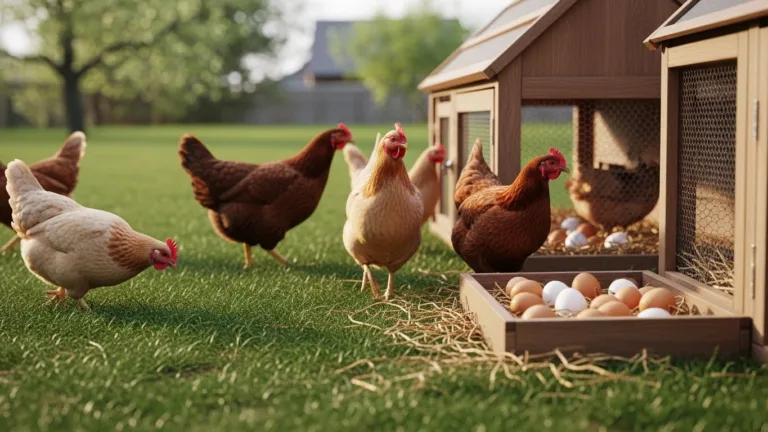
- Cage-free or deep-litter systems: Hens roam on the floor with nests, perches, and scratch areas. They act more natural, but farmers have to collect eggs by hand.
Good farms (like the ones Multanfarms.com works with) keep coops clean, cool with big fans, and give exactly the right feed. Temperature matters a ton, if it’s hotter than 30°C, hens get grumpy and lay fewer eggs, so many farms use foggers or coolers. It’s basically chicken air-conditioning!
Here’s what a happy hen needs every day:
- Clean water (they drink almost a soda can’s worth!)
- Balanced feed with protein, calcium, and vitamins
- 14–16 hours of light (natural + bulbs)
- Safe, comfy space to rest and lay
Feed, Water, Magic: Turning Corn into Perfect Eggs
Eggs are basically chicken math: feed + water + hen = egg. Layer feed is a custom mix of corn, soybean meal, limestone (for strong shells), and tiny vitamin packs. It’s like making a protein shake for chickens, but tastier for them.
One hen eats about 110–120 grams of feed a day and turns it into a 60-gram egg. That’s like you eating one burger and magically producing a whole pizza 24 hours later! Farmers at Multanfarms.com often mix their own feed recipes to keep costs low and eggs top-quality.
Keeping the Flock Healthy: Vaccines, Cleanliness, and Ninja Moves
Chickens can catch colds, just like us, so farmers vaccinate them when they’re babies against diseases like Newcastle or bird flu. Clean coops stop germs from throwing parties, and many farms use biosecurity rules, no outside shoes, special farm clothes, and hand washing, like a secret club with very strict hygiene.
Spotting a sick hen is easy, she looks fluffed up, quiet, or stops eating. Good farmers check twice a day and call a vet fast. Healthy hens = happy eggs = happy breakfast for millions of Pakistanis.
From Farm to Your Fridge: How Eggs Travel Safely
Eggs leave the farm in plastic trays, get washed (or not, depending on the buyer), and zoom off in cooled vans. Some farms grade them by size: small, medium, large, extra-large, kind of like T-shirt sizes. Multanfarms.com and similar setups make sure eggs reach markets within days so they’re fresh when you crack them for anda paratha.
Fun fact: A fresh egg sinks in water, but an old one floats because air sneaks inside over time. Try it at home!
Could YOU Start a Tiny Layer Farm? (Yes, Really!)
You don’t need a giant farm. Many families in Punjab and Sindh keep 50–200 hens in backyard sheds and sell eggs to neighbors. Here’s the starter pack:
- 10–20 pullets (teen hens ready to lay)
- Simple shed with wire mesh and roof
- Feeder, waterer, and nesting boxes
- Feed for 3 months
- Total cost? Around 100,000–150,000 rupees
In return, 20 hens can give you 15–18 eggs daily. Sell extras for 25–30 rupees each, and you’re making pocket money while eating the freshest eggs ever. Multanfarms.com even helps beginners with chicks, feed, and free advice. It’s like unlocking a real-life money-and-food cheat code.
Egg-cellent Wrap-Up: Why Layer Hens Rock Pakistan
Layer hen farming keeps Pakistan’s breakfast tables loaded with affordable protein, gives thousands of families jobs, and turns simple feed into golden eggs every single day. From high-tech farms with robot belts to backyard coops under mango trees, these fluffy workers never take a day off.
Next time you crack an egg, think about the hen that worked overtime to make it, the farmer who kept her happy, and the sunny fields of Pakistan that started it all. So, what do you say, ready to thank a chicken today, or maybe even raise a few of your own? The egg adventure is waiting!