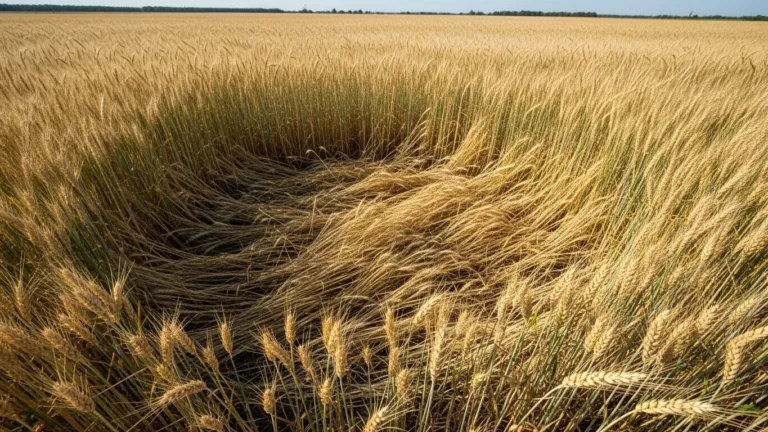
Imagine you’re walking through a huge golden wheat field that looks like a giant fluffy carpet. The stalks are standing tall, waving in the wind, ready to become the flour for your pizza or bread. Then suddenly, boom! A big section of the field is flat on the ground like someone pushed it over. The wheat didn’t get tired and lie down for fun, something went wrong. This disaster has a name: wheat lodging. Want to know why it happens, why it’s a big deal for farmers, and how people fight back? Let’s dive in!
First, What Exactly Is Lodging?
Lodging is when wheat plants (or other cereal crops like barley and oats) fall over and stay bent or flat instead of standing straight. Think of it like when you build a super tall tower out of playing cards and one tiny puff of air knocks the whole thing down. The stalks can bend at the bottom, break in the middle, or even get completely smashed against the ground. Once they lodge, they usually can’t get back up on their own.
Why Does Wheat Suddenly Flop Over?
Wheat plants are tough, but they’re not superheroes. A few things can make them lose their balance:
- Heavy rain and strong wind: Picture a rainstorm that feels like someone is throwing buckets of water at the field while a giant fan blows at the same time. Wet wheat gets heavier at the top (especially when the heads are full of grain), and wind pushes hard.
- Too much fertilizer: Farmers use nitrogen to help plants grow fast and strong. But if they add way too much, the stalks grow super tall and skinny, kind of like building a skyscraper with spaghetti instead of steel. Tall + skinny + heavy head = easy to tip over.
- Dense planting: When farmers plant too many seeds close together, the plants fight for sunlight and stretch upward. They become long, weak, and wobbly.
- Diseases and pests: Tiny fungi can attack the base of the stalk and make it soft, almost like termites eating the foundation of a house.
Did you know? In really bad years, an entire field can go from perfect to flat in just one stormy night!
How Bad Can Lodging Actually Get?
It’s not just ugly, it’s a farmer’s nightmare. Here’s why:
- Machines called combines can’t pick up flat wheat easily. It’s like trying to vacuum crumbs that are glued to the floor.
- Grain left on the ground can start sprouting early or get moldy.
- Farmers can lose 20%, 50%, or even more of their harvest. That means less wheat reaches the stores, and food prices can go up.
One famous example happened in the UK in 2012 when crazy summer storms flattened huge areas of wheat. Farmers lost millions of dollars in just a few days.
Cool Ways Farmers Stop Wheat from Lodging
Good news, people aren’t helpless! Farmers and scientists have tricks to keep wheat standing proud:
- Plant shorter, stronger varieties: Scientists breed “dwarf” wheat that’s short and stocky, kind of like a bulldog instead of a tall greyhound. These tough little plants laugh at wind and rain.
- Plant growth regulators: These are safe sprays that tell the plant, “Hey, don’t grow so tall, grow thicker stems instead.” It’s like giving the wheat a gym membership for stronger legs.
- Perfect spacing and fertilizer: Farmers now use GPS and computers to plant exactly the right number of seeds and give just enough food, no more, no less.
- Roller-crimper trick: Some farmers drive a giant rolling pin over cover crops before planting wheat. It makes a comfy mat that keeps soil firm and stops wheat from rocking back and forth.
Real-Life Heroes: Farmers Who Beat Lodging
In Pakistan (hey, that’s where Multan Farms is!), farmers in Punjab faced terrible lodging a few years ago because of extra rainy monsoons. They switched to new short-stature varieties like “Faisalabad-08” and started using growth regulators. The result? Even when storms came, most fields stayed standing, and they harvested way more grain. One farmer said it felt like his wheat grew muscles overnight!
What Does This Have to Do with You?
Every time you eat roti, naan, bread, cereal, or cookies, there’s a good chance wheat was part of it. When lodging happens, there’s less wheat, which means less food and higher prices at the store. By understanding lodging, you’re seeing one of the hidden battles farmers fight to put food on your table.
So next time you bite into a sandwich or a slice of birthday cake, think about those tall golden fields doing their best to stand straight through storms. Pretty cool, right?
What do you think farmers will invent next to make wheat even tougher? Maybe robot plants that can stand up by themselves? The future of farming is going to be awesome, and now you know one big reason why wheat needs to stay on its feet!