Imagine walking into a supermarket and finding that the fish section is nearly empty, or that the prices have doubled since last month. Sounds frustrating, right? This is actually a real problem that Pakistan faces because the demand for fish is growing faster than the country can catch them from rivers and the ocean. But here’s the exciting part: there’s a solution that’s creating new opportunities for entrepreneurs and helping feed millions of people. It’s called fish farming, and it’s quickly becoming one of the most promising businesses in Pakistan.
Fish farming, also known as aquaculture, is exactly what it sounds like: raising fish in controlled environments like ponds, tanks, or cages instead of catching them from the wild. Think of it like having a farm with cows and chickens, except you’re raising fish instead. In Pakistan, this industry is growing fast, and people are discovering that with the right knowledge and resources, fish farming can be both profitable and beneficial for communities.
At Multanfarms.com, we’ve seen firsthand how fish farming is transforming Pakistan’s agriculture sector. Whether you’re curious about entrepreneurship, interested in how food reaches your plate, or just wondering how people make money from fish, this article will give you an inside look at this fascinating business. Let’s dive in and explore why fish farming might just be the coolest agricultural opportunity in Pakistan right now!
Why Is Fish Farming Growing So Fast in Pakistan?
You might be wondering why anyone would bother farming fish when you can just catch them from rivers and the ocean. Well, there are several really good reasons why fish farming is taking off in Pakistan.
First, let’s talk about demand. Pakistan has over 240 million people, and that number is growing every year. More people means more mouths to feed, and fish is an incredibly important source of protein. It’s packed with nutrients that help kids grow strong and keep adults healthy. But here’s the problem: the natural fish populations in Pakistan’s rivers and coastal waters can’t keep up with how much fish people want to buy.
Second, wild fish populations are declining. Overfishing, which means catching fish faster than they can reproduce, has reduced the number of fish available in natural waters. Pollution and changes to river systems have also made it harder for wild fish to thrive. It’s like trying to empty a bathtub while only a tiny trickle of water is coming from the faucet; eventually, you’ll run out.
Fish farming solves both these problems. By raising fish in controlled environments, farmers can produce consistent amounts of fish year-round without depleting wild populations. It’s a win-win situation: people get the fish they need, and wild fish populations get a chance to recover. Plus, fish farming can be incredibly profitable if done correctly, which is why more and more Pakistani entrepreneurs are getting interested in this business.
What Types of Fish Can You Farm in Pakistan?
Not all fish are equally easy to farm, and Pakistan’s climate and water conditions are perfect for certain species. Let’s look at some of the most popular fish that farmers raise.
Major Carp is probably the most common fish farmed in Pakistan. This group includes several species like Rohu, Catla, and Mrigal. These fish are perfect for Pakistan because they grow quickly, adapt well to different water conditions, and people love eating them. They’re like the reliable workhorses of the fish farming world. A Rohu fish can grow to several pounds in just one year, which means farmers can harvest and sell them relatively quickly.
Tilapia is another superstar in Pakistan’s fish farming industry. Originally from Africa, Tilapia has adapted amazingly well to Pakistan’s climate. These fish are incredibly hardy, meaning they can survive in various water conditions and temperatures. They also grow fast and taste great, which makes them popular with consumers. Think of Tilapia as the easy-to-grow plant of the fish world, perfect for beginners.
Grass Carp is interesting because, as its name suggests, it loves eating grass and other vegetation. This makes them relatively inexpensive to feed compared to fish that need specialized food. Some farmers raise Grass Carp specifically to help keep their ponds clean by eating excess plant growth. It’s like having a natural lawn mower for your fish pond!
Catfish farming is also growing in popularity, especially in Punjab and Sindh provinces. Catfish are tough and can tolerate lower oxygen levels in water compared to other fish. They’re also quite tasty and fetch good prices in local markets.
How Does Someone Actually Start a Fish Farming Business?
Starting a fish farming business isn’t as simple as digging a hole, filling it with water, and throwing in some fish. It requires planning, investment, and knowledge. But don’t worry, it’s totally doable with the right approach!
Step 1: Finding the Right Location is crucial. You need access to a good water source, whether that’s a natural stream, groundwater, or even a tube well. The land should be relatively flat and have soil that holds water well. Many successful fish farms in Pakistan are located in Punjab and Sindh because these provinces have suitable conditions. It’s like choosing the perfect spot to build a house; location really matters.
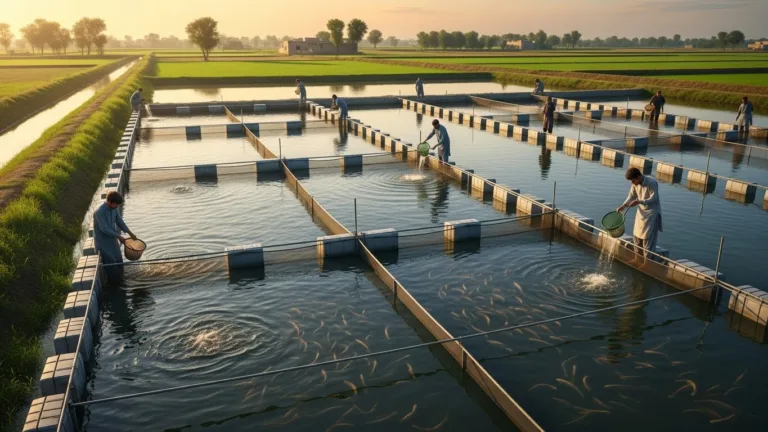
Step 2: Building Your Ponds comes next. Most fish farmers in Pakistan use earthen ponds, which are basically large holes dug into the ground and filled with water. The size depends on your budget and goals, but a typical small-scale farm might start with ponds covering about one to five acres. Some farmers use concrete tanks instead, especially in areas where land is expensive or water is scarce.
Step 3: Getting Your Fish involves buying what are called “fingerlings,” which are baby fish. You can purchase these from specialized hatcheries across Pakistan. The number of fingerlings you stock in your pond depends on the size of the pond and the species you’re raising. Overcrowding is a big mistake because fish need space to grow, kind of like how you’d feel cramped if your classroom had twice as many students.
Step 4: Feeding and Management is where the daily work comes in. Fish need to be fed regularly with proper nutrition. Some farmers use commercial fish feed, which is specially formulated to help fish grow quickly and stay healthy. Others use natural food sources or supplemental feeding methods. You also need to monitor water quality, checking things like oxygen levels, temperature, and pH. It’s similar to maintaining an aquarium, just on a much larger scale.
Step 5: Harvesting and Selling is the exciting part where all your hard work pays off! Depending on the species, fish are usually ready to harvest within 6 to 12 months. Farmers use nets to catch the fish, which are then sold to wholesalers, directly to consumers at markets, or to restaurants and shops.
What Are the Costs and Profits?
Let’s talk money, because that’s probably what you’re most curious about. Starting a fish farming business requires investment, but it can also be quite profitable.
For a small-scale operation with about one acre of ponds, you might need to invest anywhere from 500,000 to 1,000,000 Pakistani Rupees (roughly $1,800 to $3,600 USD) to get started. This covers pond construction, fingerlings, feed, equipment, and initial operating costs. It sounds like a lot, but remember, this is starting a real business!
The good news is that fish farming can generate solid returns. A well-managed one-acre fish farm can produce 2,000 to 4,000 kilograms of fish per year, depending on the species and farming methods. If you’re selling fish at market rates, you could potentially earn 1,000,000 to 2,000,000 Rupees annually after expenses. That’s not bad for a relatively small operation!
Of course, these numbers vary a lot depending on many factors: the species you raise, how efficiently you manage your farm, local market prices, and even the weather. Some farmers at Multanfarms.com have found creative ways to increase profits, like raising multiple species together or growing vegetables alongside their fish ponds using a method called aquaponics.
What Challenges Do Fish Farmers Face?
Like any business, fish farming comes with its share of challenges. Understanding these obstacles is important if you’re thinking about this as a future career or business opportunity.
Disease outbreaks can devastate a fish farm quickly. Just like how a flu virus can spread through a school, diseases can spread rapidly through a fish population, especially in crowded conditions. Farmers need to learn about fish health, recognize signs of disease early, and sometimes work with veterinarians who specialize in aquatic animals.
Water quality issues are another major concern. Fish are super sensitive to their environment. If the water becomes too polluted, lacks oxygen, or gets too hot or cold, fish can get stressed or even die. Imagine trying to live in a room where the air quality kept changing; you’d feel pretty uncomfortable, right? That’s how fish feel when water quality isn’t right.
Feed costs can eat into profits (pun intended!). Fish feed is one of the biggest expenses in fish farming, sometimes accounting for 60-70% of total costs. When feed prices increase, it directly impacts profitability. Some innovative farmers are experimenting with alternative feeds or growing their own fish food to reduce these costs.
Market access can be tricky, especially for farmers in rural areas. Getting your fish to buyers quickly is essential because fish is perishable. Some farmers struggle to find reliable buyers or get fair prices for their product. This is why organizations like Multanfarms.com work to connect farmers with markets and provide guidance on business planning.
How Is Technology Changing Fish Farming?
Here’s where things get really cool. Modern technology is transforming fish farming from a traditional practice into a high-tech industry. Even in Pakistan, farmers are starting to adopt new innovations that make fish farming easier and more profitable.
Automated feeders are devices that distribute food to fish at scheduled times without needing someone to be there. It’s like having a robot butler for your fish! This saves time and ensures fish get fed consistently, which helps them grow better.
Water quality monitors use sensors to constantly check oxygen levels, temperature, and other important factors. Some advanced systems can even send alerts to a farmer’s phone if something goes wrong. Imagine having a security system for your fish ponds!
Aerators are machines that add oxygen to the water, which is crucial for fish health. In intensive fish farming operations, natural oxygen levels aren’t enough, so these devices help maintain proper conditions. They work kind of like the air pump in a home aquarium, just much bigger.
Solar-powered systems are becoming popular in Pakistan, where electricity can be unreliable or expensive. Some farmers use solar panels to power their aerators and other equipment, making their farms more sustainable and cost-effective.
Why Should You Care About Fish Farming?
You might be thinking, “This is interesting, but why does it matter to me?” Great question! Fish farming affects your life in more ways than you might realize.
First, it impacts food security. As Pakistan’s population grows, we need smart ways to produce more food without destroying the environment. Fish farming can help ensure that people have access to affordable, nutritious protein. The fish you eat at dinner might come from a local fish farm rather than being caught in the ocean hundreds of miles away.
Second, fish farming creates jobs and economic opportunities. From the farmers themselves to the people who make fish feed, build ponds, transport fish to markets, and sell them, this industry supports thousands of families across Pakistan. It’s especially valuable in rural areas where other job opportunities might be limited.
Third, sustainable fish farming can actually help the environment by reducing pressure on wild fish populations. When we farm fish responsibly, we give ocean and river ecosystems a chance to recover from overfishing. It’s like giving nature a break so it can heal itself.
Finally, fish farming represents innovation and entrepreneurship. Young people in Pakistan are finding creative ways to build businesses around aquaculture, combining traditional knowledge with modern technology. Who knows? Maybe you’ll come up with the next big innovation in fish farming!
Looking to the Future
The fish farming industry in Pakistan is still relatively young compared to countries like China, Bangladesh, or Vietnam, where aquaculture has been advanced for decades. But that’s actually good news because it means there’s huge potential for growth and improvement.
The Pakistani government is starting to recognize the importance of aquaculture and is providing more support through training programs, loans, and technical assistance. Organizations and farms like Multanfarms.com are working to educate new farmers and share best practices. As more people learn about proper techniques and as technology becomes more accessible, Pakistan’s fish farming industry will likely expand significantly in the coming years.
Climate change will present both challenges and opportunities. While changing weather patterns might make some traditional farming harder, fish farming in controlled environments could become even more important as a reliable food source. Smart farmers who adapt to new conditions and embrace sustainable practices will be the ones who succeed.
So, whether you’re thinking about a future career in agriculture, interested in entrepreneurship, or just curious about where your food comes from, fish farming is definitely worth paying attention to. It combines science, business, and environmental stewardship in a way that could help shape Pakistan’s future. Who knows? Maybe one day you’ll start your own fish farm and become part of this growing industry. What type of fish would you want to farm, and why?