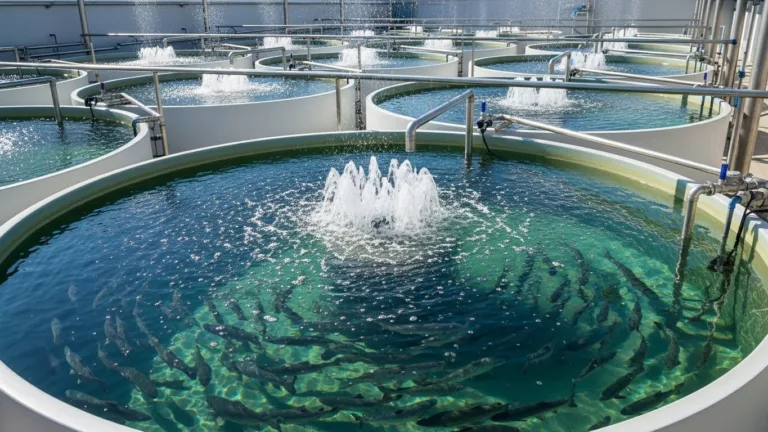
Have you ever thought about where the fish on your dinner plate actually comes from? Most people imagine a fishing boat out on the ocean, with nets pulling up fresh catches from the deep blue sea. But here’s something that might surprise you: a huge portion of the fish we eat today doesn’t come from wild oceans at all. Instead, it’s raised on farms, just like the vegetables in your garden or the cows on a dairy farm!
Fish farming, also called aquaculture, is one of the fastest-growing food industries in the world. It’s basically the practice of raising fish in controlled environments like ponds, tanks, or ocean enclosures instead of catching them in the wild. Think of it as underwater agriculture, where instead of planting seeds and growing tomatoes, farmers are hatching fish eggs and raising healthy fish to feed the world’s growing population.
In this article, we’ll dive deep into the fascinating world of fish farming. You’ll learn what it actually is, why it’s become so important, how it works, the different types of fish farms that exist, the benefits it brings, and some of the challenges farmers face. By the end, you’ll understand why fish farming might just be one of the most important food sources for our future. Let’s get started!
What Exactly Is Fish Farming?
Fish farming is the process of raising fish commercially in tanks, ponds, or ocean pens for food. It’s not a new idea, actually. People in ancient China were farming fish over 4,000 years ago! But it’s only in the last few decades that fish farming has really exploded and become a major way we get our seafood.
Here’s how it works in simple terms: Fish farmers start with baby fish, called fingerlings or fry, which are either bred in special hatcheries or collected from the wild. These tiny fish are then placed in controlled environments where they’re given food, kept safe from predators, and monitored for health issues. The farmers make sure the water stays clean and has the right temperature and oxygen levels. It’s kind of like being a parent to thousands of fish babies at once!
As the fish grow, farmers carefully manage their diet to help them develop properly. Depending on the type of fish, this process can take anywhere from a few months to a couple of years. Once the fish reach the right size, they’re harvested and sent to markets, grocery stores, or restaurants where they eventually end up on your plate. At places like Multanfarms.com, you can learn about various types of farming practices, including sustainable methods that help protect our environment while producing healthy food.
The cool thing about fish farming is that it gives us control over many factors that wild fishing doesn’t. Farmers can choose which species to raise based on what people want to eat, they can make sure the fish grow in clean water, and they can produce fish year-round instead of depending on fishing seasons.
Why Is Fish Farming So Important Today?
You might be wondering, “Why can’t we just keep catching fish from the ocean like we always have?” Great question! The truth is, our oceans are in trouble. Overfishing, which means catching fish faster than they can reproduce, has seriously depleted many fish populations. Some species that used to be super common are now endangered or at risk of disappearing completely.
The world’s population is growing like crazy. Right now, there are almost 8 billion people on Earth, and experts predict there could be nearly 10 billion by 2050. All these people need food, and fish is one of the healthiest protein sources available. It’s packed with nutrients like omega-3 fatty acids, which are amazing for your brain and heart. But there simply aren’t enough wild fish in the ocean to feed everyone.
This is where fish farming becomes a hero! It helps meet the huge demand for seafood without putting even more pressure on wild fish populations. In fact, more than half of all the fish consumed globally now comes from fish farms rather than wild catches. That’s a pretty big deal! Fish farming helps protect ocean ecosystems by giving them time to recover while still providing people with the nutritious food they need.
Another reason fish farming matters is that it creates jobs and helps economies grow, especially in coastal communities. Thousands of people around the world work in fish farming, from the people who feed the fish every day to the scientists who develop better farming methods. It’s an industry that supports families and helps communities thrive.
Different Types of Fish Farming Systems
Not all fish farms look the same! There are actually several different methods of raising fish, and each one has its own advantages. Let’s explore the main types so you can understand how diverse this industry really is.
Pond farming is one of the oldest and most common methods. Farmers dig large ponds or use natural ones and fill them with fish. These ponds can be small backyard operations or massive commercial setups covering several acres. Catfish and tilapia are often raised this way because they adapt well to pond environments. It’s kind of like having a giant fish tank in your backyard, except way, way bigger!
Cage farming, also called net pen farming, involves placing large nets or cages directly in oceans, lakes, or rivers. The fish live in their natural water environment but are contained in a specific area. Salmon is often raised this way, especially in places like Norway, Chile, and Canada. The cool part is that the fish get natural water flow and conditions, but they’re protected from predators and can be easily fed and monitored.
Recirculating aquaculture systems (RAS) are the high-tech option. These are basically giant indoor fish tanks with advanced filtration systems that clean and recycle the water continuously. It’s like having a super-sophisticated aquarium, but designed to raise thousands of fish efficiently. RAS systems can be built almost anywhere, even in cities or deserts, because they don’t rely on natural water sources. They use much less water than other methods and give farmers total control over the environment.
Rice-fish farming is a super interesting method used mainly in Asia. Farmers grow rice in flooded fields and raise fish in the same water at the same time! The fish eat insects and weeds that might harm the rice, and their waste acts as natural fertilizer for the plants. Meanwhile, the rice plants provide shade and hiding spots for the fish. It’s a perfect example of two crops helping each other grow, like the ultimate farming teamwork!
The Fish That Are Commonly Farmed
Different fish species work better for farming than others, and farmers choose what to raise based on several factors: how fast they grow, what people like to eat, and how well they adapt to farm conditions. Let’s look at some of the most popular farmed fish you’ve probably seen at the grocery store.
Salmon is probably the most famous farmed fish. If you’ve ever had salmon at a restaurant or bought it from the store, there’s a good chance it came from a fish farm. Salmon farming is huge in countries like Norway, Scotland, and Chile. These fish are prized for their rich, pink meat that’s loaded with healthy omega-3 fatty acids.
Tilapia is another superstar of fish farming. This fish is incredibly adaptable and can survive in various water conditions, which makes it perfect for farming. It grows fast, tastes mild (so even picky eaters often like it), and is very affordable. Tilapia farming is popular all over the world, from Asia to Africa to the Americas.
Catfish farming is especially big in the southern United States. These bottom-dwelling fish are hardy and grow well in ponds. They have a distinctive taste that many people love, especially when it’s fried! Catfish farms help provide jobs and income for many rural communities.
Shrimp aren’t fish, but they’re super important in aquaculture. Shrimp farming, especially in countries like Thailand, Vietnam, and Ecuador, has become a massive industry. Those bags of frozen shrimp you see at the store? Many of them came from carefully managed shrimp farms. While shrimp farming can be controversial due to environmental concerns, many farmers are working on more sustainable methods.
The Amazing Benefits of Fish Farming
Fish farming brings so many positives to the table that it’s worth understanding why this industry has grown so quickly. First and foremost, it provides food security. With fish farms, we can produce a steady, reliable supply of protein-rich food regardless of weather conditions or ocean health. Unlike wild fishing, which can be unpredictable, fish farming gives us consistent results.
From an environmental perspective, sustainable fish farming can actually be better for the planet than other forms of animal farming. Fish are cold-blooded, which means they don’t need to burn calories to stay warm like cows or pigs do. This makes them incredibly efficient at converting food into body mass. You need to feed a fish much less than you’d need to feed a cow to get the same amount of meat, which means less strain on resources.
Fish farming also reduces pressure on wild fish populations. By providing farmed alternatives, we give ocean ecosystems time to recover from decades of overfishing. Some species that were once threatened are starting to bounce back because we’re not catching as many from the wild. It’s like giving the ocean a break so it can heal and restore itself.
The economic benefits are huge too. Fish farming creates jobs in rural and coastal areas where employment opportunities might be limited. From hatchery workers to truck drivers who transport the fish to markets, many people depend on this industry for their livelihoods. In developing countries especially, fish farming has helped lift entire communities out of poverty.
Finally, farmed fish can sometimes be healthier and safer than wild-caught fish. Farmers can control what their fish eat, ensure they grow in clean water, and monitor them for diseases or parasites. While wild fish can accumulate pollutants from contaminated waters, well-managed farms can produce clean, healthy fish that’s safe for everyone to eat.
The Challenges Fish Farmers Face
Of course, fish farming isn’t perfect, and there are definitely some challenges that farmers and scientists are working hard to solve. Understanding these problems helps us appreciate the complexity of feeding the world sustainably.
One major concern is pollution. Fish produce waste, just like any animal, and in poorly managed farms, this waste can build up and harm the surrounding environment. In ocean-based farms, waste can affect the water quality and impact other marine life. However, many modern farms use better waste management systems and follow strict regulations to minimize their environmental impact.
Disease is another big challenge. When you have thousands of fish living close together, diseases can spread quickly, kind of like how a cold might spread through your classroom. Some farmers use antibiotics to prevent or treat diseases, but overusing these medicines can lead to antibiotic-resistant bacteria, which is dangerous for both fish and humans. The industry is working on better solutions like vaccines and improved farm designs that reduce disease risk.
Escaped fish can be a problem too, especially in ocean-based farms. If farmed fish escape and breed with wild populations, they can weaken the wild fish’s genetics or spread diseases. It’s like introducing a new species into an ecosystem where it doesn’t belong, which can throw things out of balance. Better cage designs and monitoring help prevent escapes.
The feed issue is complicated. Many farmed fish, especially carnivorous ones like salmon, need to eat other fish as part of their diet. To make fish food, companies often use wild-caught fish, which seems counterproductive. Scientists are working on developing plant-based and insect-based feeds that work just as well but don’t require catching wild fish.
Despite these challenges, the fish farming industry is constantly improving. New technologies, better regulations, and more research are helping create farms that are both productive and environmentally responsible. Organizations like Multanfarms.com focus on promoting sustainable farming practices that address these concerns while still feeding the world.
The Future of Feeding the World
Fish farming has come a long way from those ancient Chinese ponds thousands of years ago. Today, it’s a sophisticated industry that combines biology, engineering, and environmental science to produce food for billions of people. As our population grows and wild fish stocks continue to struggle, fish farming will only become more important.
The good news is that scientists and farmers are constantly developing new ways to make fish farming more sustainable, efficient, and environmentally friendly. From high-tech indoor systems that use barely any water to innovative feeds that don’t rely on wild fish, the future of fish farming looks bright. There’s even research into growing fish meat in laboratories without needing actual fish at all, though that’s still pretty far off!
Next time you enjoy a piece of grilled salmon or fish tacos for dinner, you’ll know there’s a whole fascinating world behind that food. Fish farming is helping feed the world while protecting our oceans, and that’s something worth appreciating. What role do you think fish farming should play in our future food systems, and how can we make sure it’s done in the most sustainable way possible?