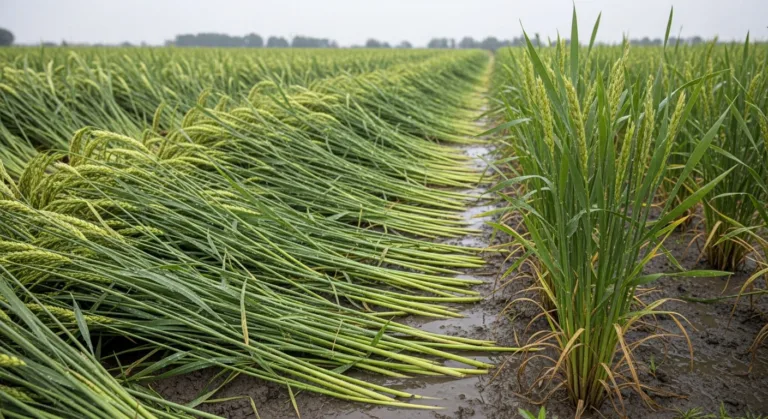
Have you ever walked through a field after a big storm and noticed something strange? Tall plants like wheat, corn, or even sunflowers lying flat on the ground, as if they’d given up on standing? It’s not because they’re tired or lazy. This phenomenon has a specific name: lodging. And trust me, it’s a bigger deal than you might think!
Lodging in plants is basically when crops or other tall plants bend over or completely fall to the ground. Imagine trying to stand up straight during a massive windstorm while carrying a heavy backpack. That’s kind of what plants experience during lodging. But why does this happen, and why should you care? Well, if you’ve ever enjoyed fresh bread, cereal, or popcorn, lodging affects the plants that make those foods possible. Let’s dive into this fascinating (and sometimes frustrating) part of plant life!
What Exactly Is Lodging?
Think of lodging as plants doing an unintentional faceplant. When we say a plant has “lodged,” we mean its stem has bent or broken, causing the whole plant to lean over or lie flat on the ground. It’s like when you try to balance a tall tower of blocks, it looks great at first, but one wrong move and everything comes tumbling down.
There are actually two main types of lodging. Stem lodging happens when the plant’s stem itself bends or breaks, usually somewhere in the middle or upper part. It’s like breaking a straw halfway down. Root lodging, on the other hand, occurs when the roots lose their grip in the soil, and the entire plant tips over from the base. Imagine pulling a fence post out of soft mud, that’s basically what happens to the plant’s roots.
Both types can happen to the same plant, and both create serious problems for farmers and gardeners. When plants lodge, they can’t grow properly, their leaves don’t get enough sunlight, and harvesting becomes incredibly difficult.
What Causes Plants to Lodge?
So what makes plants fall over in the first place? It’s usually a combination of factors working together, kind of like a perfect storm of plant problems.
Weather is the biggest troublemaker. Heavy rain softens the soil, making it harder for roots to hold tight. Strong winds push against tall plants, creating pressure on their stems. When you combine wet soil with gusty winds, you’ve got a recipe for disaster. It’s like trying to keep your balance on ice while someone’s pushing you from behind!
The plant’s own structure matters too. Plants with weak stems, shallow roots, or top-heavy growth (think of a corn plant with a huge ear of corn at the top) are more likely to lodge. If a plant grows too tall too quickly without developing strong support tissues, it’s basically setting itself up for failure. Imagine building a skyscraper with toothpicks instead of steel beams, not a great idea, right?
Soil conditions play a huge role. Plants growing in loose, wet, or poorly drained soil don’t have much to hold onto. Their roots can’t anchor properly, so even moderate wind can knock them over. On the flip side, soil that’s too rich in nitrogen can cause plants to grow too tall and leafy without strengthening their stems enough to support all that extra weight.
Why Is Lodging Such a Big Problem?
You might be thinking, “Okay, so some plants fall over. Can’t we just pick them back up?” Unfortunately, it’s not that simple. Lodging creates a domino effect of problems that can ruin entire crops.
First, lodged plants can’t photosynthesize properly. Remember, photosynthesis is how plants make their food using sunlight. When a plant is lying on the ground, its leaves are shaded by other plants or by its own stems. Less sunlight means less food production, which means smaller, weaker crops. It’s like trying to run a solar panel in the shade, it just doesn’t work well.
Second, harvesting becomes a nightmare. Modern farming equipment is designed to harvest plants that are standing upright. When plants are lying flat or tangled together on the ground, machines can’t pick them up properly. Farmers either lose part of their crop or have to harvest by hand, which takes forever and costs a lot more money.
Third, lodged plants are more vulnerable to diseases and pests. When plants lie on wet ground, they’re exposed to soil-borne fungi and bacteria. Their stems might crack or break, creating entry points for infections. Plus, insects find it easier to attack plants that are already down. It’s like how you’re more likely to catch a cold when you’re already tired and stressed.
How Do Farmers Prevent Lodging?
Farmers have developed several clever strategies to keep their plants standing tall. Think of it as giving plants the support and training they need to handle whatever weather throws at them.
Choosing the right plant varieties is the first line of defense. Scientists have bred shorter, sturdier crop varieties with stronger stems and better root systems. These plants are like gymnasts, compact, strong, and flexible. They might not grow as tall as older varieties, but they’re much better at staying upright during storms.
Proper fertilization helps too. While plants need nitrogen to grow, too much creates weak, floppy stems. Farmers carefully balance their fertilizer to encourage strong stem development and good root growth. Adding potassium and silicon to the soil can strengthen plant cell walls, making stems more resistant to bending and breaking.
Planting density matters more than you’d think. When plants are spaced correctly, they can support each other without competing too much for resources. It’s like a group of friends linking arms, they’re stronger together than alone. But if they’re too crowded, they’ll all try to grow taller to reach the light, making them even more likely to lodge.
Some farmers also use plant growth regulators, special chemicals that keep plants shorter and stockier. These substances don’t harm the plants, they just encourage them to put more energy into building strong stems instead of growing super tall.
Real-World Examples of Lodging
At Multanfarms.com, we’ve seen lodging affect different crops in different ways. Wheat is particularly vulnerable because it grows tall and develops heavy seed heads at the top. After a heavy thunderstorm last spring, we noticed about 20% of one wheat field had lodged. The stems had bent right below the seed heads, making harvest much more challenging.
Corn is another crop that struggles with lodging, especially modern hybrid varieties that produce massive ears. Strong summer winds can push over entire rows of corn, especially if the soil is saturated from recent rain. We’ve learned to monitor weather forecasts carefully and avoid over-fertilizing with nitrogen during the early growing season.
Even tomato plants in home gardens can experience lodging! Those tall, vining tomato plants you might grow in your backyard need stakes or cages to support them as they produce heavy fruits. Without support, they’ll bend over and break, just like crop plants in a field.
What Happens After Lodging Occurs?
Once lodging happens, farmers have limited options. If the lodging is mild and happens early in the growing season, some plants might partially recover. They won’t straighten up completely, but they’ll bend their tips upward toward the sun, creating a curved stem. It’s like when you drop your phone and the screen protector cracks, it still works, but it’s not quite right.
Severe lodging, especially later in the season, usually means farmers just have to make the best of a bad situation. They’ll adjust their harvesting equipment, work more slowly, and accept that they’ll lose some of their crop. In the worst cases, fields might not even be worth harvesting because the cost of collecting the lodged plants exceeds their value.
Some farmers will plow under severely lodged crops and use them as green manure to enrich the soil for the next season. It’s a total loss for this year’s income, but at least the organic matter helps improve soil quality for future crops. Sometimes you’ve got to take the setback and plan for a better tomorrow.
Why Should You Care About Lodging?
You might wonder why any of this matters to you as a student. Well, lodging affects food prices, food availability, and even environmental sustainability. When crops lodge and yields decrease, farmers produce less food. Less food can mean higher prices at the grocery store, affecting what your family can afford to buy.
Understanding lodging also connects to bigger ideas about plant biology, weather patterns, and agriculture. The same principles that cause lodging in wheat fields apply to the tomato plants in your garden or the flowers your school might grow. Learning how plants respond to environmental stress helps you understand the natural world around you.
Plus, as climate change brings more extreme weather events, lodging might become an even bigger problem in the future. The solutions farmers develop today, stronger plant varieties, better soil management, smarter planting strategies, could help ensure we have enough food for a growing global population.
Wrapping It All Up
Lodging in plants is way more than just crops falling over. It’s a complex problem that involves plant biology, weather, soil science, and farming practices all working together. Whether it’s stem lodging (where the plant breaks or bends) or root lodging (where the whole plant tips over), the results can seriously impact crop yields and food production.
From choosing sturdy plant varieties to managing fertilizer carefully, farmers use multiple strategies to prevent lodging. But when severe weather strikes, even the best preparation sometimes isn’t enough. That’s why researchers continue studying this problem, developing new solutions to help plants stay standing strong.
Next time you see a field of wheat swaying in the breeze or notice corn stalks standing tall despite yesterday’s storm, you’ll know there’s some serious science and strategy keeping those plants upright. So here’s a question for you: what other challenges do you think farmers face that most people never notice? The world of agriculture is full of fascinating problems waiting to be solved!