Imagine biting into a sweet, chewy treat that’s been famous for over 500 years. A dessert so beloved that people travel hundreds of miles just to taste the real thing. That’s Multan Sohan Halwa for you! This isn’t just any candy or sweet, it’s a legendary confection from the ancient city of Multan, Pakistan, and it has a story as rich as its flavor.
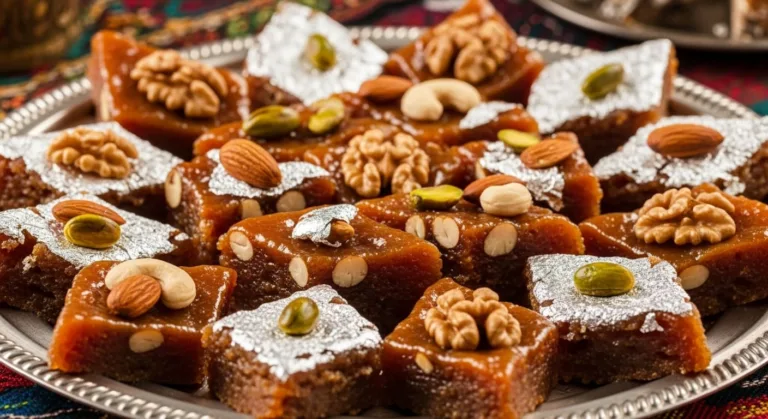
If you’ve never heard of Sohan Halwa before, get ready to learn about one of the most unique sweets in the world. It’s got a texture unlike anything you’ve probably tried, somewhere between taffy and fudge, with a golden-brown color that gleams like treasure. The taste? Think caramelized sugar mixed with the richness of butter and the earthiness of whole wheat flour. People in Pakistan don’t just eat it, they gift it, celebrate with it, and consider it a point of pride for their city.
So what makes this particular sweet so special, and why has it survived for centuries while other desserts have come and gone? Let’s unwrap the delicious mystery of Multan Sohan Halwa and discover why it’s considered one of Pakistan’s greatest culinary treasures!
The Ancient Origins of a Sweet Legend
Multan Sohan Halwa didn’t just pop up overnight. This sweet treat has been around since the Mughal Empire, which ruled parts of South Asia from the 1500s to the 1800s. Legend says it was created in the royal kitchens for emperors and nobles who wanted something extraordinary to satisfy their sweet tooth.
The city of Multan itself has been called the “City of Saints” and the “City of Gold,” and it’s one of the oldest continuously inhabited cities in Asia. For thousands of years, it’s been a crossroads of cultures, religions, and, you guessed it, food! Sohan Halwa became one of the city’s most famous exports, right alongside its beautiful handicrafts and pottery.
What’s really cool is that the recipe has been passed down through generations of halwa makers, called “halwais.” These master confectioners guard their family recipes like secret formulas, each claiming theirs is the most authentic. Some families have been making Sohan Halwa for over a hundred years, and they’ve perfected their craft through decades of practice. It’s like how your grandma might have a special cookie recipe that nobody else can quite duplicate, except these families have been perfecting their recipe for generations!
What’s Actually In This Magical Sweet?
You might be surprised to learn that Sohan Halwa doesn’t have a crazy long ingredient list. The magic isn’t in exotic ingredients, it’s in the technique and quality of what goes into it. The basic recipe includes corn flour (sometimes wheat flour), sugar, milk, ghee (which is clarified butter), and various nuts like almonds and pistachios.
Here’s where it gets interesting. Ghee is basically butter with all the milk solids removed, leaving behind pure, golden fat that doesn’t burn easily. It’s used in tons of South Asian cooking because it adds an incredible richness and nutty flavor. In Sohan Halwa, ghee isn’t just an ingredient, it’s the soul of the sweet. Good halwa uses a LOT of ghee, which is why it’s so rich and has that melt-in-your-mouth quality.
The nuts add crunch and flavor, but they also make each bite more interesting. Imagine eating something that’s smooth and chewy, then suddenly you hit a crunchy almond, it creates this awesome texture contrast. Some versions also include cardamom, a fragrant spice that tastes like a mix of mint, lemon, and something floral. It’s the kind of flavor that makes you go, “What is that amazing taste?”
The color of authentic Sohan Halwa comes from the caramelization of sugar and the long cooking process. It ranges from light golden to deep amber brown, and that color tells you a lot about how it was made. Darker halwa has been cooked longer and has a more intense, caramelized flavor.
The Crazy Cooking Process
Making Sohan Halwa isn’t like baking cookies where you mix ingredients and pop them in the oven. This is serious business that requires muscle, patience, and perfect timing. The entire process can take anywhere from three to five hours of constant stirring over heat. Yes, you read that right, hours of non-stop stirring!
Here’s how it works. The halwai starts by heating ghee in a massive, heavy-bottomed pot (sometimes these pots are so big they look like cauldrons from a fairy tale). Then they add the flour and start stirring. The mixture needs to be stirred constantly so it doesn’t stick or burn. As it cooks, the flour slowly changes color, going from pale yellow to golden brown.
Next comes the sugar syrup, made by dissolving sugar in milk and water. This has to be added at exactly the right moment and at the right temperature. Too early, and the halwa won’t set properly. Too late, and it’ll become hard as a rock. The halwai uses experience and instinct to know when it’s perfect, kind of like how an experienced chef can tell when meat is done just by touching it.
The stirring continues for hours while the mixture thickens and transforms. Imagine stirring a giant pot of thick, hot caramel for three hours straight, your arms would probably fall off! That’s why this is considered such skilled work. Finally, nuts are added, and the mixture is poured into greased trays to cool and set. The result? That beautiful, chewy, glossy Sohan Halwa that people crave.
Why Multan’s Version Is the Real Deal
You might wonder, can’t people make Sohan Halwa anywhere? Technically, yes. But here’s the thing, Multan’s version is considered the original and the best, and there are some good reasons why.
First, tradition and expertise matter. The halwais in Multan have been perfecting this recipe for generations. They know exactly how the mixture should look, smell, and feel at each stage of cooking. It’s like the difference between a pizza made by someone who learned last week versus one made by an Italian chef whose family has run a pizzeria for 50 years. Both might taste good, but one has that authentic touch.
Second, quality ingredients make a huge difference. The ghee used in Multan comes from local dairy farms, and many halwais swear that the milk from buffaloes raised in the region has a unique richness. The nuts are carefully selected, and everything is fresh. At Multanfarms.com, we understand how local ingredients and traditional methods create flavors that just can’t be replicated elsewhere.
Third, there’s something about the cultural connection. When you eat Multan Sohan Halwa in Multan, you’re not just eating a sweet, you’re experiencing centuries of history and tradition. You’re tasting what Mughal emperors might have enjoyed. That cultural authenticity adds something special that goes beyond just flavor.
Sohan Halwa in Daily Life and Celebrations
In Pakistan, Sohan Halwa isn’t just a random snack. It’s deeply woven into the culture, especially when it comes to celebrations and gift-giving. When someone visits Multan, bringing back boxes of Sohan Halwa for friends and family is basically required. It’s like how people bring back saltwater taffy from beach vacations or cheese from Wisconsin, except this tradition goes back hundreds of years.
During Eid, the major Islamic celebration that marks the end of Ramadan, Sohan Halwa appears on dessert tables across Pakistan. Families serve it to guests, and it’s often part of gift boxes exchanged between friends. The sweet, rich flavor makes it perfect for celebration, plus its long shelf life means you can make or buy it in advance.
Weddings are another big occasion for Sohan Halwa. It’s often included in the traditional wedding gift boxes that the bride’s family gives to the groom’s family, or vice versa. These gift boxes, called “mithai boxes,” contain various sweets, but Sohan Halwa is considered one of the premium items. Including it shows respect and generosity because everyone knows it’s more expensive and special than regular candy.
Even for everyday life, people in Multan might grab a small piece of Sohan Halwa with their afternoon tea. It’s like how you might have a cookie with milk after school, except this treat has way more cultural significance and history behind it.
The Challenge of Keeping Tradition Alive
Here’s something interesting to think about: in our modern world of mass-produced candy bars and factory-made sweets, traditional foods like Sohan Halwa face real challenges. Making it the old-fashioned way is time-consuming, expensive, and requires serious skill. So why do people keep doing it?
The answer is pride and preservation. The halwais of Multan see themselves as guardians of cultural heritage. They’re not just making candy, they’re keeping alive a tradition that connects modern Pakistan to its Mughal past. Some shops have been run by the same family for five or six generations, with fathers teaching sons (and now daughters too!) the exact techniques needed.
However, there’s also pressure to adapt. Some makers have started using machines for stirring, which makes the process less exhausting. Others have experimented with new flavors or packaging to attract younger customers. The challenge is finding the balance between preserving tradition and staying relevant in a changing world.
Tourism has actually helped keep the tradition strong. When visitors come to Multan specifically to try authentic Sohan Halwa, it proves there’s still demand for the real thing. Food bloggers and travel shows have featured Multan’s famous sweet shops, bringing international attention. This global interest helps ensure that future generations will continue making Sohan Halwa the traditional way.
Why Food Traditions Matter
You might be reading this and thinking, “Okay, it’s a sweet. Why does it matter so much?” Great question! Food traditions like Multan Sohan Halwa matter because they’re about way more than just taste. They’re about identity, history, and connection.
When people from Multan eat Sohan Halwa, they’re connecting to their hometown, their childhood, and their cultural roots. It’s comfort food in the deepest sense. For people who’ve moved away from Multan, tasting authentic Sohan Halwa can bring back a flood of memories and emotions. Food has this amazing power to transport us through time and space.
These traditions also teach us about craftsmanship and patience in a world that’s increasingly about speed and convenience. Making Sohan Halwa the right way can’t be rushed. It requires attention, skill, and dedication. In a time when we can microwave dinner in three minutes, there’s something valuable about appreciating foods that take hours or even days to prepare properly.
Plus, learning about foods from different cultures helps us understand and appreciate the diversity of our world. Every culture has special foods that carry meaning beyond nutrition. Understanding why Sohan Halwa matters to people in Multan helps us appreciate our own food traditions, whether that’s Thanksgiving turkey, birthday cake, or whatever special foods your family celebrates with.
Bringing It All Together
Multan Sohan Halwa is so much more than a sweet treat. It’s a delicious piece of history that’s survived for centuries, a testament to the skill of master confectioners, and a symbol of cultural pride for an ancient city. From its legendary origins in Mughal royal kitchens to its place in modern celebrations, this golden, chewy delicacy has earned its reputation as one of Pakistan’s greatest culinary treasures.
The next time you try a traditional food, whether it’s Sohan Halwa or something from your own culture, take a moment to think about the story behind it. Who first made it? How has the recipe been preserved? What does it mean to the people who make and eat it? Food connects us to the past, to each other, and to the places we call home.
So here’s a challenge for you: what’s a special food in your family or culture that has a story worth sharing? Maybe it’s time to ask your grandparents about their favorite childhood treats and the memories attached to them. After all, every beloved food has a story, just like Multan’s famous Sohan Halwa!