Have you ever wondered where the fish on your dinner plate actually comes from? You might picture a fisherman in a boat, casting a net into the wild ocean. But here’s a surprising fact: there’s a really good chance that the salmon, tilapia, or shrimp you’re eating didn’t come from the ocean at all! Instead, it came from something called a fishing farm, or as experts like to call it, an aquaculture facility.
Fishing farms are basically underwater farms where people raise fish and other sea creatures in controlled environments. Just like farmers grow corn in fields or raise chickens in coops, fish farmers grow fish in ponds, tanks, or special areas of the ocean. It might sound strange at first, but fish farming is actually one of the fastest-growing food industries in the world!
In this article, we’ll dive deep (pun totally intended!) into the fascinating world of fishing farms. You’ll learn how they work, why they’re so important, what challenges they face, and how they might be the key to feeding our growing planet. Trust me, by the end of this, you’ll never look at a piece of fish the same way again!
How Do Fishing Farms Actually Work?
So, what exactly happens at a fishing farm? Well, imagine a regular farm, but instead of growing vegetables or raising cows, you’re raising fish! The process starts with baby fish, called fingerlings or fry (yes, those are the actual terms!). These tiny fish are either bred at the farm or brought in from special hatcheries.
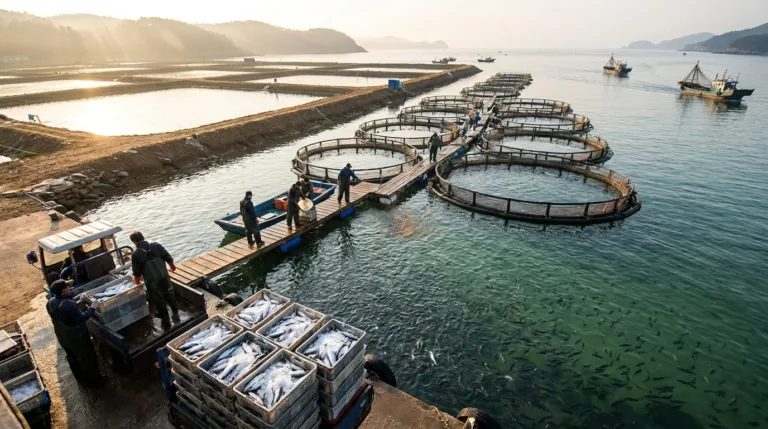
The fish are then placed in their growing environment. This could be a large outdoor pond, massive tanks inside buildings, or even floating cages in the ocean or lakes. Think of it like different types of houses, some fish live in “apartments” (tanks), some in “houses with yards” (ponds), and others in “floating homes” (ocean cages).
The farmers carefully monitor everything about the fish’s environment. They check the water temperature, oxygen levels, and cleanliness constantly. They also feed the fish special food that’s designed to help them grow healthy and strong. It’s kind of like how you need the right nutrients to grow, fish need their vitamins and proteins too! Depending on the type of fish, it can take anywhere from a few months to a couple of years before they’re ready to be harvested and sent to markets and restaurants.
Why Are Fishing Farms So Important Today?
You might be thinking, “Why don’t we just catch fish from the ocean like we’ve always done?” Great question! The truth is, we’ve been catching fish from the wild for so long that many fish populations are in serious trouble. It’s like if everyone in your school kept borrowing pencils from the supply closet without anyone putting new ones back. Eventually, you’d run out!
This is called overfishing, and it’s a huge problem. Scientists estimate that about one-third of the world’s fish populations are being harvested faster than they can reproduce. That’s scary when you consider that over 3 billion people around the world rely on fish as their main source of protein.
Here’s where fishing farms become heroes! They help take pressure off wild fish populations by producing fish in controlled environments. In fact, fishing farms now produce more than half of all the seafood that humans eat. That’s incredible when you think about it! Without fish farming, we’d be in serious trouble trying to feed everyone who loves seafood.
Plus, the world’s population keeps growing. By 2050, there will be almost 10 billion people on Earth. We’re going to need sustainable ways to produce food, and fishing farms are a big part of that solution.
The Different Types of Fish You Can Farm
Not all fish are created equal when it comes to farming! Some species do really well in farm environments, while others are super picky and hard to raise. Let’s look at some of the most popular fish that are farmed around the world.
Salmon is probably the most famous farmed fish. Those bright pink fillets you see at the grocery store? Most of them come from farms in places like Norway, Chile, and Scotland. Salmon farms usually use ocean cages where the fish can swim around in seawater.
Tilapia is another superstar of fish farming. This fish is awesome because it’s hardy (meaning it can survive in different conditions), grows quickly, and doesn’t need super expensive food. You’ll find tilapia farms all over the world, from China to Central America to right here in different parts of the United States.
Catfish farming is huge, especially in the southern United States. These bottom-dwelling fish love pond environments and are pretty easy to raise. If you’ve ever had fish and chips or fried catfish, it probably came from a farm in Mississippi or Alabama!
Shrimp farming is another massive industry. Even though shrimp aren’t technically fish (they’re crustaceans), they’re raised using similar methods. Countries like Thailand, Vietnam, and Ecuador are major shrimp farming nations.
The Challenges Fishing Farms Face
Now, before you think fishing farms are perfect, we need to talk about some of the challenges and problems they face. Like anything else, fish farming has its downsides that farmers and scientists are working hard to solve.
One big issue is water pollution. When you have thousands of fish living in one area, they produce a lot of waste (yes, fish poop!). All that waste, plus leftover food, can pollute the surrounding water if it’s not managed properly. It’s similar to what would happen if your entire school’s cafeteria trash ended up in the local river. Not good, right?
Another challenge is disease. When fish are crowded together, diseases can spread quickly, kind of like how a cold can spread through your classroom. Some farms use antibiotics or chemicals to prevent this, but that creates other concerns about whether those substances end up in the fish we eat or in the environment.
There’s also the issue of escaped fish. In ocean cage farms, sometimes fish escape into the wild. These farm-raised fish can compete with wild fish for food and space, or they might breed with wild fish and mess up the natural genetics of wild populations. Imagine if farm chickens escaped and started competing with wild birds for food, it would throw off the whole ecosystem!
Finally, some types of fish farming actually require catching wild fish to make fish food. That seems kind of backward, right? You’re catching fish from the ocean to feed fish on farms. Scientists are working on creating better fish food made from plants and other sustainable sources to solve this problem.
How Farms Are Becoming More Sustainable
The good news is that fish farmers and scientists aren’t ignoring these problems! They’re coming up with some really creative solutions to make fishing farms more environmentally friendly and sustainable.
Some farms are using recirculating aquaculture systems (try saying that five times fast!), or RAS for short. These are like super high-tech fish tanks that filter and reuse the water over and over again. It’s similar to how a swimming pool filter keeps your pool clean. These systems waste very little water and can be built almost anywhere, even in the desert!
Other farms are practicing something called integrated multi-trophic aquaculture. That’s a mouthful, but it’s basically a system where different species are farmed together in a way that helps each other out. For example, fish produce waste that becomes food for seaweed, and the seaweed cleans the water for the fish. It’s like nature’s own recycling program!
Farmers are also getting better at preventing escapes, treating diseases without harmful chemicals, and developing fish food made from sustainable ingredients like insects, algae, and plant proteins. Some companies are even making fish food from food waste that would otherwise end up in landfills. Talk about turning trash into treasure!
What Does the Future Hold?
The future of fishing farms looks pretty exciting! Scientists and entrepreneurs are developing new technologies that could revolutionize how we raise fish. Some companies are experimenting with offshore farms that are located far out in the ocean where strong currents naturally clean the water and give fish more space to swim.
Others are building vertical fish farms in cities, raising fish in stacked tanks inside warehouses. This means fresh fish could be grown right in your city instead of being shipped from thousands of miles away. Imagine having a fish farm right in downtown New York or Los Angeles!
There’s even research into raising fish in space-age facilities that use artificial intelligence to monitor every aspect of the fish’s health and environment. These smart farms can detect problems before they become serious and make automatic adjustments to keep the fish happy and healthy.
Conclusion
So, what have we learned about fishing farms? They’re basically underwater agriculture, places where people raise fish in controlled environments instead of catching them from the wild. They’ve become super important because they help feed billions of people while taking pressure off overfished ocean populations.
Sure, fishing farms face challenges like water pollution, disease, and sustainability concerns. But the industry is constantly evolving and improving, with innovative farmers and scientists finding creative solutions to these problems. From high-tech recirculating systems to integrated farming methods, the future of aquaculture looks brighter than ever!
The next time you’re eating fish, take a moment to think about where it came from. Whether it swam in the wild ocean or was raised on a carefully managed farm, that fish is part of an amazing system that feeds our world. As our planet’s population continues to grow, fishing farms will play an even bigger role in making sure everyone has access to healthy, delicious seafood.
What do you think? Would you be interested in visiting a fishing farm to see how it all works? Or maybe you’re curious about trying fish raised using these new sustainable methods? The world of aquaculture is full of possibilities!