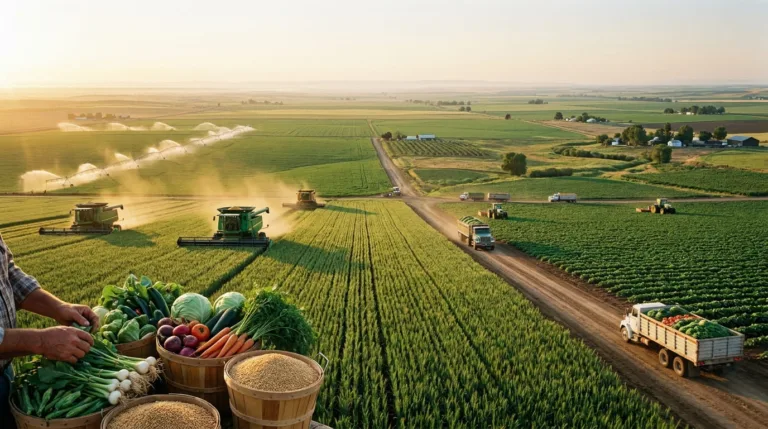
Every time you bite into a crunchy apple, munch on a slice of pizza, or enjoy a bowl of cereal, you’re experiencing the results of farming. But have you ever stopped to think about the incredible journey that food takes before it reaches your plate? It’s pretty mind-blowing when you consider that almost everything you eat starts as a tiny seed in the ground somewhere!
Farming is way more than just planting seeds and waiting for them to grow. It’s an ancient practice that’s been around for over 10,000 years, and it’s literally the foundation of human civilization. Without farming, there would be no cities, no schools, and definitely no grocery stores. In fact, farming is so important that it feeds nearly 8 billion people on our planet every single day!
Whether you live in a bustling city or a quiet town, farming affects your life in ways you might not even realize. Let’s dig into the fascinating world of farming and discover how it works, why it matters, and how it’s changing to meet the challenges of our modern world.
What Exactly Is Farming?
At its core, farming is the practice of growing crops and raising animals to produce food, fiber, and other products we need. Think of farmers as the ultimate multitaskers. They’re part scientist, part businessman, part weather forecaster, and part caretaker, all rolled into one!
There are two main types of farming you should know about. Crop farming involves growing plants like wheat, corn, rice, vegetables, and fruits. Livestock farming focuses on raising animals like cows, pigs, chickens, and sheep. Many farms do both, which is called mixed farming. It’s kind of like having both a garden and pets, except on a much, much bigger scale!
Modern farming looks pretty different from what you might picture in your head. Sure, there are still traditional farms with red barns and tractors, but today’s farms also use technology like GPS, drones, and even robots to help grow food more efficiently.
How Did Farming Change Human History?
Here’s a cool fact: before farming was invented, humans were nomads. That means they constantly moved around, hunting animals and gathering wild plants to eat. Imagine never staying in one place long enough to have a real home or go to school!
Everything changed when people figured out they could plant seeds and grow their own food. This happened around 10,000 years ago in a region called the Fertile Crescent (in what’s now the Middle East). Suddenly, people could settle down in one spot because they didn’t have to chase their dinner anymore. This led to the creation of villages, then towns, and eventually entire civilizations.
Farming gave people free time to do other things besides just finding food. Some became builders, others became artists or inventors, and that’s how human society really took off. It’s wild to think that your ability to sit in a classroom and learn is partly thanks to farming!
What Does a Farmer’s Day Actually Look Like?
You might think farmers just plant stuff and wait for it to grow, but their job is way more complex than that. A farmer’s day starts early, often before sunrise. They need to check on their crops or animals, make sure everything has enough water, and look out for any problems like pests or diseases.
Let’s say you’re a crop farmer growing corn. You’d need to prepare the soil, which is like giving plants a comfy bed to grow in. Then you’d plant the seeds at just the right time of year. Throughout the growing season, you’d monitor the weather constantly (because too much or too little rain can ruin everything), apply fertilizers to help plants grow strong, and protect your crops from insects and weeds that want to steal their nutrients.
Livestock farmers have a different set of challenges. They need to feed their animals every day, keep their living spaces clean, watch for signs of illness, and make sure the animals are comfortable. If you’ve ever had to remember to feed a pet fish, imagine doing that for hundreds of cows or thousands of chickens!
The Amazing Technology Behind Modern Farming
Today’s farms look more like something from a science fiction movie than Old MacDonald’s farm! Farmers use precision agriculture, which means using technology to grow crops more efficiently and with less waste.
For example, many tractors now drive themselves using GPS, kind of like a self-driving car but for fields. Drones fly overhead taking pictures that help farmers spot problems before they can see them from the ground. Some farms even use sensors in the soil that send information to a farmer’s smartphone, telling them exactly when their crops need water or nutrients.
There’s also something called vertical farming, where crops are grown indoors in stacked layers under special LED lights. These farms can be built right in cities, which means fresher food with less transportation needed. Imagine getting lettuce that was grown in a building downtown rather than trucked in from hundreds of miles away!
Why Sustainable Farming Matters for Our Future
Here’s something important to think about: the world’s population is growing, but we don’t have unlimited farmland or resources. That’s where sustainable farming comes in. It’s all about growing food in ways that protect the environment and can continue for many generations.
Sustainable farmers use methods that keep the soil healthy, conserve water, and reduce pollution. They might plant different crops in rotation (like switching between corn and soybeans each year) to keep the soil rich in nutrients. Some use natural predators, like ladybugs, to control pests instead of harsh chemicals.
Organic farming is one type of sustainable farming where farmers don’t use synthetic pesticides or fertilizers. Think of it like choosing to clean your room with natural cleaners instead of strong chemicals. It takes more work and sometimes produces less food, but it’s better for the environment and often better for our health too.
The Challenges Farmers Face Today
Farming isn’t easy, and farmers deal with some seriously tough challenges. Climate change is making weather patterns less predictable, which means farmers can’t always count on rain coming when they need it. Droughts, floods, and extreme temperatures can destroy entire harvests in a matter of days.
There’s also the challenge of pests and diseases. Just like how you might catch a cold at school, plants and animals can get sick too. When this happens on a farm, it can spread quickly and cause huge losses. Farmers have to constantly stay alert and sometimes make tough decisions to protect their crops and animals.
Money is another big issue. Farming requires expensive equipment, seeds, fertilizer, and other supplies. Farmers invest a lot of money at the beginning of the growing season and have to wait months to see if they’ll make it back. It’s a bit like spending your whole allowance on supplies for a lemonade stand and hoping you’ll sell enough to make a profit!
How Farming Connects to Your Daily Life
Even if you’ve never set foot on a farm, farming touches your life every single day in ways you might not realize. That cotton t-shirt you’re wearing? It came from a cotton farm. The wood in your desk? From a tree farm. Even the leather in your shoes started on a livestock farm.
Beyond the obvious food connection, farming provides jobs for millions of people. There are the farmers themselves, but also the people who make tractors, develop seeds, transport food, work in grocery stores, and cook in restaurants. It’s like a giant network where everything’s connected!
Farming also helps take care of our planet in some cool ways. Fields and pastures provide homes for wildlife, and many farms have ponds, forests, and wetlands that support biodiversity (that means lots of different types of plants and animals living together). Farmers often act as stewards of the land, protecting it for future generations.
What Does the Future of Farming Look Like?
The future of farming is both exciting and challenging. Scientists are developing new crop varieties that can survive in tougher conditions, need less water, and provide more nutrition. Some researchers are even working on growing meat in laboratories, which could reduce the need for livestock farming (though that’s still pretty controversial!).
We’re also seeing more young people getting interested in farming, but in new ways. Urban farming, where people grow food in cities using rooftops, vacant lots, and even basements, is becoming super popular. Community gardens are popping up everywhere, letting people connect with where their food comes from.
Technology will keep playing a bigger role too. Imagine farms where artificial intelligence monitors every plant and animal, making sure they get exactly what they need to thrive. Or picture robots that can pick delicate fruits without bruising them, working alongside human farmers to produce more food with less effort.
The Big Picture
Farming is so much more than just plowing fields and planting seeds. It’s a complex, fascinating industry that combines tradition with cutting-edge technology, and it’s absolutely essential to human life. Every meal you eat is a reminder of the hard work farmers do to feed the world.
Next time you sit down for dinner, take a moment to think about the journey your food took to get there. That corn probably traveled hundreds of miles. Those tomatoes started as tiny seeds carefully nurtured by a farmer who checked on them every day. The milk in your glass came from a cow that someone fed and cared for.
As our world changes and grows, farming will need to adapt and innovate to keep feeding everyone. So here’s something to think about: how can you support farmers and make smart choices about the food you eat? Whether it’s learning where your food comes from, reducing food waste, or even growing a small garden of your own, you can be part of the solution. Who knows, maybe you’ll even discover a passion for farming yourself!