Few fruits inspire the kind of devotion that mangoes do. Across South Asia, summer isn’t really summer until the first Sindhri or Chaunsa mangoes show up at the market. People plan family gatherings around mango season, argue passionately about which variety is the best, and treat a perfectly ripe mango like a small miracle. If you’ve ever wondered why this fruit holds such a special place in so many cultures, there’s a lot more to the story than just its sweet taste.
This article digs into where mangoes actually come from, why they’re so good for you, how many varieties exist, and a few surprising facts that might change how you look at this fruit. Whether you grew up eating mangoes every summer or you’re just curious about what makes them so beloved, there’s something here for you.
A Fruit With Thousands of Years of History
Mangoes aren’t a recent discovery. Historians believe people in South Asia have been cultivating mangoes for more than 4,000 years, which makes it one of the oldest cultivated fruits on the planet. The fruit eventually spread along trade routes to Southeast Asia, the Middle East, Africa, and later the Americas, carried by traders and travelers who clearly couldn’t resist sharing it.
Pakistan and India remain two of the largest mango producers in the world today, and the Multan region in particular has built a reputation for growing some of the finest mangoes anywhere. The soil, climate, and generations of farming knowledge here all play a role in producing fruit that’s prized far beyond local markets.
Why Mangoes Are Considered a Nutritional Powerhouse
Beyond their flavor, mangoes pack a serious nutritional punch. A single cup of mango provides a generous dose of vitamin C, which supports your immune system, along with vitamin A, which is important for healthy eyesight and skin. Mangoes also contain dietary fiber, which helps digestion run smoothly, and a range of antioxidants that help protect your cells from damage.
What’s interesting is that mangoes manage to deliver all of this in a fruit that tastes more like dessert than medicine. That combination of great taste and real nutritional value is part of why nutritionists often recommend mangoes as a smart addition to a balanced diet, especially during the months when they’re freshly in season.
More Varieties Than Most People Realize
Ask someone how many types of mangoes exist, and most people guess far too low. In reality, there are hundreds of mango varieties grown around the world, each with its own texture, sweetness level, and aroma. In the Multan region alone, well known varieties like Chaunsa, Anwar Ratol, Sindhri, and Langra each have loyal fans who swear their favorite is unmatched.
Some varieties are fibrous and intensely sweet, while others are smooth, almost custard like, with a milder flavor. This variety is part of what makes mango season so exciting every year. There’s always a new variety to try, or a familiar one to look forward to.
From Blossom to Harvest, How Mangoes Actually Grow
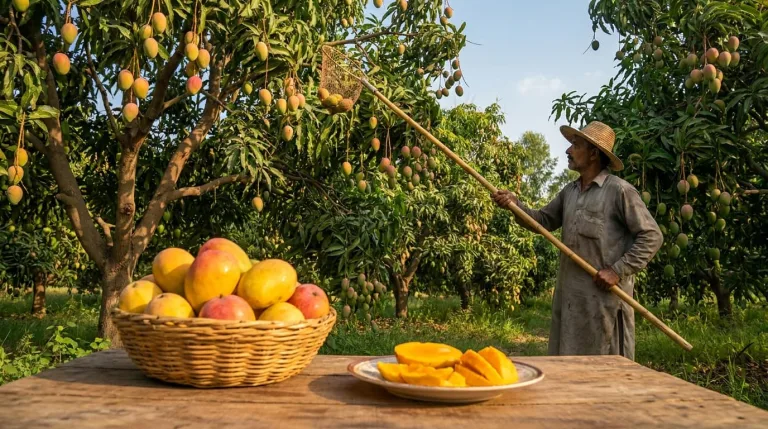
A mango doesn’t appear overnight. Mango trees first produce clusters of small flowers, and only a fraction of those flowers eventually develop into fruit. Once a mango begins to grow, it can take anywhere from three to five months to fully mature on the tree, depending on the variety and local climate.
Farmers often harvest mangoes slightly before they’re fully ripe, since the fruit continues to ripen after picking. This is why a mango that looks green and firm at the store can turn soft, fragrant, and golden within just a few days at home. It’s a natural process that farmers and households alike have learned to work with over generations.
Surprising Facts You Probably Didn’t Know About Mangoes
There’s more to mangoes than meets the eye. Here are a few facts that tend to surprise people.
- Mangoes are part of the same plant family as cashews and pistachios, which is why some people with nut allergies also react to mango skin.
- The mango is the national fruit of both Pakistan and India, reflecting just how deeply it’s woven into the culture of the region.
- Mango leaves and wood have traditional uses too, from religious ceremonies to handicrafts, beyond just the fruit itself.
- Beyond eating it fresh, mango is turned into countless products, including lassi, achaar, dried mango leather, and juice, showing just how versatile this fruit really is.
These details show that the mango’s influence goes far beyond the dinner table. It’s a fruit tied closely to tradition, agriculture, and even economy in regions like Multan.
Why This Fruit Deserves Its Reputation
Mangoes have earned their popularity the honest way, through centuries of cultivation, a genuinely impressive nutritional profile, and a flavor that’s hard to replicate with any other fruit. From the orchards of Multan to dinner tables around the world, mangoes connect people through taste, tradition, and shared appreciation for something genuinely special.
Next time you bite into a ripe mango, think about the thousands of years of history behind it, and the journey it took from blossom to your plate. Curious to explore more about the mangoes grown right here in Multan, visit Multanfarms.com to learn more about the varieties, farming practices, and seasonal offerings from the region.