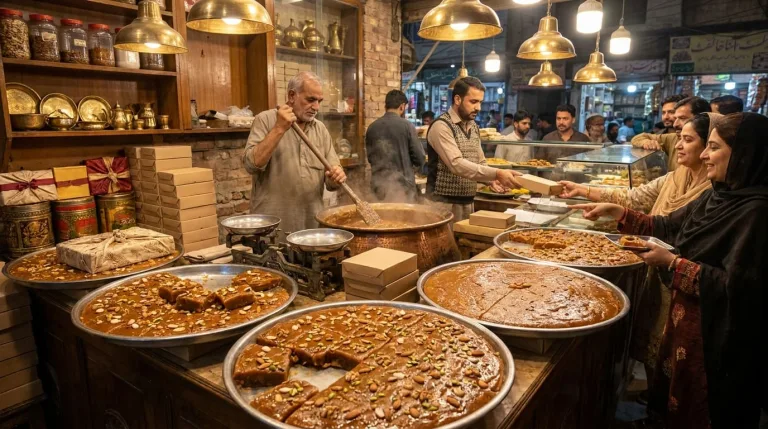
Ever picked up a box of sweets and wondered why one variety costs so much more than the rest sitting right next to it on the same shelf? That’s exactly the reaction most people have the first time they check the price tag on Multani sohan halwa. This glossy, golden dessert from Multan has been prized for generations, and its price often surprises first time buyers who expect it to cost the same as an ordinary sweet.
In this article, we’ll break down what you can actually expect to pay for a kilogram of authentic sohan halwa in Pakistan, why the price varies so much from shop to shop, and how you can tell you’re getting the real thing instead of a cheaper imitation.
What Does a Kilogram of Sohan Halwa Cost Right Now?
Prices for authentic Multani sohan halwa in Pakistan generally fall anywhere between PKR 1,500 to PKR 3,000 per kilogram, depending on the quality of ingredients and where you’re buying from. Some retailers report a slightly wider range, with prices stretching from around PKR 1,800 up to PKR 3,500 per kilogram for premium versions made with extra nuts and higher quality desi ghee, which simply means pure clarified butter made the traditional way. If you spot sohan halwa selling for far less than this, treat it as a warning sign rather than a bargain.
Some local sweet shops in Multan itself price their halwa closer to the lower end of that range, with certain vendors listing rates between roughly PKR 1,400 and PKR 1,900 per kilogram for their standard offerings. The gap between the cheapest and most expensive versions usually comes down to one thing: how much real ghee, milk, and dry fruit actually went into the pot.
Why Does the Price Swing So Much Between Shops?
The biggest cost driver is desi ghee itself, since authentic recipes use a generous amount of it rather than substituting cheaper cooking oil. Add in high quality milk, sugar, cornflour, and a heavy hand of almonds and pistachios, and the ingredient cost alone climbs quickly. Think of it the same way you’d think about two pizzas, one made with basic cheese and one loaded with imported toppings. Both are technically pizza, but only one justifies a higher price tag.
Labor plays a role too. Making real sohan halwa takes hours of continuous stirring over heat by an experienced hand, since the mixture has to be worked constantly to develop its signature texture. Shops that rush this process, or cut corners with the ratio of ghee to filler ingredients, can sell for less, but the final product suffers for it.
Does the Season Affect the Price?
Yes, and this is something a lot of buyers don’t expect. During Eid, wedding season, and other major celebrations, demand for sohan halwa spikes sharply as families buy it for gifting. Shops know this, and prices often creep upward during these peak periods simply because more people want the same limited daily batches.
If you’re buying outside of festival season, you’ll typically find better prices and fresher stock, since shops aren’t scrambling to meet a sudden surge in orders. Planning ahead and buying a week or two before a major holiday can save you a noticeable amount per kilogram.
How Can You Tell If You’re Getting the Authentic Version?
Real Multani sohan halwa has a very specific texture that’s easy to spot once you know what to look for. It should be glossy and slightly translucent, with a chewy, almost thread-like structure that pulls apart in delicate strands rather than snapping cleanly. This sets it apart from barfi, a completely different sweet that’s solid, opaque, and dense all the way through.
If a shop’s sohan halwa looks dull, feels stiff, or breaks like a solid block, it’s likely made with cheaper fillers or the wrong cooking method. A little bit of research before you buy, including checking reviews and asking the seller directly about their ghee and dry fruit sourcing, can save you from paying a premium price for a product that isn’t actually premium quality.
Buying in Bulk and Other Money Saving Tips
If you’re buying for a wedding, office celebration, or large family gathering, ordering in bulk can often lower your cost per kilogram. Many sellers offer discounts once you cross a certain quantity threshold, since packaging and delivery costs get spread across more product. It’s worth asking directly rather than assuming the listed price is final.
Reputable sellers will also usually tell you exactly how long their sohan halwa stays fresh and how to store it properly, which is typically in an airtight container away from direct heat. A halwa that’s been sitting out or improperly sealed can lose its texture fast, so freshness information is just as important as the price itself when you’re deciding where to buy.
Why This Matters Beyond Just the Price Tag
Understanding sohan halwa pricing isn’t just about saving a few rupees here and there. It’s about learning to recognize genuine craftsmanship in a product that represents generations of tradition from Multan. When you know what goes into an authentic batch, from the ghee to the hours of stirring, the price starts to make a lot more sense.
Next time you’re standing in front of a sweet shop counter deciding between two boxes of sohan halwa, you’ll know exactly what questions to ask and what price range to expect. Ready to taste the real thing for yourself and see what authentic Multani craftsmanship actually looks like? Visit Multanfarms.com to explore more.