If you’ve ever bitten into a cold, dripping slice of watermelon on a scorching June afternoon, you already know why this fruit is one of Pakistan’s most beloved summer treats. There’s something almost magical about the way a perfectly ripe watermelon can make the heat feel bearable, turning an ordinary afternoon into a proper celebration. But have you ever wondered where all those big, round, bright-green fruits come from, and exactly when they’re at their best?
Pakistan is one of Asia’s major watermelon-producing countries, and the growing season follows a pattern shaped by weather, soil, and centuries of farming wisdom. Knowing when watermelons are in season means you can get the freshest, sweetest fruit possible, often straight from farms that have been growing them for generations. This guide breaks down everything you need to know about watermelon season in Pakistan, from the first planting to the final harvest on your table.
When Does Watermelon Season Begin in Pakistan?
Watermelon season in Pakistan typically runs from late April through August, with the peak harvest falling in May, June, and July. These months align with the country’s intense pre-monsoon and early monsoon heat, which watermelons absolutely love. The fruit thrives in temperatures between 24°C and 35°C, and Pakistan’s summers deliver exactly that kind of warmth across most of the country.
Planting usually begins in February and March, when farmers sow seeds directly into prepared soil. By the time May arrives, the vines have spread wide across the fields and the fruits are swelling fast. You start seeing watermelons flood the roadside markets and fruit stalls around late April in the hotter southern regions, and the season extends into August as production moves to slightly cooler northern areas.
Which Regions Grow the Most Watermelons?
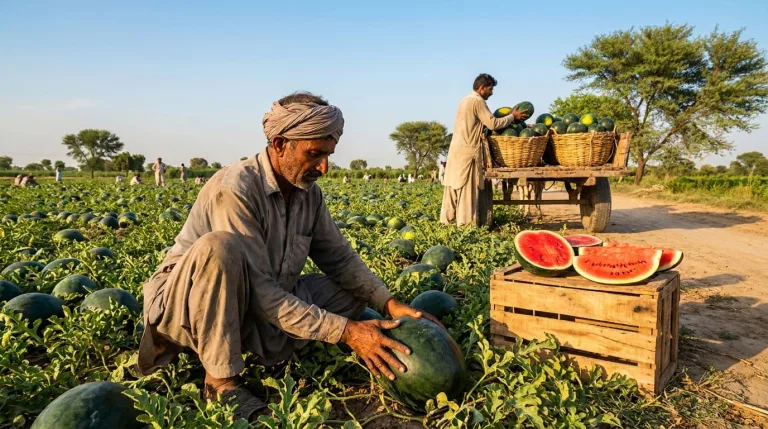
Pakistan’s major watermelon-growing regions include Sindh, southern Punjab, and parts of Balochistan. Sindh, with its flat plains and long sunny days, is the biggest contributor to the country’s watermelon supply. Farmers there benefit from rich alluvial soil along the Indus River, which retains just enough moisture to support healthy vine growth without waterlogging the roots.
Southern Punjab, including areas around Multan and Bahawalpur, is another major production zone. The soil here is sandy-loam, which drains well and warms up quickly in spring, giving watermelon roots a comfortable growing environment. Balochistan contributes smaller but high-quality batches, where the dry, hot summers and cool nights create a natural sweetness in the fruit that many buyers specifically seek out.
What Makes Pakistani Watermelons So Sweet?
The secret behind a truly sweet watermelon comes down to three things: sun exposure, soil quality, and water management. Pakistani farms in peak summer get 10 to 14 hours of direct sunlight per day, which pushes the fruit’s sugar content, measured in Brix units, to impressive highs. The more sunlight the vine gets during the final weeks before harvest, the sweeter the flesh becomes.
Farmers also play a crucial role in controlling irrigation. Watermelons need consistent watering during the early growth stages, but in the final 10 to 15 days before harvest, cutting back on water actually concentrates the sugars inside the fruit. This is a technique passed down through generations of Pakistani farmers, and it’s one reason why a locally grown watermelon, bought at the right time, tastes so much better than an out-of-season one.
How Do Farmers Know When a Watermelon Is Ready to Harvest?
This is where farming becomes a bit of an art form. Pakistani farmers use several time-tested methods to check ripeness. First, they look at the field spot, the yellowish patch on the underside of the fruit where it rests on the ground. A creamy yellow field spot signals ripeness, while a white or pale green one means the watermelon needs more time.
Second, experienced farmers tap the watermelon with their knuckles and listen for a deep, hollow sound. A dull, flat thud usually means the fruit is overripe or underwatered. Third, they check the tendril, the small curled stem closest to the fruit. When this tendril dries up and turns brown, the watermelon is typically ready to come off the vine. These techniques might sound simple, but they take years of practice to master with confidence.
Why Buying In-Season Watermelon Makes a Huge Difference
Out-of-season fruit travels long distances, spends weeks in cold storage, and loses a significant amount of its flavor and nutritional value along the way. An in-season Pakistani watermelon, harvested in June or July and sold at a local market within a day or two, is a completely different experience. It’s sweeter, juicier, and packed with more vitamins and antioxidants, including lycopene, the compound that gives watermelon its bright red color and supports heart health.
Lycopene is a powerful antioxidant that helps protect your body’s cells from damage, and watermelon is one of the richest natural sources of it. You also get a solid dose of Vitamin C, potassium, and Vitamin A from a fresh slice. In peak season, when the fruit is harvested ripe and sold quickly, these nutrients are at their highest levels. Eating watermelon in season isn’t just tastier, it’s genuinely better for your health.
Tips for Picking the Best Watermelon at the Market
Knowing the season is just the first step. Here’s how to pick the best one once you’re standing in front of a pile of them:
- Check the field spot: A deep yellow or orange-yellow patch on the bottom is a great sign.
- Tap and listen: Go for a deep, hollow sound rather than a high-pitched or flat one.
- Look at the stem end: A dry, slightly sunken stem end usually means the fruit ripened properly on the vine.
- Pick it up: A good watermelon feels heavier than it looks. This weight comes from water content, which means juicy, flavorful flesh inside.
- Avoid shiny skin: A matte, dull surface often indicates better ripeness than a very glossy one.
Celebrate Watermelon Season with the Freshest Pakistani Produce
Watermelon season in Pakistan is one of those wonderful moments in the agricultural calendar when nature gives you something almost perfect. From the sun-baked fields of Sindh to the sandy plains of southern Punjab, Pakistani farmers put enormous care into growing a fruit that’s become a summer staple for millions of families. When you buy in season, you’re not just getting a better-tasting watermelon, you’re supporting local agriculture and eating at the peak of the fruit’s natural goodness.
At Multanfarms.com, we celebrate the rich farming heritage of the Multan region and bring you fresh, trusted agricultural products rooted in local knowledge. Whether you’re learning about seasonal produce or looking for the real flavors of Pakistani farming, we’ve got you covered. Explore more at Multanfarms.com and discover what’s fresh this season.