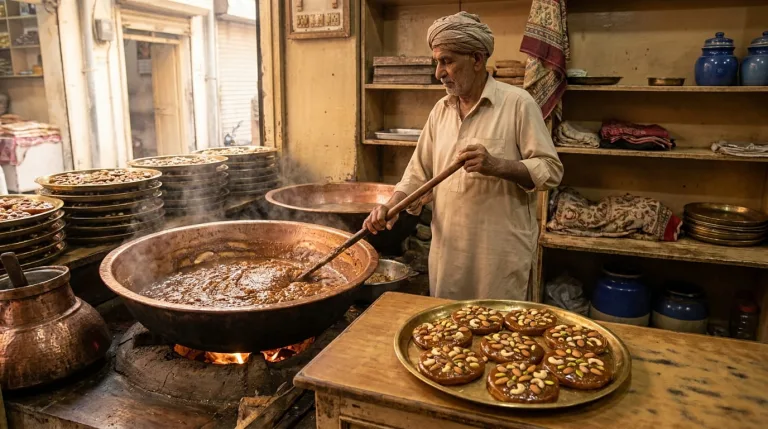
If you’ve ever unwrapped a piece of Pakistani mithai and found something that looks like golden, glossy threads pressed into a firm yet chewy slab, chances are you were holding a piece of Sohan Halwa. The way light catches its amber surface, the slight pull when you break off a piece, the rich aroma of ghee and cardamom rising toward you, it’s an experience before you even take the first bite. This isn’t just a sweet. It’s one of Pakistan’s most iconic confections, and Multan has been its home for centuries.
Sohan Halwa holds a place in Pakistani culture that goes well beyond dessert. It’s gifted at weddings, sent home by travelers returning from Multan, and stacked in beautifully decorated tins at every major sweet shop across the country. Understanding what makes it special, how it’s made, and why Multan became its spiritual home is a delicious dive into both food history and cultural pride. Let’s get into it.
What Exactly Is Sohan Halwa?
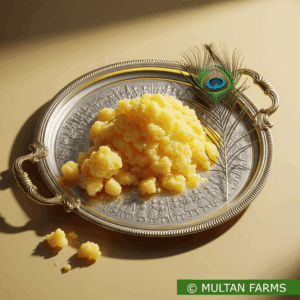
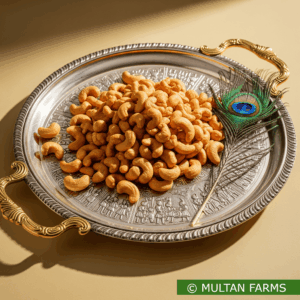
Sohan Halwa is a traditional Pakistani sweet made by cooking wheat starch or cornstarch, sugar, ghee, milk, and dry fruits over low heat for an extended period of time. The result is a dense, chewy confection with a glossy, semi-translucent surface and a satisfying pull to its texture, somewhere between a firm toffee and a rich fudge. It’s studded with pistachios and almonds, and flavored with cardamom and sometimes saffron, which gives it that warm golden color.
What sets Sohan Halwa apart from other Pakistani sweets is its texture. Most mithai, like barfi or peda, is soft and crumbly. Sohan Halwa has a stretch to it, almost like a very dense caramel, and it glistens under light because of its high ghee and sugar content. The surface has a slightly thread-like, pulled appearance when broken, and the inside is firm but yielding. It’s a completely different eating experience, and once you’ve had a good piece, ordinary sweets can feel a little plain by comparison.
The History Behind This Legendary Sweet
The story of Sohan Halwa’s origin is deeply tied to the city of Multan, one of Pakistan’s oldest and most historically rich cities. Multan has been a center of trade, culture, and craftsmanship for over 5,000 years, and its sweet-making tradition is just as layered. Local historians trace the roots of Sohan Halwa back to the Mughal era, when royal kitchens began experimenting with slow-cooked sugar and starch confections using the region’s abundant dry fruits and high-quality ghee.
Over generations, families in Multan turned the recipe into a craft. Certain family-run sweet shops have been making Sohan Halwa using the same methods for well over a hundred years, passing the recipe from father to son. The sweet became so closely associated with the city that today, if someone says they’re bringing you something from Multan, there’s a very good chance a tin of Sohan Halwa is involved. It’s practically the city’s edible ambassador.
How Is Sohan Halwa Made?
The magic of Sohan Halwa happens in a large, heavy-bottomed cooking vessel called a karahi or deg, over a flame that demands patience. The process starts with dissolving sugar in milk and water, then adding starch slowly while stirring constantly. Ghee is added in stages as the mixture thickens, and the whole cook can take anywhere from two to four hours of continuous stirring. This is why Sohan Halwa is genuinely considered a labor of love.
As the mixture cooks, it begins to pull away from the sides of the vessel and takes on that characteristic glossy, thread-like consistency. At this point, roasted pistachios, almonds, and cardamom are folded in, and the hot mixture is spread onto greased trays to set. Once cooled, it’s cut into squares or diamond shapes and packed into tins. The whole process is a workout, but it produces a sweet that genuinely cannot be replicated with shortcuts.
What Makes Multani Sohan Halwa Different?
You’ll find versions of Sohan Halwa in Karachi, Lahore, and Faisalabad, but connoisseurs consistently say that Multani Sohan Halwa sits in a class of its own. Part of the reason is ingredient quality. Multan’s ghee has a distinct richness, and the dry fruits sourced from nearby regions, including pistachios from Balochistan and almonds from Afghanistan, bring a freshness that commercially sourced alternatives can’t always match.
The other factor is technique. Multan’s master halwa-makers, called halwais, have refined their craft over decades. They know exactly when to add ghee by the sound of the mixture in the pan, and they can tell by the way the halwa pulls off the spoon whether it needs another ten minutes on the heat. This kind of intuition only comes from years of practice, and it produces a product that tastes noticeably different from factory-made versions.
The Nutritional Side of Sohan Halwa
Sohan Halwa is a rich, indulgent treat, and it’s worth knowing what goes into it:
- Ghee: A source of healthy fats, but calorie-dense. A little goes a long way.
- Dry fruits: Pistachios and almonds bring protein, healthy fats, and micronutrients like magnesium and Vitamin E.
- Sugar: The primary sweetener, so moderation is key.
- Starch: Provides the base texture and acts as the thickening agent.
- Milk: Adds creaminess and a small amount of calcium and protein.
Because it’s packed with real dry fruits and made with pure ghee rather than artificial additives, a quality piece of Sohan Halwa is a far better indulgence than most mass-produced sweets. That said, it’s still a treat to be enjoyed mindfully, not by the tin.
How to Spot Authentic Sohan Halwa
With so many versions available across Pakistan, knowing what to look for makes a real difference:
- Color: Authentic Sohan Halwa has a warm amber to golden-brown color, sometimes with a saffron tinge. Overly pale or very dark pieces may signal poor ingredients or incorrect cooking.
- Texture: It should be firm but chewy, with a glossy, thread-like surface. If it crumbles like barfi or feels grainy, it hasn’t been made correctly.
- Aroma: Fresh Sohan Halwa smells of ghee, cardamom, and roasted nuts. A flat or artificial smell is a warning sign.
- Dry fruit content: Good Sohan Halwa is generous with pistachios and almonds. Sparse nut pieces buried under mostly starch and sugar is a quality shortcut worth avoiding.
Taste a Piece of Pakistan’s Sweetest Heritage
Pakistani Sohan Halwa is more than a confection. It’s a piece of living history that connects Multan’s ancient past to every table it reaches today. The hours of slow cooking, the craft passed down through generations, and the pride that Multani halwais take in their product all come together in every glossy, chewy, perfectly spiced bite. Whether you’re tasting it for the first time or it’s been a part of your life since childhood, there’s always something new to appreciate about this extraordinary sweet.
At Multanfarms.com, we celebrate the agricultural and culinary heritage of the Multan region, from its fertile farmlands to the traditional foods that have made it famous across Pakistan and beyond. Discover more about the flavors and traditions that define our region at Multanfarms.com.