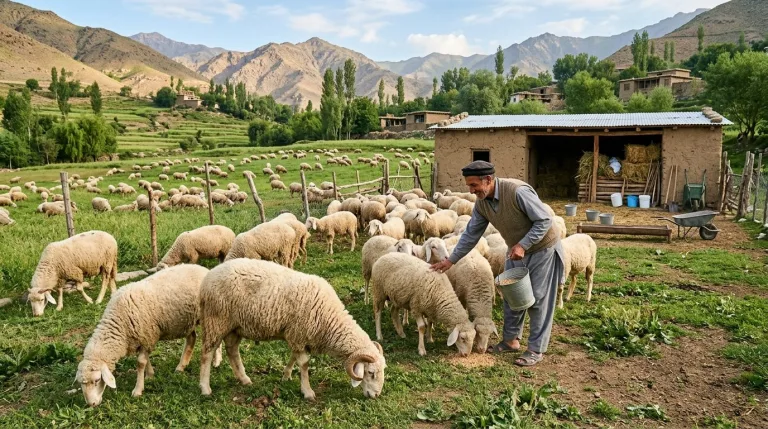
Sheep farming has quietly become one of the most profitable livestock ventures across rural Pakistan, and for good reason. A well-managed flock can generate income from meat, milk, and wool, often on the same piece of land you already own. If you’ve been thinking about starting sheep farming but don’t know where to begin, this guide will walk you through every essential step, from choosing your first breed to selling your first batch.
Pakistan is home to over 31 million sheep, making it one of the top sheep-producing countries in Asia. The demand for mutton spikes around Eid ul Adha, but steady year-round consumption means this is not a seasonal business. You can earn from a small flock of just 20 to 30 animals, and scale up as your experience grows.
Why Should You Consider Sheep Farming?
Before spending a single rupee, it helps to understand why sheep farming works so well in Pakistan’s climate and market conditions. Sheep are hardy animals that can survive on dry rangeland, crop leftovers, and basic fodder that other livestock would reject. This makes them ideal for farmers with limited resources.
Sheep farming offers three income streams at once: meat (mutton), milk, and wool. Unlike dairy cattle, sheep require a fraction of the housing space and feeding cost per animal. A single female sheep, called a ewe, can produce one or two lambs per year, so your flock grows naturally without constant reinvestment.
The profit margins are also encouraging. If you buy a 3-month-old lamb for Rs. 15,000 and raise it for 6 months on locally available fodder, the same animal can sell for Rs. 35,000 or more during peak demand. That’s a simple example, but it captures why so many farmers across Punjab and Sindh are expanding into sheep.
Choosing the Right Breed for Your Region
Not all sheep breeds perform equally in every environment. Pakistan has several well-adapted indigenous breeds that are worth knowing before you buy your first animal.
- Kajli (Punjab): Large-bodied, fast-growing, and highly popular for meat. Excellent choice for farmers targeting the Eid market.
- Lohi (southern Punjab and Sindh): Dual-purpose breed that produces both good meat and reasonable wool yield.
- Kachi (Balochistan): Well-suited to arid and semi-arid conditions, resilient in low-rainfall areas.
- Thalli (Cholistan and Thal desert regions): Hardy desert breed with strong disease resistance.
For most new farmers in Punjab, Kajli and Lohi are the most practical starting points. They’re widely available, buyers know and trust them, and veterinary advice for these breeds is easy to find locally.
Setting Up Your Sheep Shed and Space Requirements
Housing doesn’t have to be expensive, but it does need to meet a few basic standards. A proper sheep shed protects your animals from rain, extreme heat, and predators, and makes feeding and health monitoring much easier.
Each adult sheep needs roughly 15 to 20 square feet of covered space. A simple shed built from brick walls, a tin roof, and a packed mud floor works well for most climates. Ventilation is critical, so don’t seal the shed too tightly. Good airflow reduces ammonia buildup from manure, which is one of the biggest causes of respiratory problems in confined flocks.
Your pen should include a clean water trough, a salt lick, and a feeding area separated from the sleeping area. Clean the manure every two to three days, since accumulated waste breeds flies, bacteria, and disease that can destroy a young flock quickly.
What Do Sheep Eat and How Much Does It Cost?
Feeding is your biggest ongoing expense, so planning it carefully from the start makes a real difference to your profit margin. Sheep are ruminants, meaning they have a four-chambered stomach that allows them to digest rough plant material that most other animals can’t.
A basic sheep diet in Pakistan typically includes:
- Green fodder: Berseem, lucerne (alfalfa), and maize fodder are the most common choices.
- Dry fodder: Wheat straw, rice straw, or sorghum stalks during lean seasons.
- Concentrate feed: A grain mixture of crushed corn, wheat bran, and cottonseed cake, used during pregnancy or fattening.
An average adult sheep consumes around 3 to 4 kg of dry matter per day. If you have your own agricultural land, producing your own fodder brings the cost down significantly. Many farmers in southern Punjab integrate sheep with wheat farming, using wheat straw as free dry fodder after harvest.
Healthcare and Disease Prevention
Preventing disease is far cheaper than treating it. New sheep farmers often underestimate how quickly a single sick animal can infect an entire flock, so building a basic health routine from day one is not optional.
Vaccination is your first line of defense. Common diseases in Pakistani sheep include Foot and Mouth Disease, Enterotoxaemia, and PPR (Peste des Petits Ruminants). Consult your local livestock department or a registered veterinary doctor for the current vaccination schedule in your province.
Deworming is equally important. Internal parasites are extremely common in grazing sheep and can stunt growth, reduce fertility, and cause death if left untreated. Deworm your flock every 3 months, and quarantine any new animal for at least two weeks before introducing it to your existing flock. Early detection of illness, spotting a sheep eating less, moving slowly, or showing nasal discharge, allows you to act before a problem becomes a crisis.
Marketing Your Sheep and Getting the Best Price
Raising healthy sheep is only half the job. Knowing how and when to sell is what turns farming into a business. Pakistan’s mutton market has clear seasonal peaks, with demand and prices rising sharply in the months before Eid ul Adha.
Plan your production cycle around this. If you buy young lambs in January or February and fatten them over 5 to 6 months, you can sell them at peak prices in time for the Qurbani season. Animals ready for sacrifice command the highest premiums.
Selling options include local cattle markets (mandis), direct sale to butchers, online platforms like OLX or WhatsApp groups, and Eid animal fairs in your district. Over time, a reputation for healthy animals will bring buyers directly to your farm, cutting out middlemen and improving your margins.
Starting Small and Scaling Up Smartly
The most common mistake new sheep farmers make is starting too big. Beginning with 10 to 20 animals allows you to learn daily flock management, understand your actual feed costs, and handle health emergencies without catastrophic financial loss.
Once you’ve completed one full production cycle, you’ll know your real cost per animal, your local selling price, and where your time goes. That’s the moment to expand confidently. Many successful farmers in Multan, Bahawalpur, and Rahim Yar Khan started with 15 animals and grew to flocks of 200 or more within three to four years.
Sheep farming rewards patience, consistency, and attention to detail. If you feed them well, keep them healthy, and time your sales right, this is one of the most reliable and scalable livestock businesses available to Pakistani farmers today.
For more farming guides and agricultural knowledge rooted in the Multan region, visit Multanfarms.com.