Which Goat Breeds in Pakistan Grow the Biggest, and What Makes Them Special?
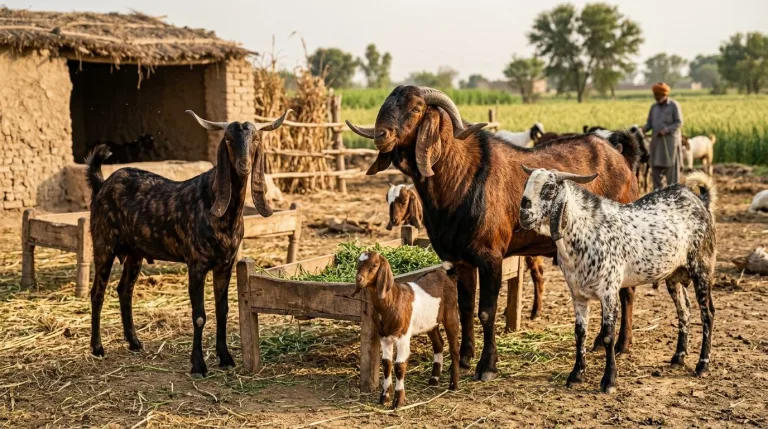
Walk into any livestock mandi in Punjab or Sindh, and you’ll quickly notice that not all goats are created equal. Some are small and compact, while others stand tall, broad-shouldered, and commanding, the kind of animal that turns heads in any crowd. Pakistan is home to some of the most impressive large goat breeds in the entire world, and farmers across the country prize them for very good reasons.
From the fertile plains of South Punjab to the river valleys of Sindh, big goats have been a part of Pakistani farming culture for centuries. They’re raised for meat, milk, and even as show animals during Eid-ul-Adha, when the biggest and most beautiful goats command extraordinary prices. If you’ve ever been curious about which breeds top the size charts and why they matter so much to Pakistani livestock farmers, you’re in the right place.
The Beetal: Pakistan’s Most Famous Big Goat
When people talk about big goat breeds in Pakistan, the Beetal almost always comes up first. Originally from the districts of Gujrat and Gujranwala in Punjab, this breed is considered one of the largest and most productive goat breeds not just in Pakistan but across South Asia. Beetal goats have a long, lean body, large drooping ears, and a Roman nose that gives them a dignified, almost regal appearance. Bucks, which are adult male goats, can weigh anywhere from 55 to 65 kilograms, with exceptional animals crossing 80 kilograms.
Beetal goats are what farmers call a dual-purpose breed, meaning they’re valuable for both meat and milk production. A good Beetal doe can produce up to 2 liters of milk per day, which is impressive for a goat. Their large frame means more meat per animal, making them a preferred choice for commercial livestock farming. At Eid, well-bred Beetals with good conformation and color can sell for tens of thousands of rupees.
The Nachi: The Dancing Goat of South Punjab
If the Beetal is the workhorse of big Pakistani goats, the Nachi is the celebrity. Native to the districts of Multan, Jhang, and Muzaffargarh, the Nachi is famous for two things: its impressive size and its unique, prancing gait. Nachi goats don’t walk the way ordinary goats do, they move with a rhythmic, high-stepping motion that almost looks like a dance, which is exactly how this breed got its name. “Nachi” comes from the Punjabi word for dancer.
Nachi bucks can reach weights of 60 to 70 kilograms, and their tall, upright posture makes them look even larger. They have long ears, a muscular build, and come in a variety of colors including black, white, and multicolored patterns. Nachi goats are primarily raised as show animals and for meat, and a prize-winning Nachi can fetch an eye-popping price at livestock exhibitions and Eid markets. For farmers in South Punjab, owning a high-quality Nachi is a matter of both income and local pride.
Dera Din Panah: The Giant of Southern Punjab
Not as widely known outside livestock circles, the Dera Din Panah breed deserves far more attention. Named after a town in Muzaffargarh district, this breed is one of the heaviest goat breeds found in Pakistan. These animals are built solidly, with large bones, a wide chest, and strong legs that carry their considerable weight with ease. Adult bucks of this breed regularly exceed 70 kilograms, and exceptionally raised animals can push past 90 kilograms.
The Dera Din Panah is primarily a meat breed, and its large body size makes it exceptionally profitable for farmers who sell animals during Eid or to commercial slaughterhouses. The breed is hardy and well-adapted to the hot, dry conditions of South Punjab, meaning it doesn’t require as much intensive care as some exotic or imported breeds. Farmers who raise them describe them as calm, manageable animals that are relatively straightforward to keep on a mixed diet of fodder, crop residues, and grazing.
The Kamori: Sindh’s Striking Big Goat
Crossing over into Sindh, the Kamori goat stands out immediately. It’s one of the most visually distinctive breeds in Pakistan, sporting a deep chocolate or coffee-brown coat with small lighter spots scattered across the body. Kamori goats are tall, long-legged, and elegant, with adult males commonly weighing between 60 and 70 kilograms. They’re found mainly in the Dadu and Larkana districts of Sindh, where local farmers have selectively bred them for generations.
Kamori goats are valued for both their meat and their milk, and because of their striking appearance, they’re also popular as show animals. A well-marked Kamori with a clean, deep brown coat and good body proportions is one of the most sought-after animals in Pakistan’s livestock trade. Their relatively calm temperament makes them manageable even for smaller farms, and they’ve been gaining popularity in Punjab as well over the past decade.
What Do Big Goats Need to Reach Their Full Size?
Raising a big goat breed to its full potential isn’t just about picking the right breed and hoping for the best. Proper nutrition is the single biggest factor that determines how large and healthy a goat grows. Large breeds like Beetal and Dera Din Panah need a consistent supply of green fodder, including berseem, mott grass, and seasonal crops, along with dry roughage and a balanced concentrate feed to support muscle development and weight gain.
Clean water, adequate space, and protection from common diseases like foot-and-mouth disease and pneumonia are equally important. Farmers who achieve record-breaking weights in Beetal or Nachi bucks typically follow a strict feeding schedule, provide mineral supplements, and work with veterinarians to keep their animals vaccinated and dewormed on a regular schedule. The investment in proper care pays off directly in higher market prices and healthier, more productive animals.
Why Big Goats Matter for Pakistani Farmers
Large goat breeds are more than just impressive animals, they’re a significant source of income for hundreds of thousands of farming families across Pakistan. The livestock sector contributes meaningfully to Pakistan’s agricultural economy, and goats form a major part of that contribution. During Eid-ul-Adha alone, the demand for big, healthy goats creates a massive seasonal market that can make or break a small farmer’s yearly income.
Beyond Eid, big breeds like Beetal and Kamori support year-round income through milk sales, breeding fees for high-quality bucks, and the commercial meat trade. As more Pakistani farmers shift toward intensive and semi-intensive livestock systems, the demand for proven big goat breeds is only expected to grow. Understanding which breeds perform best in your region, and how to raise them properly, is one of the most practical investments a livestock farmer can make.
Want to learn more about raising big goat breeds and getting the most from your livestock? Visit Multanfarms.com for expert guidance on Pakistani livestock farming rooted in the agricultural traditions of South Punjab.
Walk into any livestock mandi in Punjab or Sindh, and you’ll quickly notice that not all goats are created equal. Some are small and compact, while others stand tall, broad-shouldered, and commanding, the kind of animal that turns heads in any crowd. Pakistan is home to some of the most impressive large goat breeds in the entire world, and farmers across the country prize them for very good reasons.
From the fertile plains of South Punjab to the river valleys of Sindh, big goats have been a part of Pakistani farming culture for centuries. They’re raised for meat, milk, and even as show animals during Eid-ul-Adha, when the biggest and most beautiful goats command extraordinary prices. If you’ve ever been curious about which breeds top the size charts and why they matter so much to Pakistani livestock farmers, you’re in the right place.
The Beetal: Pakistan’s Most Famous Big Goat
When people talk about big goat breeds in Pakistan, the Beetal almost always comes up first. Originally from the districts of Gujrat and Gujranwala in Punjab, this breed is considered one of the largest and most productive goat breeds not just in Pakistan but across South Asia. Beetal goats have a long, lean body, large drooping ears, and a Roman nose that gives them a dignified, almost regal appearance. Bucks, which are adult male goats, can weigh anywhere from 55 to 65 kilograms, with exceptional animals crossing 80 kilograms.
Beetal goats are what farmers call a dual-purpose breed, meaning they’re valuable for both meat and milk production. A good Beetal doe can produce up to 2 liters of milk per day, which is impressive for a goat. Their large frame means more meat per animal, making them a preferred choice for commercial livestock farming. At Eid, well-bred Beetals with good conformation and color can sell for tens of thousands of rupees.
The Nachi: The Dancing Goat of South Punjab
If the Beetal is the workhorse of big Pakistani goats, the Nachi is the celebrity. Native to the districts of Multan, Jhang, and Muzaffargarh, the Nachi is famous for two things: its impressive size and its unique, prancing gait. Nachi goats don’t walk the way ordinary goats do, they move with a rhythmic, high-stepping motion that almost looks like a dance, which is exactly how this breed got its name. “Nachi” comes from the Punjabi word for dancer.
Nachi bucks can reach weights of 60 to 70 kilograms, and their tall, upright posture makes them look even larger. They have long ears, a muscular build, and come in a variety of colors including black, white, and multicolored patterns. Nachi goats are primarily raised as show animals and for meat, and a prize-winning Nachi can fetch an eye-popping price at livestock exhibitions and Eid markets. For farmers in South Punjab, owning a high-quality Nachi is a matter of both income and local pride.
Dera Din Panah: The Giant of Southern Punjab
Not as widely known outside livestock circles, the Dera Din Panah breed deserves far more attention. Named after a town in Muzaffargarh district, this breed is one of the heaviest goat breeds found in Pakistan. These animals are built solidly, with large bones, a wide chest, and strong legs that carry their considerable weight with ease. Adult bucks of this breed regularly exceed 70 kilograms, and exceptionally raised animals can push past 90 kilograms.
The Dera Din Panah is primarily a meat breed, and its large body size makes it exceptionally profitable for farmers who sell animals during Eid or to commercial slaughterhouses. The breed is hardy and well-adapted to the hot, dry conditions of South Punjab, meaning it doesn’t require as much intensive care as some exotic or imported breeds. Farmers who raise them describe them as calm, manageable animals that are relatively straightforward to keep on a mixed diet of fodder, crop residues, and grazing.
The Kamori: Sindh’s Striking Big Goat
Crossing over into Sindh, the Kamori goat stands out immediately. It’s one of the most visually distinctive breeds in Pakistan, sporting a deep chocolate or coffee-brown coat with small lighter spots scattered across the body. Kamori goats are tall, long-legged, and elegant, with adult males commonly weighing between 60 and 70 kilograms. They’re found mainly in the Dadu and Larkana districts of Sindh, where local farmers have selectively bred them for generations.
Kamori goats are valued for both their meat and their milk, and because of their striking appearance, they’re also popular as show animals. A well-marked Kamori with a clean, deep brown coat and good body proportions is one of the most sought-after animals in Pakistan’s livestock trade. Their relatively calm temperament makes them manageable even for smaller farms, and they’ve been gaining popularity in Punjab as well over the past decade.
What Do Big Goats Need to Reach Their Full Size?
Raising a big goat breed to its full potential isn’t just about picking the right breed and hoping for the best. Proper nutrition is the single biggest factor that determines how large and healthy a goat grows. Large breeds like Beetal and Dera Din Panah need a consistent supply of green fodder, including berseem, mott grass, and seasonal crops, along with dry roughage and a balanced concentrate feed to support muscle development and weight gain.
Clean water, adequate space, and protection from common diseases like foot-and-mouth disease and pneumonia are equally important. Farmers who achieve record-breaking weights in Beetal or Nachi bucks typically follow a strict feeding schedule, provide mineral supplements, and work with veterinarians to keep their animals vaccinated and dewormed on a regular schedule. The investment in proper care pays off directly in higher market prices and healthier, more productive animals.
Why Big Goats Matter for Pakistani Farmers
Large goat breeds are more than just impressive animals, they’re a significant source of income for hundreds of thousands of farming families across Pakistan. The livestock sector contributes meaningfully to Pakistan’s agricultural economy, and goats form a major part of that contribution. During Eid-ul-Adha alone, the demand for big, healthy goats creates a massive seasonal market that can make or break a small farmer’s yearly income.
Beyond Eid, big breeds like Beetal and Kamori support year-round income through milk sales, breeding fees for high-quality bucks, and the commercial meat trade. As more Pakistani farmers shift toward intensive and semi-intensive livestock systems, the demand for proven big goat breeds is only expected to grow. Understanding which breeds perform best in your region, and how to raise them properly, is one of the most practical investments a livestock farmer can make.
Want to learn more about raising big goat breeds and getting the most from your livestock? Visit Multanfarms.com for expert guidance on Pakistani livestock farming rooted in the agricultural traditions of South Punjab.