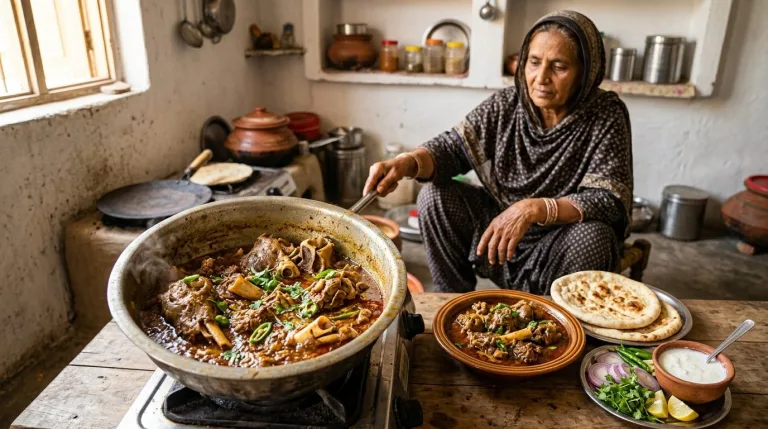
If you’ve ever walked past a roadside dhaba in the early morning hours and caught the rich, earthy aroma of slow-cooked goat head curry, known across Pakistan as Siri, you already know there’s something deeply satisfying about this dish. It’s warming, intensely flavored, and has been a staple of Pakistani breakfast culture for generations. But beyond the taste, a more important question is worth asking: is goat head curry actually good for you?
The answer might surprise you. Far from being just a comfort food, goat head curry packs a remarkable nutritional profile that supports everything from bone health and joint function to skin, immunity, and cognitive performance. The secret lies in the unique combination of cuts involved, bone, cartilage, soft tissue, and marrow, each contributing a different set of nutrients to the final dish.
A Dish Built on Centuries of Traditional Wisdom
Before modern nutrition science gave us labels like “collagen peptides” and “bioavailable minerals,” our grandparents already knew that siri was restorative. Across South Asia, goat head curry has historically been served to people recovering from illness, new mothers, and anyone who needed to rebuild strength quickly.
This isn’t coincidence. Traditional food cultures around the world recognized that slow-cooked bones and connective tissue released powerful nutrients into the broth. What cooks passed down through generations, nutritionists are now validating through research. The dish is a natural example of whole-animal eating, where nothing is wasted and every part contributes something valuable to the meal.
The Collagen Advantage: What It Does for Your Body
One of the most significant benefits of goat head curry comes from collagen, the most abundant structural protein in the human body. Collagen is found in skin, cartilage, tendons, and bones, and a goat’s head contains all of these in generous amounts. When the head is slow-cooked for several hours, collagen breaks down into gelatin, which your body absorbs and uses to rebuild its own connective tissue.
What does that mean practically? Stronger joints, more elastic skin, healthier hair and nails, and improved gut lining integrity. Think of collagen as the body’s natural scaffolding, and eating goat head curry as a direct way to reinforce it. People who eat collagen-rich foods regularly often report fewer joint aches and noticeably better skin texture over time.
Protein-Dense and Mineral-Rich: The Core Nutritional Profile
Goat meat is widely regarded as one of the leanest red meats available, and the meat from the head is no exception. It delivers a strong dose of complete protein, meaning it contains all nine essential amino acids the body can’t produce on its own, supporting muscle repair, enzyme production, hormone regulation, and immune function.
Beyond protein, goat head curry is a meaningful source of several critical minerals. Zinc supports immune function and wound healing. Iron, present in high amounts especially in the darker tissues, helps carry oxygen through the blood and combats fatigue. Phosphorus and calcium, released from bone during slow cooking, contribute to bone density and nerve signaling, and for people with limited dietary variety, a single serving can cover a meaningful portion of several daily mineral needs.
Brain Meat: Nutritionally Significant and Worth Understanding
The brain is one of the most nutrient-dense parts of the goat head, and in Pakistani cooking it’s often considered a delicacy. Goat brain is exceptionally high in omega-3 fatty acids, particularly DHA (docosahexaenoic acid), a fat that plays a critical role in brain function, memory retention, and reducing systemic inflammation.
It’s also rich in phosphatidylcholine, a compound that supports the nervous system and cognitive performance. However, goat brain is also high in cholesterol, which makes it best consumed in moderation, and those with existing cholesterol concerns should keep portions in check. For most healthy adults eating it occasionally as part of a traditional dish, the nutritional benefits are both real and meaningful.
Bone Broth Benefits: The Liquid Gold in Your Bowl
When you eat goat head curry, you’re not just eating meat. You’re consuming a slow-cooked broth that has been drawing nutrients from bone and marrow for hours, which is exactly what nutritionists today refer to as bone broth, a preparation that has seen a serious resurgence in health circles worldwide.
Bone broth contains glycine and proline, amino acids that support liver detoxification, gut health, and sleep quality. The marrow inside the bones provides healthy fats, B vitamins, and compounds that support red blood cell production. When you drink the soup at the bottom of your bowl, you’re absorbing as much nutrition as when you eat the meat itself, which is why finishing the broth is never a mistake.
Who Benefits Most from Eating Goat Head Curry?
While goat head curry is a solid choice for most people, certain groups benefit from it most significantly. Those recovering from illness or surgery can use it to rebuild protein and mineral stores efficiently. Older adults concerned about joint health and bone density get direct support from the collagen and calcium content, while anyone dealing with iron deficiency or persistent fatigue benefits from the rich iron concentration in the tissue.
It’s also worth noting that goat meat is lower in saturated fat compared to beef or lamb, making it a comparatively heart-friendly red meat option when eaten as part of a varied diet. The key, as with most nutrient-dense foods, is consistent but moderate consumption rather than occasional excess.
How You Cook It Matters as Much as What’s in It
The nutritional value of goat head curry is heavily influenced by preparation. Slow cooking at low to medium heat over two to four hours is what breaks down collagen into gelatin and draws minerals from the bones into the broth. Pressure cooking achieves similar results faster, though many home cooks prefer the texture that comes from a longer, gentler simmer.
Using whole spices like cinnamon, cloves, black pepper, and ginger doesn’t just build the flavor profile. These spices carry their own anti-inflammatory and digestive properties, making the final dish even more beneficial from a functional nutrition standpoint. Serving the curry with a whole-grain bread like naan or roti rounds out the meal and balances the protein load with complex carbohydrates.
Tradition, Taste, and Real Nutrition in Every Bowl
Goat head curry is one of those rare dishes where centuries of cultural tradition and modern nutritional science are in full agreement. It’s rich in collagen, complete protein, bioavailable minerals, and brain-supporting fats, all delivered in a form the body absorbs efficiently thanks to the slow-cooking process.
The next time you sit down to a bowl of siri, know that you’re not just enjoying one of Pakistan’s most beloved traditional dishes. You’re giving your joints, bones, skin, and immune system a genuinely powerful nutritional boost in one sitting. For the freshest, most responsibly sourced goat products in South Punjab, visit Multanfarms.com and explore what authentic Pakistani livestock farming has to offer.