Every summer, the same argument breaks out at fruit markets, dinner tables, and family WhatsApp groups across the globe: which mango is the best? Some people will fight for India’s Alphonso with the same passion they reserve for cricket. Others swear by Pakistan’s Chaunsa with a loyalty that needs no debate. And then there are the mango lovers who’ve never tasted a South Asian variety and think a Florida Tommy Atkins is perfectly fine.
The truth is, the answer depends on who you ask, where they grew up, and what kind of mango experience they’re chasing. Are you after intense sweetness? Buttery texture? Floral fragrance? Or that specific nostalgic taste that takes you straight back to long summer afternoons? This article breaks down the world’s most celebrated mango varieties, what makes each one special, and why Pakistan’s own mangoes are genuinely in a league of their own.
Why Is the Mango Called the King of Fruits?
The title of King of Fruits isn’t just poetic flattery. Mangoes have been cultivated for over 4,000 years, originating in South Asia and spreading to every tropical corner of the planet. Today, over 500 mango varieties are grown worldwide, from the humid valleys of India and Pakistan to the plantations of Mexico, Brazil, and the Philippines.
What earns the mango its crown is a rare combination of rich flavor, vibrant aroma, and impressive nutrition. A single ripe mango provides a generous dose of Vitamin C, Vitamin A, folate, and natural sugars that deliver quick, clean energy. It’s sweet, it’s fragrant, and it somehow manages to taste like a fruit designed specifically to make you happy.
The World’s Top Mango Varieties, Ranked by Reputation
Not all mangoes are created equal. Here’s a look at the varieties that consistently dominate the global conversation.
Alphonso (Hapus), India: Grown in the Ratnagiri region of Maharashtra, the Alphonso has a deep saffron-colored flesh, a creamy texture, and a rich, sweet flavor with very little fiber. It’s exported globally and commands premium prices. Many food critics consider it the gold standard of mangoes outside South Asia.
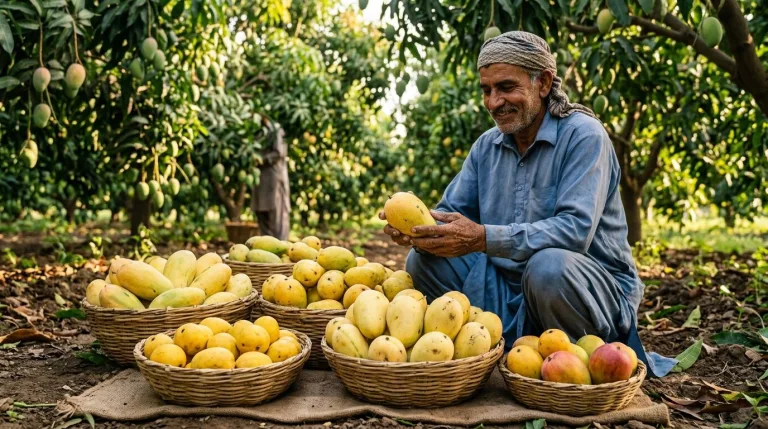
Chaunsa, Pakistan: Chaunsa is Pakistan’s most celebrated variety and arguably the most aromatic mango in the world. Originating in the mango belt of South Punjab, particularly around Multan and Rahim Yar Khan, it has pale yellow skin, almost fiber-free flesh, and a fragrance so intense it can fill an entire room. There’s a reason it earned the nickname “the honey mango of Pakistan,” and it’s exported to the Middle East, Europe, and beyond, where it has developed a loyal fanbase of its own.
Anwar Ratol, Pakistan: Smaller in size but enormous in flavor, Anwar Ratol is a variety that Pakistanis treat almost like a delicacy. The season is short, the supply is limited, and anyone who has tasted one will tell you it’s unlike anything else. The sweetness is almost candy-like, with a syrupy depth that even devoted Alphonso fans rarely experience.
Ataulfo (Honey Mango), Mexico: A smaller, kidney-shaped variety with creamy, buttery flesh and very low fiber content. Ataulfo mangoes have a milder sweetness compared to South Asian varieties, but they’re widely available in North America and Europe and are a genuine crowd-pleaser.
Tommy Atkins, USA: Tommy Atkins is the most commercially grown mango in the world by sheer volume. It has a long shelf life and travels well. But it’s also the least exciting of the major varieties, with a fibrous texture and a flavor that often tastes more “mango-adjacent” than truly mango, giving many Western shoppers a misleadingly average first impression of what the fruit can be.
What Actually Makes a Mango “The Best”?
When experts, farmers, and food lovers debate the best mango in the world, they evaluate a handful of key qualities. Sweetness is the most obvious factor, measured by the sugar content, or Brix level, of the fruit. The higher the Brix reading, the sweeter the mango, and Pakistani varieties like Chaunsa and Anwar Ratol consistently score among the highest in the world.
Aroma is the second major factor. A great mango should smell incredible before you even cut it open. The fragrance comes from a complex mix of volatile organic compounds, and South Asian varieties are particularly rich in these aromatic compounds. Texture matters too, as fiber-free, creamy flesh is considered the premium standard. Finally, flavor complexity, whether a mango carries floral, citrusy, or honey-like notes beneath the sweetness, separates a truly great mango from a merely good one.
Multan: The Mango Capital of Pakistan
If you want to understand why Pakistani mangoes are so exceptional, you need to understand the soil and climate of South Punjab, particularly the region around Multan. The intense summer heat, the alluvial soil of the Indus basin, and centuries of cultivation expertise have created perfect conditions for producing mangoes of extraordinary quality.
Multan sits at the heart of Pakistan’s mango belt, producing varieties that are consistently ranked among the finest in Asia. Local farmers here have passed down grafting techniques and harvesting wisdom across generations, and that knowledge shows in every fruit that reaches your plate. Pakistan is one of the top five mango-producing countries in the world, and a significant portion of that production comes from this very region.
So, Which Mango Is Actually the Best?
Here’s the honest answer: it depends on what you value most. If you want global prestige and widespread availability, the Alphonso earns its reputation. If you want the most intense fragrance and naturally sweet, fiber-free flesh, Chaunsa is difficult to beat. If you want something rare and syrupy that true mango lovers travel across the country to find, Anwar Ratol is your answer.
But ask anyone who has grown up eating mangoes from Multan, and the answer is never complicated. The best mango in the world comes from right here.
Explore premium Pakistani mangoes, including Chaunsa and seasonal varieties, at Multanfarms.com and taste the difference that real mango country makes.