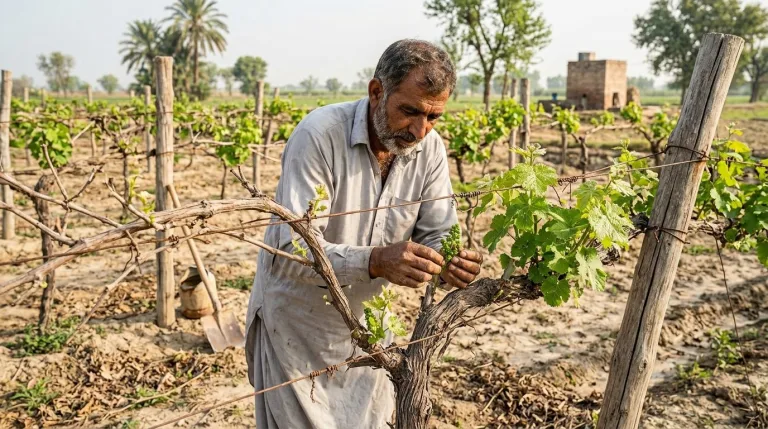
Here’s a question that trips up a lot of people: are grapes a rabi crop or a kharif crop? If you’ve ever heard farmers talk about these two seasons, you might guess grapes belong to one of them. The surprising answer is that they don’t fit in either box.
Grapes are neither rabi nor kharif. They’re a perennial crop, which means the plant lives and keeps producing fruit for many years instead of just one season. That one fact changes how grapes are grown, cared for and harvested.
In this article, you’ll learn what rabi and kharif really mean, why grapes are different, and what a grape vine does through the year.
What Do Rabi and Kharif Actually Mean?
Farming in Pakistan follows two main crop seasons. The kharif season starts around May to July, when the summer heat and monsoon rains arrive. Crops like rice, cotton, maize and sugarcane are sown then and harvested in autumn.
The rabi season starts around October to December, when the weather turns cool. Wheat, gram, mustard and barley are sown in this season and harvested in spring.
Think of it like school terms. Kharif is the summer term and rabi is the winter term. Most crops enroll for just one term, finish their job and leave the field.
So Why Don’t Grapes Fit In?
Wheat or rice lives for only a few months. A farmer sows the seed, waits, harvests, and then the plant is done. Next season, the farmer has to start over.
A grape vine is more like a permanent resident than a one-term student. Once it’s planted, it stays in the same spot and grows back every year. Because it never needs to be re-sown, it can’t be tied to a single sowing season like rabi or kharif.
That’s why grapes are grouped with other long-living fruit plants such as mangoes, citrus trees and pomegranates.
How Long Does a Grape Vine Live?
Here’s the part that surprises most people. A healthy vine usually starts giving a good harvest about three years after planting. After that, it can keep producing fruit for 20 to 30 years, and some well-cared-for vines live even longer.
It’s a bit like a cricket player who joins a team as a teenager and plays for decades. The early years are about learning and growing strong. The later years are about delivering results again and again.
This long life is why farmers treat grape vines like a family investment. They spend time and money in the first few years, then enjoy harvest after harvest.
A Year in the Life of a Grape Vine
Even though grapes don’t follow rabi or kharif, they still have their own yearly rhythm. Here’s how it usually goes:
- Winter: The vine rests. Farmers prune it, which means cutting back old branches so new, fruit-bearing ones can grow.
- Early spring: Buds open and fresh green leaves appear.
- Late spring: Tiny flowers bloom and turn into small green berries.
- Summer: The berries swell and sweeten under the sun.
- Late summer to early autumn: The grapes ripen and are harvested, usually from about June through September in Pakistan.
As you can see, the vine works on its own calendar. Its season depends on the weather and the variety, not on a sowing date.
Quick Sorting Guide: Rabi, Kharif or Perennial?
Still feeling unsure? Here’s an easy way to sort common crops:
- Kharif: rice, cotton, maize
- Rabi: wheat, gram, mustard
- Perennial: grapes, mangoes, citrus
The trick is to ask one question: does the plant need to be sown again every year? If the answer is yes, it’s rabi or kharif. If the plant just keeps growing and fruiting on its own, it’s perennial.
Did You Know? Fun Facts About Grape Growing
- Grape vines are climbers. Farmers train them on wires or frames so the leaves get sunshine and the bunches get air.
- Pruning might sound harsh, but cutting a vine back in winter actually helps it produce better grapes later.
- Grapes grow well in dry, sunny places with cool nights, which is why Balochistan is a major grape-growing region in Pakistan.
- Raisins are simply dried grapes, so one vine can supply both fresh fruit and dry fruit.
What Does This Mean for You?
Knowing that grapes are perennial helps you understand why they’re not sold in the same way as wheat or rice. The harvest comes once a year, and quality depends on how well the vine was looked after through the other months. That’s also why in-season grapes taste so much better than ones kept in storage.
Next time you pick up a bunch, you can think about the vine that has been growing for years to produce it. Isn’t it amazing that one plant can feed families for decades? For more simple farming guides and fresh, honest farm produce, visit Multanfarms.com.