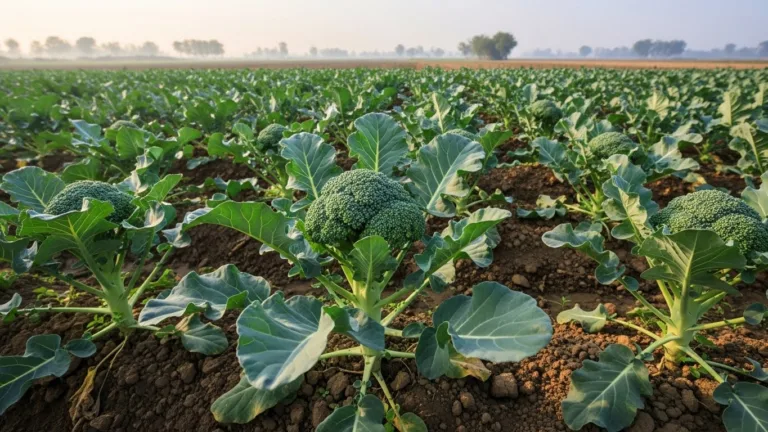
Have you ever looked at those tiny green trees on your dinner plate and wondered where they come from? Broccoli might look like a miniature forest, but it’s actually one of the most nutritious vegetables you can eat! Here’s something that might surprise you: this veggie that seems so common in Western countries is becoming increasingly popular in Pakistan, even though it wasn’t traditionally grown there. So how did broccoli make its way to Pakistani farms, and can it really grow well in the country’s hot climate?
Pakistan is known for its delicious mangoes, juicy oranges, and flavorful spices, but broccoli is a relatively new addition to the country’s agricultural scene. For years, most Pakistanis didn’t even know what broccoli was! It was considered an exotic foreign vegetable that only appeared in fancy restaurants or imported food sections. But things have changed dramatically over the past couple of decades. Now, you can find locally grown broccoli in markets across major cities, and farms like Multanfarms.com are leading the way in bringing this super-healthy veggie to Pakistani dinner tables.
In this article, you’ll discover how broccoli found its home in Pakistan, why it’s such a challenging crop to grow in the country’s unique climate, where it’s being cultivated successfully, and why more Pakistani farmers are choosing to grow this green powerhouse. By the end, you’ll understand why broccoli’s journey to Pakistan is actually a pretty cool success story about agriculture, adaptation, and healthy eating!
How Did Broccoli Arrive in Pakistan?
Broccoli isn’t native to Pakistan or even to Asia. It actually comes from Italy and has been popular in European countries for hundreds of years. So how did it end up growing in Pakistani soil? The story is more interesting than you might think!
In the 1980s and 1990s, as more Pakistanis traveled abroad for work and education, they discovered new foods, including broccoli. When they returned home, they wanted to eat the same healthy vegetables they’d enjoyed overseas. At first, the only way to get broccoli in Pakistan was to import it from other countries, which made it super expensive. A small bunch of broccoli could cost as much as a whole bag of local vegetables! This meant only wealthy families could afford it.
Smart farmers and agricultural experts realized there was a growing demand for broccoli. They thought, “Why not try growing it here?” The challenge was that broccoli loves cool weather, and most of Pakistan is pretty hot for much of the year. But Pakistan does have some cooler regions and a winter season when temperatures drop. Farmers started experimenting with broccoli cultivation in the cooler months and in areas with milder climates. Slowly but surely, they figured out how to grow this foreign veggie successfully on Pakistani soil. Today, farms like Multanfarms.com have perfected the art of growing high-quality broccoli that’s both affordable and fresh for local consumers.
Why Is Growing Broccoli in Pakistan So Tricky?
Imagine you’re a plant that loves cold weather, and suddenly someone plants you in a place where summer temperatures can reach 40°C (that’s 104°F!). That’s basically what broccoli faces in Pakistan. This vegetable is pretty picky about its growing conditions, which makes it a challenging crop for Pakistani farmers.
Broccoli grows best when temperatures are between 18°C and 23°C (about 64°F to 73°F). It needs cool weather to develop those tight, compact heads that we eat. If it gets too hot, the heads become loose and develop flowers too quickly, a process called “bolting.” When broccoli bolts, it becomes bitter and isn’t as good to eat. Think of it like ice cream melting on a hot day, once it starts melting, there’s no going back to the perfect frozen treat!
Another challenge is that broccoli needs consistent watering and nutrient-rich soil. It’s like a high-maintenance friend who needs constant attention! The plant requires specific amounts of nitrogen, phosphorus, and potassium at different stages of growth. Too much or too little of any nutrient can affect the size and quality of the heads. Pakistani farmers have had to learn these specific requirements through trial and error, working closely with agricultural experts to get the balance just right.
Where in Pakistan Does Broccoli Grow Best?
Not all parts of Pakistan are suitable for growing broccoli, but several regions have proven to be perfect for this cool-weather crop. Let’s explore where you’re most likely to find broccoli farms flourishing across the country.
Northern areas like parts of Khyber Pakhtunkhwa and the cooler valleys are ideal for broccoli cultivation. These regions have naturally cooler temperatures, especially during the winter months. The mountainous terrain and higher altitudes create the perfect climate that broccoli loves. Farmers in these areas can sometimes grow broccoli for a longer season compared to other parts of the country.
Punjab’s winter season provides another great opportunity for broccoli farming. Cities like Lahore, Faisalabad, and the surrounding agricultural areas become suitable for broccoli cultivation from October through February. During these months, temperatures drop to the range that broccoli needs to thrive. Smart farmers like those at Multanfarms.com time their planting perfectly to take advantage of these cooler months, ensuring the broccoli matures when conditions are just right.
Balochistan’s highlands also offer suitable conditions for broccoli farming. Areas around Quetta and other elevated regions have cooler climates that can support broccoli growth. The unique advantage here is that these regions can sometimes extend the growing season a bit longer than the plains because they stay cooler even as spring approaches.
What Makes Pakistani-Grown Broccoli Special?
You might wonder if there’s any difference between broccoli grown in Pakistan and broccoli imported from other countries. The answer is yes, and the differences matter more than you’d think! Locally grown broccoli has several advantages that make it a better choice for Pakistani consumers.
First, freshness makes a huge difference. When broccoli is imported, it might spend days or even weeks traveling from farms in other countries to stores in Pakistan. During this time, it loses nutrients and flavor. Locally grown broccoli from farms like Multanfarms.com can go from the field to your local market in just a day or two. This means it’s crisper, tastier, and more nutritious. It’s like comparing a fresh-baked cookie to one that’s been sitting in a jar for weeks, both are cookies, but the fresh one is definitely better!
Second, local broccoli is more affordable. When you don’t have to pay for international shipping, import taxes, and all the other costs of bringing vegetables from far away, the price drops significantly. This means more Pakistani families can afford to include this super-healthy vegetable in their diets. What used to be a luxury item is now becoming accessible to regular households.
Third, supporting local farmers helps the Pakistani economy. When you buy locally grown broccoli, you’re helping Pakistani farmers earn a living and contributing to the country’s food security. It also means fewer carbon emissions from transporting food across the world, which is better for the environment. It’s a win-win situation for everyone!
How Are Farmers Making Broccoli Cultivation Successful?
Pakistani farmers have had to become pretty creative and scientific to make broccoli cultivation work. They’ve developed some clever techniques and strategies that have turned this challenging crop into a profitable venture. Let’s look at some of the methods they’re using.
Timing is everything when it comes to growing broccoli in Pakistan. Farmers carefully plan their planting schedules to ensure the crop matures during the coolest part of the year. They typically start planting seeds in September or October, allowing the young plants to grow during the gradually cooling months. By the time the broccoli heads start forming in December and January, temperatures are perfect for producing high-quality vegetables.
Modern farming techniques have also made a big difference. Many progressive farms use drip irrigation systems that deliver water directly to the plants’ roots, reducing waste and ensuring consistent moisture levels. They also use soil testing to determine exactly what nutrients the soil needs, then add the right fertilizers at the right times. It’s like giving the plants a customized meal plan designed just for them!
Protected cultivation is another game-changer. Some farmers use shade nets or tunnels to protect their broccoli crops from extreme temperature changes and harsh sunlight. These structures help maintain more stable temperatures and protect the plants from pests and diseases. Think of it as giving the broccoli plants their own climate-controlled room where conditions are always ideal. Farms like Multanfarms.com invest in these modern techniques to ensure they can consistently produce top-quality broccoli for their customers.
Why Should You Care About Broccoli in Pakistan?
At this point, you might be thinking, “Okay, so Pakistan grows broccoli now. Why does this matter to me?” Well, the story of broccoli in Pakistan is about much more than just one vegetable. It represents how agriculture can adapt and change to meet new demands and challenges.
First, broccoli is incredibly nutritious. It’s packed with vitamins C and K, fiber, and antioxidants that help keep your body healthy. It even contains compounds that scientists believe might help prevent certain diseases. As more Pakistanis become health-conscious, having access to affordable, locally grown broccoli means more people can improve their diets and overall health. It’s like having a superhero vegetable that’s now available in your neighborhood market!
Second, the success of broccoli cultivation shows that Pakistani farmers are innovative and capable of adapting to new challenges. Climate change is making agriculture more difficult around the world, and farmers who can successfully grow new crops are developing skills that will be valuable in the future. The techniques they’re learning from growing broccoli can be applied to other crops too.
Finally, having diverse crops is important for food security. If Pakistan can successfully grow vegetables like broccoli that were once considered impossible to cultivate locally, it means the country is less dependent on imports and more self-sufficient. This is especially important during times when international trade becomes difficult or expensive.
The Future of Broccoli Farming in Pakistan
The story of broccoli in Pakistan is still being written, and the future looks pretty promising! As more farmers gain experience with this crop and as demand continues to grow, we’re likely to see even more broccoli farms popping up across the country. Agricultural researchers are working on developing broccoli varieties that are even better suited to Pakistan’s climate, which could make cultivation easier and more profitable.
Technology is also playing a role. Farmers are using smartphone apps to monitor weather conditions, track plant growth, and get advice from agricultural experts. Some farms are experimenting with hydroponic systems (growing plants in water instead of soil) and other advanced techniques that could revolutionize how broccoli is grown. Farms like Multanfarms.com are at the forefront of these innovations, constantly looking for ways to improve their cultivation methods and bring better products to consumers.
The growing popularity of healthy eating in Pakistan means more people are looking for nutritious vegetables like broccoli. This increasing demand encourages more farmers to try their hand at broccoli cultivation, creating a positive cycle of supply and demand. Who knows? In ten years, broccoli might be as common in Pakistani cuisine as spinach or cauliflower are today!
Growing Green, Growing Strong
From an exotic foreign vegetable to a locally grown crop, broccoli’s journey in Pakistan is a testament to agricultural innovation and adaptation. Pakistani farmers have overcome significant climate challenges to successfully cultivate this nutritious vegetable, making it more accessible and affordable for everyone. Through careful timing, modern techniques, and dedication, they’ve proven that even crops that seem impossible to grow can thrive with the right approach.
The next time you see broccoli at your local market or on your dinner plate, you’ll know the interesting story behind how it got there. You’ll understand the challenges farmers face and the clever solutions they’ve developed. More importantly, you’ll appreciate that choosing locally grown broccoli from farms like Multanfarms.com means you’re supporting Pakistani agriculture, eating fresher and more nutritious food, and contributing to a more sustainable food system.
So here’s something to think about: will you give broccoli a try if you haven’t already? Or if you’re already a broccoli fan, will you look for locally grown options and support Pakistani farmers who are working hard to bring this super-healthy vegetable to your table? The choice is yours, but now you know the amazing story behind those little green trees on your plate!