Imagine walking into your backyard and catching fresh fish for dinner without ever leaving home. Sounds like something out of a movie, right? Well, here’s the cool part: fish farming at home is not only possible, it’s becoming super popular with families around the world! Whether you have a tiny balcony or a spacious backyard, you can raise your own fish and even turn it into a small business.
Home fish farming, also called backyard aquaculture, is exactly what it sounds like. You create a controlled environment where fish can grow, just like farmers grow vegetables in gardens. The difference? Instead of soil and seeds, you’re working with water and fingerlings (baby fish). People in Pakistan, especially in cities like Multan and Lahore, are discovering that their rooftops, backyards, and even basements can become mini fish farms!
In this article, you’ll learn everything you need to know about starting your own fish farm at home. We’ll explore what types of fish work best, what equipment you’ll need, how to avoid common mistakes, and whether this exciting project might be right for you. Let’s dive into the fascinating world of home fish farming!
Why Would Anyone Want to Farm Fish at Home?
You might be wondering, “Why bother raising fish when I can just buy them from the market?” Great question! Home fish farming offers some pretty amazing benefits that go way beyond just having fresh fish available. First off, you’ll always know exactly what your fish are eating and how they’re being raised. No mystery chemicals or questionable conditions, just healthy fish grown in clean water.
The economic benefits are seriously impressive too. Once your system is set up, raising fish costs much less than buying them regularly from the store. Think about it like this: buying fish every week for a year might cost you 50,000 rupees or more, but setting up a small home fish farm might only cost 20,000-30,000 rupees initially, and then your fish basically pay for themselves! Plus, if your fish start reproducing, you could even sell the extras to neighbors or local markets.
There’s also something incredibly satisfying about growing your own food. It’s like leveling up from growing tomatoes to producing actual protein! You’ll learn about biology, water chemistry, and ecosystem management while doing something productive. And here’s a bonus: fish farming is way less work than taking care of chickens or goats. Fish don’t need daily walks, they don’t make noise, and they won’t escape and eat your neighbor’s garden!
Choosing the Right Fish for Your Home Setup
Not all fish are created equal when it comes to home farming. Some fish are like high-maintenance pets that need perfect conditions, while others are tough and forgiving, perfect for beginners. In Pakistan, the superstar of home fish farming is definitely tilapia. These fish are basically the champions of survival, they can handle temperature changes, don’t need fancy equipment, and grow fast enough that you can harvest them in just 6-8 months.
Tilapia are also incredibly efficient eaters. They’ll munch on commercial fish feed, but they’re not picky, they’ll also eat vegetables, kitchen scraps (like leftover rice or bread), and even algae that grows in their tank. It’s like having a pet that helps you recycle your food waste! A single tilapia can grow from fingerling size to a full 500-gram eating-size fish in about six months under good conditions.
Another great option for Pakistani home farmers is rohu or catfish. Catfish are super hardy and can even survive in water with lower oxygen levels, which means less equipment and worry for you. Rohu is a local favorite that people love eating, so if you’re planning to sell your fish, rohu can be a smart choice. Some adventurous farmers even try koi or goldfish first as practice, since these ornamental fish teach you the basics before you invest in food fish.
Setting Up Your First Fish Tank or Pond
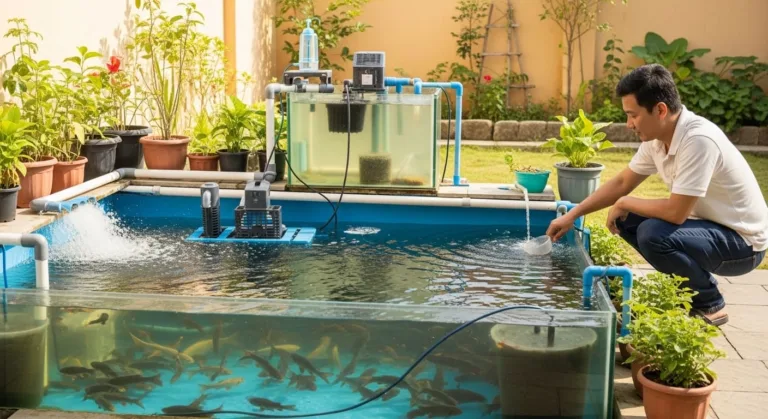
Here’s where things get real! You don’t need an Olympic-sized swimming pool to start fish farming. Many successful home fish farmers begin with containers you might already have or can easily get. Large plastic tanks (like the big water storage tanks), concrete tanks built into the ground, or even sturdy above-ground pools can all work perfectly well.
The size matters, but it’s not as big a deal as you’d think. A general rule is that you need about 20-30 liters of water per fish for them to grow comfortably. So a 500-liter tank (which is pretty manageable for a backyard) could hold around 15-20 fish. That might not sound like much, but remember, these fish can weigh 500 grams each when fully grown, that’s a lot of fresh fish!
Your setup needs a few essential components to work properly. Aeration is crucial, fish need oxygen just like you do, so you’ll need an air pump that keeps the water oxygenated. Think of it like the fish version of an air conditioner, it keeps the environment livable. You’ll also need a filtration system to keep the water clean (fish are messy!), which can be as simple as a sponge filter or as complex as a multi-stage system. Many beginners start simple and upgrade as they learn.
Feeding and Caring for Your Fish Family
Feeding fish is actually way easier than feeding most other animals. Fish need food 2-3 times a day, and each fish typically eats about 3-5% of its body weight daily. You can buy commercial fish feed from agricultural stores in Pakistan for around 80-120 rupees per kilogram, and that food lasts a surprisingly long time. It’s like buying a bag of chips that feeds your whole family for weeks!
Here’s a cool trick many home fish farmers use: supplemental feeding. Besides commercial pellets, you can give your fish kitchen leftovers like rice, bread crumbs, or vegetable scraps. Some farmers even grow duckweed (a tiny floating plant) in a separate container and feed it to their fish. It’s free fish food that grows itself! Just make sure never to overfeed, leftover food rots in the water and can make your fish sick.
Water quality is your number one priority. You’ll want to check your water regularly and do partial water changes (replacing about 20-30% of the water) every week or two. This is like cleaning a fish bowl, but bigger. The water temperature should stay between 25-30°C for most fish, which is perfect for Pakistan’s climate. During really hot summers, you might need to provide shade, and during winter, a simple aquarium heater can keep things comfortable.
Common Mistakes and How to Avoid Them
Let’s talk about the mistakes that trip up most beginners, so you can dodge them! The biggest mistake? Overcrowding. New fish farmers get excited and stuff too many fish in their tank, thinking more fish equals more profit. Wrong! Overcrowded fish get stressed, fight each other, and get sick easily. It’s like trying to fit thirty students in a classroom meant for fifteen, nobody’s happy or healthy.
Another common problem is poor water quality. Some people think they can just fill a tank, add fish, and forget about it. Nope! Fish waste builds up, the water gets toxic, and your fish suffer. You need to stay on top of water changes and filtration. Think of it like your room, if you never cleaned it, it would become pretty gross pretty fast, right?
Many beginners also make the mistake of buying sick or weak fingerlings to save money. This is like building a house on a weak foundation, it’s doomed from the start. Always buy your starting fish from reputable suppliers who can show you healthy, active fingerlings. At places like Multanfarms.com and other established farms, you’re more likely to get quality fish that will actually survive and grow.
Turning Your Hobby into Extra Income
Once you’ve successfully raised your first batch of fish, you might start thinking bigger. Could this become a side business? Absolutely! Many families in Pakistan are earning extra income through small-scale home fish farming. Once your system is running smoothly, the work becomes pretty manageable, just feeding and basic maintenance, while your fish literally grow money in your backyard.
There are several ways to make money from home fish farming. The most obvious is selling grown fish to neighbors, local markets, or restaurants. Fresh, locally-raised fish can command good prices, especially if you market them as chemical-free and naturally raised. A single 500-gram tilapia can sell for 200-300 rupees, and if you’re harvesting 20-30 fish every few months, that adds up quickly!
Another smart strategy is selling fingerlings to other people who want to start fish farming. Once your fish start breeding (and they will!), you’ll have more baby fish than you need. Other beginners will pay good money for healthy fingerlings, typically 15-30 rupees each. Some creative farmers even offer consulting services, teaching others how to set up their own systems based on what they’ve learned.
Is Home Fish Farming Right for You?
So after learning all this, you’re probably wondering if you should jump in. Home fish farming isn’t for everyone, but it might be perfect for you if you’re looking for a productive hobby that can save money (or even make money), you have some outdoor or covered space available, and you’re willing to learn and experiment a bit.
The upfront costs are manageable. You can start a basic setup for 15,000-25,000 rupees, which includes your tank, aeration equipment, filtration, and your first batch of fish and feed. That’s less than many people spend on hobbies like gaming or sports equipment! And unlike those hobbies, fish farming can actually pay you back over time.
The best part? You don’t have to go all-in immediately. Start with a small experimental tank, learn the ropes, figure out what works in your specific situation, and then expand if you enjoy it. Many successful commercial fish farmers in Pakistan started exactly this way, with a single tank in their backyard and a willingness to learn.
Ready to transform your backyard into a mini fish farm? What’s the first step you’ll take to get started on this exciting journey?