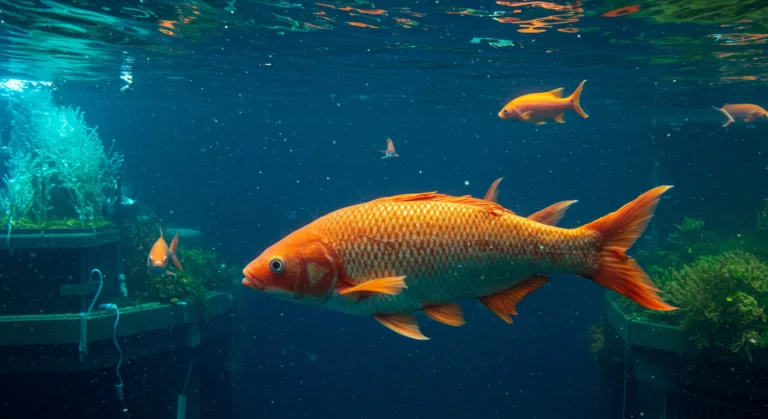
Have you ever been to an aquarium and watched hundreds of colorful fish swimming around in crystal-clear tanks? Now imagine those tanks filled with delicious fish like salmon, tilapia, or catfish, and instead of entertaining visitors, they’re actually feeding families around the world! Welcome to the amazing world of fish farming, also called aquaculture, where farmers don’t grow crops in soil but instead raise fish in water.
You might think all the fish on your dinner plate comes from wild fishermen casting nets into the ocean, but here’s a surprising fact: nearly half of all the fish people eat today actually comes from fish farms! These underwater farms are like regular farms, except instead of cows grazing in pastures or chickens pecking in coops, fish are swimming in specially designed ponds, tanks, or ocean pens.
Fish farming is one of the fastest-growing food industries in the world, and for good reason. As our planet’s population grows and wild fish populations face challenges, fish farms are becoming the heroes of sustainable food production. Let’s dive deep into this fascinating world and discover how farmers are literally making waves in agriculture!
What Exactly Happens on a Fish Farm?
Think of a fish farm like an underwater city where fish live, eat, grow, and thrive under the careful watch of their human caretakers. Unlike wild fish that have to search for food, avoid predators, and deal with pollution, farmed fish live in a controlled environment where everything is designed for their success.
Fish farmers are like underwater shepherds who take care of thousands or even millions of fish at once. They start with tiny baby fish called fry (no, not the kind you eat with burgers!), which are so small they look like swimming rice grains. These baby fish are placed in specially prepared environments where they’ll grow into full-sized, healthy fish ready for market.
The most common types of fish raised on farms include salmon, catfish, tilapia, trout, and shrimp. Each type needs different conditions to thrive, just like how different plants need different amounts of sunlight and water. Salmon prefer cold, clean water and need lots of space to swim, while tilapia are tougher and can live in warmer, more crowded conditions.
Fish farms can be located in different places depending on the type of fish being raised. Some farms use large ponds dug into the ground, others use massive tanks that look like swimming pools, and some even use floating cages in lakes or oceans. It’s like having different neighborhoods for different types of fish families!
The Science Behind Growing Fish Successfully
Raising fish might seem as simple as putting them in water and feeding them, but there’s actually incredible science involved in making fish farms successful. Fish farmers are like underwater scientists who need to understand biology, chemistry, nutrition, and engineering all at once!
Water quality is absolutely critical for fish farming success. Fish breathe through their gills, which means they’re constantly filtering water to get oxygen, just like how we breathe air through our lungs. If the water isn’t clean and properly oxygenated, the fish can get sick or even die. Farmers use special equipment to monitor oxygen levels, temperature, pH (how acidic or basic the water is), and ammonia levels around the clock.
Fish nutrition is another fascinating aspect of fish farming. Wild fish eat whatever they can find, from tiny plankton to smaller fish, but farmed fish get specially formulated feed that’s like a perfectly balanced meal designed by nutritionists. This feed contains the exact proteins, fats, vitamins, and minerals that each species needs to grow quickly and stay healthy.
Here’s something really cool: fish are incredibly efficient at converting food into body weight. While it takes about 8 pounds of feed to produce 1 pound of beef, it only takes about 1.5 pounds of feed to produce 1 pound of fish! This makes fish farming one of the most efficient ways to produce protein for human consumption.
Fish farmers also need to understand fish behavior and psychology. Yes, fish have personalities and social structures! Some fish prefer to swim in schools, others are territorial, and some are more aggressive than others. Understanding these behaviors helps farmers create the best possible environments for their fish to thrive.
Different Types of Fish Farming Systems
Just like there are different types of regular farms, there are several different systems used for fish farming, each with its own advantages and challenges. Let’s explore the most common types and see how they work.
Pond aquaculture is probably what most people picture when they think of fish farms. These are large, shallow ponds that can be natural or man-made, where fish swim freely in a controlled environment. Catfish farms in the southern United States often use this system, with rectangular ponds that can hold thousands of fish. The water is usually pumped in from wells or rivers, and farmers can control the depth, temperature, and water flow.
Tank-based systems are like giant aquariums for fish farming. These circular or rectangular tanks can be indoors or outdoors and give farmers complete control over the fish’s environment. The water is constantly filtered and recycled, kind of like how a swimming pool filtration system works. This method is often used for raising salmon, trout, and other fish that need very specific water conditions.
Cage farming involves placing large net enclosures in natural bodies of water like lakes, rivers, or ocean bays. The fish live in a more natural environment but are still contained and fed by farmers. This system is popular for salmon farming, where huge floating cages are anchored in coastal waters. The fish get the benefits of natural water flow and temperature while still being protected and fed.
Recirculating aquaculture systems (RAS) are the high-tech sports cars of fish farming. These indoor systems recycle and clean the same water over and over again, using advanced filtration technology. They can be built anywhere, even in urban areas or places without access to natural water sources, making fresh fish production possible in unexpected locations.
The Business Side: Why Fish Farming Makes a Splash
Fish farming isn’t just good for the environment and food security, it’s also an incredibly lucrative business opportunity. The global aquaculture industry is worth over $250 billion annually and continues to grow as more people around the world add fish to their diets.
Here’s what makes fish farming such an attractive business: fish grow relatively quickly compared to other livestock. While it takes 2-3 years to raise a cow to market size, most farmed fish reach harvest size in 6 months to 2 years. Tilapia, one of the most popular farmed fish, can grow from fry to market size in just 6-8 months under optimal conditions.
The profit margins can be impressive too. A tilapia farmer might spend $1.50 to raise a fish that sells for $3-4 at market. Salmon farming can be even more profitable, with premium Atlantic salmon selling for $8-12 per pound wholesale. When you’re raising thousands of fish at once, these numbers add up quickly.
Fish farming also provides opportunities for small-scale entrepreneurs and large corporations alike. Some farmers start with small backyard ponds and a few hundred fish, while others operate massive facilities with millions of fish. There are success stories of farmers who started small and built multi-million dollar operations over time.
The demand for fish continues to grow worldwide. As people become more health-conscious, they’re choosing fish over red meat because it’s high in protein and healthy omega-3 fatty acids. This growing demand means stable markets and good prices for fish farmers.
Challenges That Keep Fish Farmers Swimming Upstream
Like any agricultural business, fish farming comes with its share of challenges that farmers need to navigate skillfully. Understanding these challenges is crucial for anyone considering entering this industry.
Disease management is probably the biggest concern for fish farmers. When thousands of fish live close together, diseases can spread rapidly through the entire population, just like how a flu outbreak can quickly spread through a school. Fish farmers work with aquatic veterinarians and use various prevention strategies, including vaccines, probiotics, and careful monitoring to keep their fish healthy.
Water quality management requires constant attention and can be expensive. Fish farms need reliable sources of clean water, and in some areas, competition for water resources can drive up costs or limit expansion. Environmental regulations also require farmers to manage their water discharge carefully to protect local ecosystems.
Market price fluctuations can significantly impact profitability. Fish prices change based on supply and demand, seasonal factors, and competition from wild-caught fish. A successful fish farmer needs to understand market trends and possibly diversify their products to reduce risk.
Feed costs represent the largest expense for most fish farms, typically accounting for 50-70% of production costs. Since fish feed often contains fishmeal made from wild-caught fish, rising ocean fishing costs can increase feed prices and squeeze profit margins.
Environmental Benefits: Why Fish Farming Helps Our Planet
One of the most exciting aspects of fish farming is its potential to help solve environmental challenges while providing nutritious food for a growing world population. When done responsibly, aquaculture can be much more sustainable than many other forms of food production.
Fish farming uses significantly less land than traditional livestock farming. You can produce the same amount of protein from fish using a fraction of the land required for cattle or pigs. This is especially important as the world’s population grows and available farmland becomes more limited.
Water usage is also more efficient in fish farming. While it might seem like fish farming uses a lot of water, the fish actually live in the water rather than consuming it. Many modern fish farming systems recycle water multiple times, making them very water-efficient compared to crops like rice or almonds.
Fish farming can also help reduce pressure on wild fish populations. Overfishing is a serious problem in many parts of the world’s oceans, with some fish species facing extinction due to excessive harvesting. By providing farmed alternatives, aquaculture allows wild fish populations to recover while still meeting human demand for seafood.
Some fish farming systems even provide additional environmental benefits. Integrated aquaculture systems combine fish farming with vegetable or rice production, where fish waste provides natural fertilizer for plants. This creates a closed-loop system that maximizes productivity while minimizing waste.
The Future of Fish Farming: Innovation and Expansion
The fish farming industry is constantly evolving, with new technologies and methods being developed to make production more efficient, sustainable, and profitable. These innovations are opening up exciting possibilities for the future of food production.
Genetic improvement is helping farmers raise fish that grow faster, resist diseases better, and convert feed more efficiently. Scientists are developing fish varieties that are specifically adapted to farming conditions, much like how farmers have bred cattle and chickens for optimal production over thousands of years.
Automation and artificial intelligence are making fish farms smarter and more efficient. Automated feeding systems can deliver the exact amount of food needed at optimal times, while sensors monitor water quality and fish behavior 24/7. Some farms now use underwater cameras and AI to count fish, monitor their health, and detect problems before they become serious.
Alternative protein feeds are being developed to reduce the industry’s dependence on wild-caught fish for feed production. Scientists are creating fish feeds from insects, algae, plant proteins, and even food waste, making fish farming more sustainable and potentially less expensive.
Urban aquaculture is bringing fish farming to cities through vertical farming systems and rooftop installations. This reduces transportation costs and provides fresh fish to urban populations while creating jobs in metropolitan areas.
Fish farming represents one of the most promising solutions to feeding our growing world population while protecting our planet’s natural resources. It combines traditional farming knowledge with cutting-edge technology to produce nutritious, affordable protein in a sustainable way.
Whether you’re interested in marine biology, sustainable agriculture, or entrepreneurship, fish farming offers exciting career opportunities in a rapidly growing industry. From small-scale backyard operations to massive commercial facilities, there are opportunities for people with different interests and investment levels.
The next time you enjoy a piece of salmon, tilapia, or shrimp, remember that it might have come from an innovative fish farm where dedicated farmers are working to feed the world while protecting our oceans. Fish farming is proving that with creativity, science, and hard work, we can find solutions to some of humanity’s biggest challenges.
So, are you ready to make a splash in the world of aquaculture? What type of fish farming system sounds most interesting to you?