Have you ever cracked open an egg for breakfast and wondered where it actually came from? Sure, you know it came from a chicken, but have you ever thought about the incredible business behind getting that fresh egg from a farm to your kitchen table? Every single day, millions of chickens around the world wake up with one job: laying eggs. And the farmers who take care of these amazing birds are running some of the most successful agricultural businesses on the planet!
Welcome to the fascinating world of layers poultry farming, where special chickens called “layer hens” work like tiny, feathered factories producing one of the world’s most perfect foods. These aren’t just any ordinary chickens wandering around someone’s backyard. These are professional egg-laying superstars that have been specially bred to produce hundreds of eggs each year.
In this article, we’ll explore how layers poultry farming works, why it’s such a smart business, and what it really takes to turn a bunch of chickens into a profitable egg empire. Get ready to discover why this industry is absolutely egg-cellent!
What Makes Layer Chickens So Special?
Imagine if you had a friend who could create something valuable every single day without fail. That’s basically what layer chickens do! These remarkable birds are like the Olympic athletes of the chicken world, specially bred and trained for one specific purpose: producing as many high-quality eggs as possible.
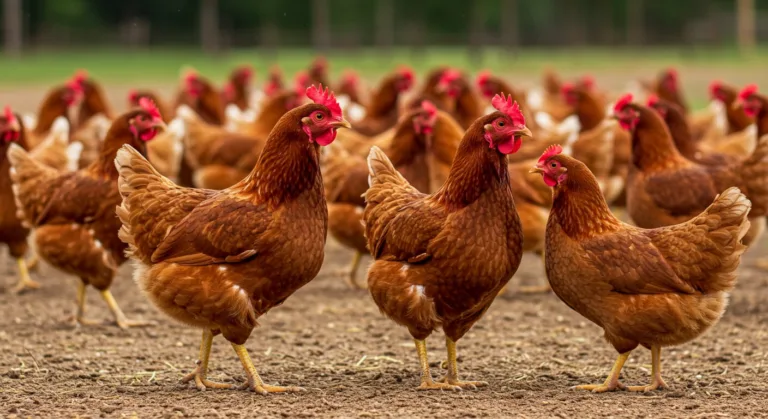
Layer hens are different from the chickens you might see running around a regular farm. While those backyard chickens might lay an egg here and there when they feel like it, commercial layer hens are consistent performers. A good layer hen can produce about 250-300 eggs per year, which means she’s laying an egg almost every single day!
Here’s something that might blow your mind: it takes about 24-26 hours for a hen to create one complete egg inside her body. It’s like having a 3D printer that works around the clock, except instead of printing plastic objects, it’s creating perfect protein packages complete with their own biodegradable containers (the shells)!
The most popular breeds for commercial egg production include White Leghorns, Rhode Island Reds, and Golden Comets. Each breed has its own superpowers. White Leghorns are like the marathon runners, they’re small but can lay tons of white eggs. Rhode Island Reds are the sturdy workhorses that lay brown eggs and can handle tough weather conditions.
The Incredible Journey from Chick to Egg-Laying Superstar
Every layer hen starts her journey as a tiny, fluffy chick no bigger than a tennis ball. But unlike baby humans who take years to become productive adults, these chicks grow incredibly fast and are ready to start their egg-laying careers when they’re just 16-20 weeks old. That’s less than five months from hatching to working!
During their first few months, these chicks are like students in training. They need the right nutrition, proper housing, and careful attention to develop into healthy, productive layers. Farmers provide them with specially formulated feed that’s packed with protein, vitamins, and minerals, kind of like a super-powered smoothie designed specifically for growing chickens.
The really cool part is watching them develop. At around 16 weeks, something amazing happens called “point of lay.” This is when the young hens start getting ready to lay their first eggs. You can actually tell when this is happening because their combs (the red thing on top of their heads) get bigger and redder, and they start making different sounds.
Once they start laying, these hens are like reliable employees who show up to work every day. They’ll continue producing eggs for about 12-18 months before their production starts to slow down. During their peak production period, a well-managed flock can be incredibly profitable for farmers.
The Business Side: Why Layer Farming Makes Cents and Dollars
Here’s where layer poultry farming gets really exciting from a business perspective. Unlike many businesses that take years to show a profit, egg farming can start making money relatively quickly. Think of it like this: you invest in your “employees” (the chickens) for about four months, and then they start “working” and earning money for the next year or more.
Let’s break down the math in simple terms. One layer hen might cost about $3-5 to buy as a young bird. During her productive lifetime, she’ll lay about 250-300 eggs. If those eggs sell for just $0.25 each (which is actually pretty low), that one hen could generate $62-75 in revenue. After subtracting feed costs and other expenses, each hen can potentially profit $20-30 or more during her laying period.
Now imagine you have 1,000 hens (which is considered a small commercial operation). That could mean $20,000-30,000 in profit from just one flock! Larger operations with 10,000 or 100,000 hens can generate serious income. Some major egg farms have millions of laying hens and are worth hundreds of millions of dollars.
The best part about the egg business is that people always need eggs. Unlike toys or gadgets that go in and out of style, eggs are a staple food that people buy consistently. Whether the economy is good or bad, people still eat breakfast, still bake cakes, and still need protein in their diets.
Modern Layer Farming: It’s All About the System
Today’s commercial layer farms are like high-tech cities designed specifically for chickens. Gone are the days when farmers just scattered some feed on the ground and hoped for the best. Modern layer farming uses incredible technology and scientific methods to maximize egg production while keeping the birds healthy and comfortable.
Most commercial layer operations use what’s called cage-free or enriched housing systems. These are specially designed buildings where thousands of hens live together in carefully controlled environments. The temperature is regulated, the lighting is programmed to simulate natural daylight cycles, and the air quality is constantly monitored.
The feeding systems are like something from a science fiction movie. Automated conveyor belts deliver precisely measured amounts of feed to the birds multiple times per day. The feed itself is scientifically formulated with exact ratios of protein, carbohydrates, vitamins, and minerals to optimize egg production and shell quality.
Egg collection is often automated too. Special conveyor belt systems gently transport eggs from the laying areas to processing facilities where they’re washed, graded by size, and packaged for shipping. Some modern farms can process and package thousands of eggs per hour with minimal human handling.
Challenges That Keep Farmers on Their Toes
Running a successful layer operation isn’t just about buying some chickens and waiting for eggs to appear. Like any business, there are real challenges that farmers need to be smart about handling.
Disease prevention is probably the biggest concern for layer farmers. When you have thousands of birds living close together, illness can spread incredibly fast. It’s like how a cold can quickly spread through your school, except the consequences for a poultry farm can be devastating. Farmers work closely with veterinarians and follow strict biosecurity protocols to keep their flocks healthy.
Market price fluctuations can also impact profits significantly. The price of eggs changes based on supply and demand, just like gas prices at the pump. During some seasons, like around Easter when people use lots of eggs for baking and dyeing, prices might go up. Other times, if there’s an oversupply of eggs in the market, prices can drop and squeeze farmers’ profit margins.
Feed costs represent the biggest expense for layer farmers, usually accounting for about 60-70% of production costs. Since chickens eat grain-based feeds, layer farmers are directly affected by crop prices. If corn or soybean prices go up due to weather or other factors, it becomes more expensive to feed the hens.
The Future of Layer Farming: Innovation and Sustainability
The layer poultry industry is constantly evolving, adopting new technologies and practices to become more efficient and sustainable. Today’s farmers are like tech entrepreneurs, always looking for ways to improve their operations using the latest innovations.
Precision agriculture is becoming increasingly important in layer farming. This involves using sensors, computers, and data analysis to monitor everything from individual hen health to environmental conditions in the barns. Some farms now use artificial intelligence to predict optimal feeding schedules and detect potential problems before they become serious.
Sustainability is also driving major changes in the industry. Many consumers are willing to pay more for eggs from farms that prioritize animal welfare and environmental responsibility. This has led to growth in free-range, organic, and pasture-raised egg production systems.
Alternative protein trends are creating new opportunities too. While some people are interested in plant-based egg alternatives, the demand for traditional eggs from well-managed farms continues to grow. Many farmers are finding success by marketing their eggs as premium products with stories about their farming practices and animal care.
Genetic improvements in layer breeds continue to produce hens that are more efficient, healthier, and better adapted to different production systems. Scientists are working on developing birds that require less feed per egg produced and are more resistant to diseases.
Getting Started: Your Path to Poultry Success
If you’re thinking that layer poultry farming sounds like an interesting career path, you’re not wrong! This industry offers opportunities for people with different interests and skill levels. You could work on a large commercial farm, start your own small operation, or even get into related businesses like feed production or egg processing.
Starting small is totally possible in this business. Many successful commercial operations began with just a few hundred birds in someone’s backyard or a small rural property. The key is learning the basics: proper nutrition, housing, health management, and understanding your local egg market.
Education is super important too. Many agricultural colleges offer poultry science programs where you can learn everything from chicken biology to business management. There are also lots of workshops, online courses, and industry associations that provide training and support for new farmers.
The investment required can vary widely depending on the scale you want to start with. A small operation with a few hundred hens might require $10,000-20,000 to get started, while larger commercial facilities can cost millions of dollars. Many farmers start small and reinvest their profits to gradually expand their operations.
Why Layer Farming Matters More Than You Think
Layer poultry farming isn’t just about making money, it’s about feeding the world. Eggs are one of the most affordable, complete protein sources available to people everywhere. They contain all the essential amino acids our bodies need, plus vitamins and minerals that support healthy growth and development.
In developing countries, small-scale layer operations provide both food security and income opportunities for families and communities. A few dozen hens can provide a steady source of protein for a family while generating enough income to pay for school fees, medical expenses, and other necessities.
From an environmental perspective, eggs have a relatively small carbon footprint compared to other animal protein sources. Chickens are incredibly efficient at converting feed into protein, and modern layer farms are becoming increasingly sustainable through improved efficiency and waste management practices.
The layer poultry industry also supports millions of jobs worldwide, from farmers and farmworkers to truck drivers, processing plant employees, grocery store workers, and everyone else involved in getting eggs from farm to table.
Layer poultry farming represents one of agriculture’s greatest success stories, combining traditional farming knowledge with modern technology to efficiently produce a nutritious, affordable food that people around the world depend on every day. Whether you’re interested in this as a potential career, curious about where your breakfast comes from, or just fascinated by the amazing productivity of these feathered professionals, layer farming shows us how innovation and dedication can turn a simple idea into a thriving industry that feeds the world.
So the next time you crack open an egg, take a moment to appreciate the incredible journey it took to reach your plate. Behind that simple shell is a whole world of science, business, and agricultural expertise that’s been perfected over generations. Who knows, maybe you’ll be inspired to become part of this egg-citing industry yourself! What aspects of layer farming interest you the most?