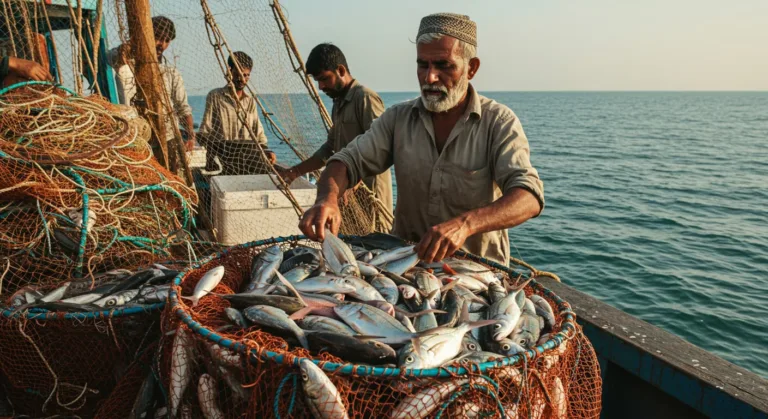
Picture this: You’re sitting down to a yummy plate of fried fish with your family, the kind that’s crispy on the outside and super tender inside. But have you ever stopped to think about where that fish swam before it landed on your table? It might not have come from a wild river or the deep sea, but from a bustling underwater neighborhood right here in Pakistan, created by clever farmers. These are fish farms, and they’re like secret gardens under the water where fish grow up happy and healthy.
Fish farming, or aquaculture as the experts call it, is basically raising fish in ponds or tanks, just like how your grandparents might grow veggies in their backyard. In Pakistan, with our long rivers, lakes, and even the Arabian Sea nearby, it’s a perfect spot for this. Places like Multanfarms.com are leading the way, showing how everyday folks can turn a simple pond into a food factory. Today, we’ll splash around in this topic together. You’ll learn how fish farms started here, what kinds of fish call them home, why they’re a big deal for our country, and even the tricky parts farmers face. By the end, you might see that next fish dinner in a whole new light, like it’s got its own adventure story.
Get ready to dive in, because fish farms aren’t just about catching dinner, they’re about growing our future, one fin at a time.
How Did Fish Farming Splash Into Pakistan?
Imagine fish farming as a young explorer who’s only been around for a short while but is already making waves. In Pakistan, this all kicked off in the early 2000s. Back then, we got just 10 to 15 thousand tons of farmed fish a year. Fast forward to now, and we’re pulling in over 100,000 tons annually. That’s like going from a kiddie pool to an Olympic-sized one in just a couple of decades!
It started small, mostly in places like Punjab and Sindh, where the land is flat and water flows easy from rivers like the Indus. Government folks saw how wild fish were getting harder to catch, so they encouraged building ponds and teaching farmers the tricks. Today, over 12,000 fish farms dot the country, covering about 60,500 hectares of land. That’s bigger than many cities! And guess what? Sindh leads with nearly 50,000 hectares, turning dusty fields into watery wonders.
Did you know? The first big push came from setting up hatcheries, which are like fish nurseries where baby fish, called fingerlings, get a safe start. Without them, farms would be empty. It’s all about planning ahead, kind of like how you prep your backpack before a school trip.
What Kinds of Fish Farms Are Popping Up Around Us?
Fish farms in Pakistan come in different styles, each suited to our varied landscapes, like choosing the right bike for a trail or a road. The most common is pond culture, where big, dug-out ponds hold thousands of fish. These are like natural pools, fed by rainwater or tube wells, and they’re everywhere in Punjab and Sindh.
Then there’s cage culture, which is cooler, think of floating net houses in lakes or rivers. Fish swim free inside the cages but can’t wander off, making it easy to feed them without messing up the wild spots. In coastal areas like Balochistan, folks are trying marine farms with cages in the sea for salty-water lovers like shrimp.
And don’t forget trout farms up north in chilly streams, like in Swat or Chitral. These use fast-flowing water to keep things cool. Multanfarms.com highlights how starting simple with ponds can lead to bigger setups, using local tools like solar pumps to save money and energy.
Why so many types? It’s all about matching the farm to the place, just like picking soccer cleats for grass or sneakers for gym class. This mix keeps things fresh and grows more fish without wasting space.
Meet the Star Fish of Pakistani Farms
Ever met a fish that eats plants like a vacuum cleaner? That’s the gang on Pakistan’s fish farms, a team of buddies who share space without fighting. The stars are the carp family, tough swimmers that love our warm waters. Let’s spotlight a few.
First up, Rohu, the mild-mannered one with silvery scales. It’s a favorite in curries because it’s not too bony and tastes sweet, like a gentle hug in food form. Farmers stock about 30-35% of their ponds with Rohu, and it grows to a kilo in six months.
Then there’s Catla, the speedy grower that can stretch as long as your arm. It’s the top feeder, munching on tiny bits near the surface, and makes up 10-20% of the mix. Imagine it as the class sprinter, always first to the finish line.
Don’t skip Mrigal, the bottom-dweller that cleans up leftovers from the pond floor, like the friend who picks up trash after a party. And grass carp, the veggie muncher that keeps weeds in check, acting as a natural lawnmower.
Lately, tilapia has joined the crew, thanks to spots like Multanfarms.com pushing GIFT tilapia , a super-hardy type from Nile stock. You can pack 6,000 of these per acre, way more than carps’ 600-1,200. They’re fast growers too, ready in eight months, and perfect for grilling.
- Fun fact: Farmers mix these species in polyculture, where they eat different foods at different levels, like roommates sharing a fridge without drama. This boosts yield by 20-30%!
- Up north, trout shines in cold streams, tasting nutty and firm, like a mountain adventure on your plate.
These fish aren’t just tasty, they’re smart choices for our climate, growing quick and strong.
Why Are Fish Farms a Game-Changer for Pakistan?
Hold on to your floaties, because fish farms are boosting our country like a power-up in your favorite game. First, jobs! Over a million folks work in fisheries, from pond cleaners to truck drivers hauling fresh catches. In rural spots like Muzaffargarh or Khanewal, a farm can employ a whole village, turning idle land into income streams.
Economically, it’s huge. One acre of fish farm can net up to Rs. 500,000 in profit a year, way more than growing wheat or cotton on the same spot. Exports bring in millions too, shipping tasty carps to neighbors like China. And for food? Fish packs protein punch, helping families eat healthier without breaking the bank. It’s cheaper than meat but just as filling.
Take Multanfarms.com as an example, they’re all about sustainable setups that feed locals while earning green. Another cool one: In Punjab’s Okara district, farms turned salty soil useless for crops into tilapia goldmines, proving fish can fix “bad” land.
Did you know? Aquaculture adds 0.3% to our GDP, but with growth, it could double that. It’s like planting money trees that swim!
Plus, it eases wild fishing pressure, letting rivers recover. Relate it to this: If everyone grabbed candy from one bowl at a party, it’d empty fast. Farms provide endless refills.
Facing the Currents: Challenges in Our Fish Farms
No adventure’s complete without a few hurdles, right? Fish farming in Pakistan has some, but farmers are tackling them like pros. One biggie is water quality. Ponds can get dirty from fish waste, leading to sick fish if not cleaned. It’s like forgetting to wash your soccer jersey, it gets stinky fast!
Diseases sneak in too, especially in crowded setups. Without good checks, a bug can wipe out a batch quicker than you can say “oops.” And climate? Hot summers stress fish, while floods wash away ponds. In Sindh, salty water from the sea sometimes creeps in, messing with freshwater types.
Money’s tricky, with loans hard to snag and feed costs rising. Infrastructure lags too, no fancy aerators in every farm to pump oxygen. But here’s the hopeful part: Groups like the Fisheries Development Board offer training, and tech like solar aerators from Multanfarms.com cuts costs.
- Quick tips from experts: Test water weekly, mix fish wisely, and start small to learn.
- Analogy time: It’s like training for a race, you build stamina against bumps in the road.
With smarts and support, these challenges turn into chances to innovate.
Tech Waves Making Farms Smarter
Technology is the secret gadget turning fish farms into high-tech hubs. Gone are the days of guesswork; now, farmers use simple tools to monitor everything. Aerators, like bubbly jacuzzis, keep oxygen flowing so fish don’t gasp. Solar-powered ones save cash in sunny Pakistan.
Then there’s feed tech, pellets packed with nutrients, fed just right via auto-dispensers. No more overfeeding waste! Apps on phones even predict weather or spot sick fish early with photos. Multanfarms.com shares guides on these, making it easy for newbies.
In Punjab, drone cameras fly over ponds to check water levels, like having eyes in the sky. And genetic tweaks? GIFT tilapia grows 20% faster thanks to smart breeding.
Did you know? One farm in Faisalabad uses recirculating systems, reusing 90% of water, like a eco-friendly loop-de-loop.
This tech isn’t fancy, it’s practical, helping small farms punch above their weight.
Wrapping Up the Swim: Why Fish Farms Matter to You
So, we’ve bubbled through the history, met the finned friends, cheered the wins, dodged the challenges, and geeked out on tech. Fish farms in Pakistan aren’t just ponds, they’re powerhouses feeding bellies, filling pockets, and protecting wild waters for tomorrow. From carp crews in Punjab to tilapia triumphs at Multanfarms.com, they’re proving we can grow our own seafood sustainably.
This matters because you and your family deserve fresh, affordable protein that doesn’t empty oceans. Plus, it sparks jobs in your neighborhood, maybe even a career if you love water adventures. Next time you bite into that rohu, remember the farmer who raised it like a champ.
What if you started a mini fish pond in your backyard? Could you be the next aquaculture hero? Dive into it, and who knows, your plate might inspire a wave of change!