Picture this: it’s Eid morning, and your aunt has just brought over a beautifully wrapped box of Sohan Halwa from Multan. The moment you open it, that sweet, nutty aroma fills the room, and you can already taste that first amazing bite. But then a little voice in your head asks, “Wait, how many calories am I about to eat?” If you’ve ever wondered about the nutritional side of this delicious Pakistani sweet, you’re definitely not alone!
Sohan Halwa is one of those treats that’s so good, it’s hard to stop at just one piece. But understanding what’s actually in your food is pretty important, especially when you’re growing and want to make smart choices about what you eat. Don’t worry though, we’re not here to tell you to never eat Sohan Halwa again! Instead, we’re going to break down exactly what’s in 100 grams of this sweet treat and what that means for you.
Here’s the deal: 100 grams of Sohan Halwa contains approximately 450-500 calories. Now, before you panic or throw away that box, let’s talk about what that number actually means, where those calories come from, and how you can enjoy this traditional sweet in a way that makes sense for your lifestyle. Trust me, by the end of this article, you’ll be a calorie-counting expert, at least when it comes to your favorite Multani sweet!
What’s a Calorie, Anyway?
Let’s start with the basics. You’ve probably heard the word “calorie” a million times, but what does it actually mean? Think of calories as units of energy, kind of like how gasoline is fuel for a car. Your body needs calories to do everything, from running around during PE class to thinking through a tough math problem, and yes, even sleeping!
When we say 100 grams of Sohan Halwa has about 450-500 calories, we’re saying that this amount of the sweet provides enough energy to power your body for a few hours of activity. To put that in perspective, a typical person your age needs somewhere between 1,800 to 2,400 calories per day, depending on how active you are. So that 100-gram serving is roughly one-fifth to one-fourth of your daily energy needs!
Here’s an interesting way to think about it: eating 100 grams of Sohan Halwa gives you about the same energy as eating two large slices of pizza or three medium-sized bananas. The difference is what comes along with those calories, and we’ll get into that in just a bit.
Breaking Down the Sweet Truth: What Makes Up Those Calories?
Now, let’s dig deeper into where those 450-500 calories are actually coming from. Sohan Halwa isn’t made from just one ingredient. It’s a combination of ghee (clarified butter), sugar, milk, cornflour, and nuts like almonds and pistachios. Each of these ingredients contributes to the total calorie count in different ways.
The biggest calorie contributor is probably the ghee and sugar. Ghee is pure fat, and fat contains 9 calories per gram, which is more than double what you get from carbohydrates or protein (only 4 calories per gram each). Since traditional Sohan Halwa uses a generous amount of ghee to get that rich, melt-in-your-mouth texture, you can see why the calories add up quickly.
Sugar is the next major player. It’s what makes Sohan Halwa sweet (obviously!), but it’s also a concentrated source of calories. Think of sugar like rocket fuel, it gives you quick energy, but it doesn’t stick around very long. The nuts scattered throughout add some protein and healthy fats, plus they give you vitamins and minerals that plain sugar and ghee don’t provide.
The 100-Gram Question: How Much Is That, Really?
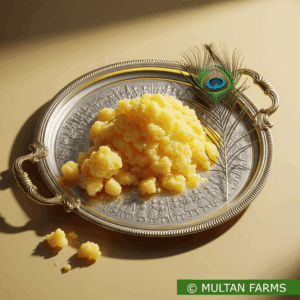
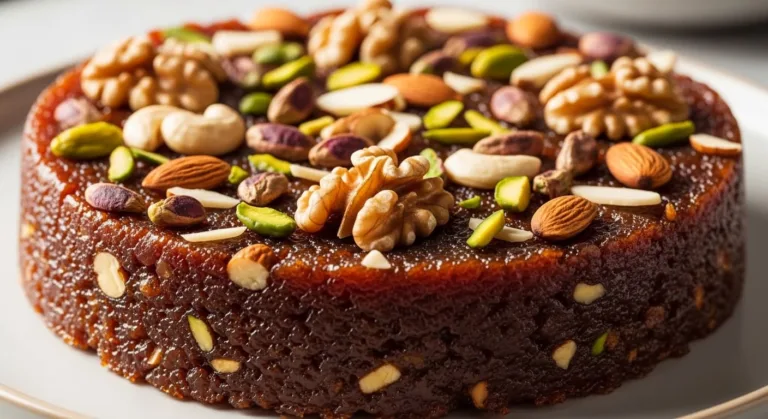
Here’s something that trips up a lot of people: what does 100 grams of Sohan Halwa actually look like? It’s not as much as you might think! Depending on how it’s cut, 100 grams is usually about 2 to 3 medium-sized pieces, roughly the size of two fun-size candy bars put together.
If you’ve ever grabbed a handful of Sohan Halwa during a celebration, you might have easily eaten 100 grams without even realizing it. That’s why knowing this number is helpful. It’s not about feeling guilty, it’s about being aware so you can make choices that feel right for you.
Let me give you a real-world comparison. A standard smartphone weighs about 200 grams. So 100 grams of Sohan Halwa is about half the weight of your phone. Not much, right? But because it’s so dense with ingredients like ghee and sugar, those 100 grams pack a serious calorie punch!
The Good Stuff: It’s Not All About the Calories
Okay, so we’ve talked about calories, but here’s something important: calories aren’t the whole story. While Sohan Halwa is definitely high in calories, it also contains some nutrients that your body actually needs.
The milk and ghee provide calcium, which is super important for building strong bones while you’re still growing. The nuts add protein, vitamin E, and healthy fats that are good for your brain and skin. Even the ghee, which gets a bad reputation sometimes, contains vitamins A, D, E, and K that help your body function properly.
Think of it this way: would you rather eat 500 calories of pure sugar, or 500 calories of Sohan Halwa that at least includes some nuts, milk, and other ingredients with nutritional value? The second option gives your body more to work with. That doesn’t mean you should eat tons of it, but it does mean you don’t need to treat it like it’s completely “bad” for you.
Balancing the Scale: When and How to Enjoy Sohan Halwa
So here’s the million-dollar question: can you still enjoy Sohan Halwa knowing it has 450-500 calories per 100 grams? Absolutely! The key is understanding what nutritionists call “portion control” and “balance.”
Let’s say you have a sports match or a really active day ahead. Those calories from Sohan Halwa can actually fuel your activities! Your body will use that energy instead of storing it. On the other hand, if you’re planning to spend the whole day watching Netflix on the couch, you might want to stick to a smaller piece.
Here’s a practical approach: enjoy a small piece (maybe 30-40 grams) as an occasional treat, perhaps once or twice a week. That would be about 150-200 calories, which fits much more easily into your daily energy needs. You get to enjoy the flavor and the cultural tradition without overdoing it. It’s kind of like how you might have cake at a birthday party without eating cake every single day.
Another smart move is to pair your Sohan Halwa with some physical activity. If you know you’re going to have some at a family gathering, maybe play some cricket or go for a bike ride that day. Your body will thank you for both the fuel and the movement!
Why This Matters for You Right Now
You might be wondering, “Why should I even care about calories? I’m young and healthy!” That’s a fair question! The truth is, understanding what you eat now helps you build healthy habits that’ll stick with you for life.
Think of your body like a car that you’ll be driving for the next 70 or 80 years. Learning how to fuel it properly now means it’ll run better for longer. You don’t need to become obsessed with counting every single calorie, that’s not the point. But having a general idea of what different foods provide helps you make balanced choices.
Plus, when you understand food better, you can enjoy treats like Sohan Halwa without guilt or worry. Knowledge is power, right? Instead of stressing about whether you “should” or “shouldn’t” eat something, you can make an informed decision based on what your body needs that day.
The Multanfarms.com Difference
When you’re choosing Sohan Halwa, quality matters just as much as quantity. Traditional makers like those at Multanfarms.com use authentic recipes and real ingredients, which means you’re getting actual nuts, real ghee, and quality milk products. Sure, the calorie count might be similar to mass-produced versions, but at least you know what you’re eating!
Some commercial sweets use cheaper substitutes or artificial ingredients to cut costs. While they might have similar calories, they don’t provide the same nutritional benefits or authentic taste. It’s like comparing a homemade burger to a fast-food one, the calories might be close, but the quality is totally different.
The Sweet Spot: Finding Your Balance
At the end of the day, knowing that 100 grams of Sohan Halwa contains 450-500 calories gives you the information you need to enjoy this traditional sweet in a way that works for your lifestyle. Maybe you’ll decide to savor a small piece after dinner instead of eating a whole slab at once. Maybe you’ll save it for special occasions when it means the most.
The beautiful thing about food is that it’s not just fuel, it’s also culture, tradition, and enjoyment. Sohan Halwa represents centuries of Multani tradition and craftsmanship. Understanding its nutritional content doesn’t take away from that, it actually helps you appreciate it more mindfully.
Remember, there are no “good” or “bad” foods, just choices that fit better or worse with your goals and activities. Armed with the knowledge of what’s in your Sohan Halwa, you can make those choices confidently and enjoy every delicious, nutty, sweet bite without the guilt.
So, the next time someone offers you Sohan Halwa, you’ll know exactly what you’re getting into, and that’s pretty empowering! What’s your strategy going to be for enjoying treats while staying healthy?