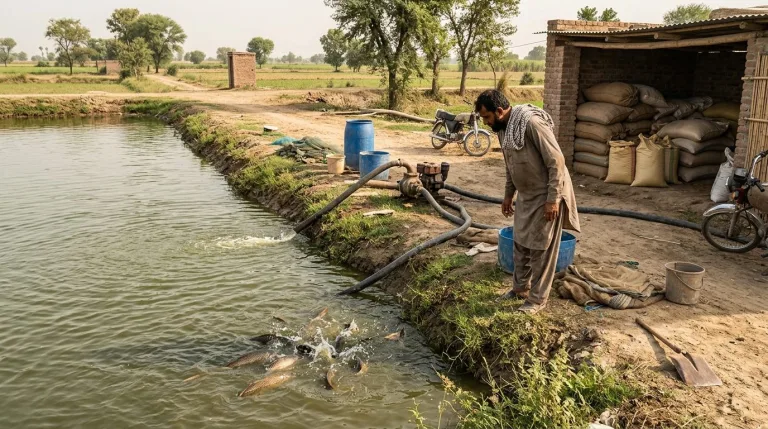
Imagine this: you walk past a quiet pond and notice the water ripple. A few weeks later, that same pond is full of healthy fish that families will cook for dinner. Pretty cool, right? That’s fish farming, also called aquaculture, which just means raising fish in a controlled place like a pond or tank.
But before anyone digs a pond, one big question comes up: how much does a fish farming project cost? The answer depends on a few things, like how big your farm is and what kind of fish you pick. Let’s break it down so it’s easy to understand.
Think of it like opening a small lemonade stand. You need a table, cups, lemons, and sugar. Fish farming works the same way, just with bigger “ingredients.” By the end of this article, you’ll know exactly where the money goes.
What Are the Main Costs of Starting a Fish Farm?
Every fish farm has the same basic shopping list. Here are the big items:
- Land or pond space: You need a place to keep the fish.
- Pond building: Digging, shaping, and sealing the pond.
- Water supply: A tube well, canal, or other steady water source.
- Fingerlings: Baby fish that you’ll raise until they’re big enough to sell.
- Feed: The food that helps your fish grow.
- Equipment and labor: Nets, pumps, and people to help.
Some of these costs happen only once, like digging the pond. Others come back again and again, like buying feed. It helps to think of it like owning a phone. The phone itself is a one-time cost, but the monthly data plan keeps showing up.
Building the Pond: Your Biggest First Step
The pond is usually the largest startup cost, which is the money you spend before you earn anything. A pond has to hold water well, be deep enough for fish to stay comfortable, and be easy to clean and harvest.
Here’s a simple way to picture it. A pond is like a giant swimming pool for fish. If your pool leaks or is too shallow, the fish will be unhappy. So farmers spend time and money making it strong and safe.
For a one-acre pond in Pakistan, digging and preparing can cost anywhere from several hundred thousand rupees to a bit more, depending on soil type and location. If the land is already yours, you save a lot. If you rent or buy land, your cost goes up. Smaller farmers often start with a half-acre pond or even a few cement tanks, which cost less.
Did you know? Some farmers start with just one small tank to learn the basics before building a bigger farm. It’s a smart way to practice without risking too much money.
Fingerlings: Meet Your Baby Fish
Fingerlings are young fish about as long as your finger. You buy them from a hatchery and place them in your pond. They’re usually cheap, only a few rupees each, but you need thousands of them.
Popular choices in Pakistan include Rohu, Catla, Mrigal, and Tilapia. Many farmers mix different types together in the same pond. This is called polyculture, and it works like a school cafeteria. Some fish eat from the top of the water, some from the middle, and some from the bottom. Nobody fights over the same food, so the whole pond stays healthy.
A one-acre pond often holds several thousand fingerlings. Even so, they’re usually one of the smaller parts of your budget.
Feed: The Cost That Surprises Everyone
Here’s the part many beginners don’t expect. Feed is often the biggest ongoing expense, sometimes more than half of all running costs.
Why? Because fish need to eat every single day, just like you do. And the more they eat, the faster they grow. Imagine feeding a hundred hungry puppies for six months. That grocery bill adds up fast!
Farmers can save money in smart ways:
- Use natural pond food by adding the right fertilizer so tiny plants and bugs grow in the water.
- Buy feed in bulk when prices are lower.
- Don’t overfeed. Extra food just sinks and makes the water dirty.
Good feeding habits can mean the difference between a profit and a loss.
Other Costs You Shouldn’t Forget
Small expenses can sneak up on you, so plan for them:
- Electricity or fuel for water pumps
- Medicine and water treatments if fish get sick
- Nets and tools for catching and moving fish
- Workers to help with feeding and harvest
- Transport to carry fish to the market
A smart farmer always keeps a little extra money aside for surprises. It’s like carrying a spare tire in your car. You hope you won’t need it, but you’ll be glad it’s there.
So, Can You Make Money From Fish Farming?
Yes, fish farming can be profitable, but it takes patience. Most fish need around 6 to 12 months to reach market size, depending on the type and how well they’re cared for. During that time, you’re spending money before you earn any.
Here’s a simple way to think about it. Add up your costs, then compare that to what you’ll earn when you sell the fish. If a farmer spends a certain amount on feed, fingerlings, and labor, and then sells the harvest for more than that, the leftover amount is profit.
Please remember that all prices here are rough estimates. Costs change from city to city and year to year, so always check current local rates for land, fingerlings, and feed before you plan a real project. Talking to local fish farmers or your district fisheries department is a great way to get accurate numbers.
Wrapping It Up
So, how much does a fish farming project cost? The honest answer is that it depends on your pond size, fish type, and location. The main costs are the pond, fingerlings, feed, and daily running expenses, with feed usually being the biggest one over time. Starting small, learning as you go, and planning for surprises will help you succeed.
Fish farming is a great example of how science, patience, and good planning can turn a simple pond into a food source for hundreds of people. It also shows why understanding costs matters in any project, big or small.
Now here’s something to think about: if you had a small piece of land and a little bit of money, would you start with one tank or go big with a full pond? Share your answer and keep exploring more farming ideas right here on Multanfarms.com!