Imagine waking up one morning and there’s no roti on the table, no naan with your nihari, no paratha for breakfast. Sounds impossible, right? Well, that could actually happen if Pakistan ever stopped growing wheat. Wheat is the king of crops here, and every year farmers work super hard to make sure we have enough. Want to know how they do it? Come with me, let’s walk through the fields together and see the whole story from seed to your plate!
Pakistan grows so much wheat that we’re usually in the top ten wheat-producing countries in the world. That’s pretty cool when you think about it. So let’s find out exactly how this golden grain goes from tiny seeds in the dirt to the flour that makes your favorite foods.
When Do Farmers Even Plant Wheat?
Timing is everything! In Pakistan, wheat season kicks off when the weather starts to cool down after the hot summer. Most farmers sow wheat seeds between October and December. That’s usually right after you finish your mid-term exams and the evenings feel nice and chilly.
Why winter? Because wheat loves cool weather to grow, but it needs warm sunny days later when it’s making the actual grains. It’s like the plant goes to school in winter and takes its big final exam in spring!
Where in Pakistan Does All This Magic Happen?
You probably think of Punjab when someone says “wheat fields,” and you’re totally right! Punjab is the superstar, growing more than 70% of Pakistan’s wheat. Places like Multan, Bahawalpur, Sahiwal, Faisalabad, and Sargodha have huge golden fields that look like someone spilled yellow paint everywhere in April.
But guess what? Sindh, Khyber Pakhtunkhwa, and even parts of Balochistan grow wheat too. In the north, near Peshawar or Swat, the wheat grows super tall because of the cooler mountain air.
How Do Farmers Actually Plant It?
Okay, picture this: a farmer is driving a big tractor across the field. Behind the tractor there’s a machine called a seed drill that pokes perfect little holes in the soil and drops exactly the right number of seeds in each hole. It’s like a giant planting robot!
Some farmers still use the old-school way: they scatter seeds by hand (we call it “chittar marna”) and then a bullock plough covers them with soil. Both ways work, but the drill is faster and uses fewer seeds.
What Does Baby Wheat Need to Grow Up Strong?
Think of wheat like you when you were little. It needs four big things:
- Good soil that isn’t too sandy or too sticky
- The right amount of water (not too much, not too little)
- Sunshine (tons of it later in spring)
- Plant food, which farmers give through fertilizer
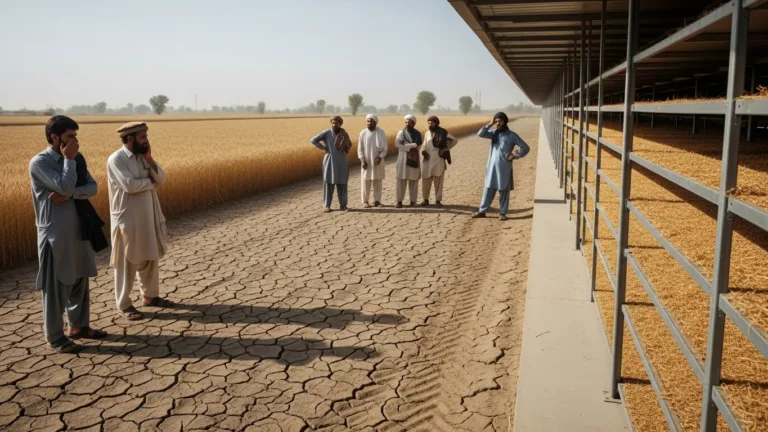
Too much rain can drown the baby plants, and too little rain makes them thirsty and weak. That’s why many farmers in places like Multan use tube wells or canals to give water exactly when the wheat says “I’m thirsty!”
Did you know? One wheat plant can produce up to 100 grains if it’s happy. That means one tiny seed can become 100 seeds, talk about a good investment!
Uh-Oh, Bugs and Weeds Want to Party Too!
Just like you don’t want someone stealing your lunch, wheat plants hate when weeds steal their water and nutrients. Farmers spray safe weed-killers or pull them out. Then there are sneaky insects like aphids and nasty fungi like rust that can ruin whole fields. Farmers have to stay on guard like superheroes protecting the crop.
The Big Harvest Party in Spring
By April, the fields turn from green to shining gold. That’s the signal, harvest time! Giant machines called combine harvesters zoom through the fields, cutting the stalks, separating the grains, and even packing them into bags, all in one go. It’s like a wheat haircut and grocery shopping combined!
In villages, you’ll still see families cutting wheat with sickles, singing songs, and stacking the stalks into beautiful round piles. Everyone helps, even kids!
From Farm to Your Roti, What Happens Next?
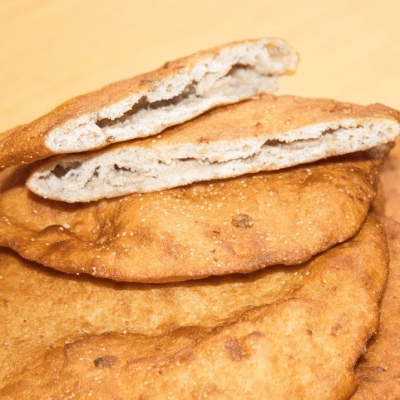
After harvest, trucks carry the wheat to big markets called “mandis.” There, the government checks the quality and buys a lot of it to keep prices fair. Then it goes to mills where huge machines turn hard wheat grains into soft flour. Finally, that flour reaches the little shops near your house, and boom, your mom makes fresh rotis!
Why Should You Care About All This?
Because every single roti, naan, or biscuit you eat started as a tiny seed in some farmer’s field. When farmers do their job well, you get affordable food. When the weather is bad or prices of fertilizer go up, food can get more expensive for everyone, even for your family.
Next time you tear off a piece of roti, think about the cool winter mornings, the tractors, the golden fields, and the farmers who worked months just for that one bite.
So here’s a question for you: what would you say “thank you” to if you could talk to a wheat field? Maybe next time you’re eating roti, you can whisper a little thank you to the farmers and the land that made it possible.