Ever wondered which fish ends up on more dinner tables than almost any other on the planet? There’s a good chance it’s carp. It might not be as famous as salmon or tuna, but carp quietly feeds millions of families across Asia, Europe, and beyond. Carp is a freshwater fish that grows quickly, adapts well, and doesn’t need fancy food to thrive. That’s why farmers love it, and why it plays such a big role in modern fish farming, including right here in Pakistan. In this article, we’ll look at what carp is, the main types you’ll come across, why farmers choose it, and what makes it a good food fish.
So, What Exactly Is Carp?
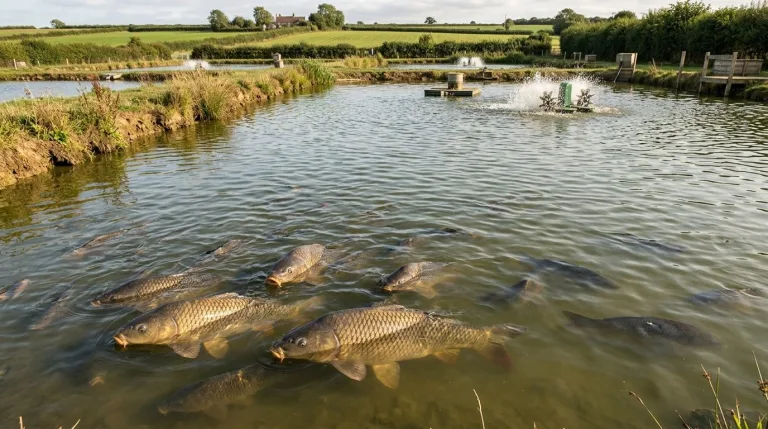
Carp is a group of freshwater fish that live in ponds, lakes, slow rivers, and canals. They have scales, a single long fin along the back, and small whisker-like feelers near the mouth called barbels, which help them find food in muddy water. Here’s a fun fact. Carp have been raised by people for well over two thousand years, making them one of the oldest farmed fish in history. In many countries, people have long treated carp as a symbol of strength, because these fish can survive in tough conditions that would trouble many others.
Meet the Most Common Types of Carp
Not all carp are the same, and knowing the main types helps a lot. In South Asia, farmers mostly work with a handful of well-known varieties:
- Rohu: A popular, tasty fish that swims in the middle layer of the water and feeds on plant matter and tiny organisms.
- Catla: A fast grower with a wide head that feeds near the surface of the pond.
- Mrigal: A bottom-feeder that picks food from the pond floor.
- Common carp: A hardy, adaptable fish that tolerates a wide range of conditions.
- Silver carp and grass carp: Silver carp feed on tiny floating algae, while grass carp munch on water plants. Each one has its own favorite spot and menu, which turns out to be very useful for farmers, as we’ll see next.
Why Do Farmers Love Raising Carp?
Think of a school cafeteria where every student has a different favorite table and a different favorite meal. Nobody fights over food, and everything gets eaten. That’s roughly how a carp pond works. Farmers use a method called polyculture, which simply means raising several types of fish together in one pond. Catla feed near the top, rohu in the middle, and mrigal at the bottom, so each fish uses a different part of the pond. The result is better use of space and food, and more fish from the same water. Carp are also budget-friendly to raise. Many varieties eat natural food that grows in the pond, along with simple feed like rice bran or oil cakes, so farmers don’t need to buy expensive ingredients. They grow quickly too, which means a faster return for the farmer.
What Does a Carp Farm Need?
You don’t need a giant lake to raise carp, but the basics matter. Here’s what a healthy carp pond usually needs:
- Clean, fresh water. Fish need enough oxygen, and dirty or stagnant water can make them sick.
- A good pond depth. Ponds that are deep enough stay cooler in summer and protect the fish from extreme heat.
- Healthy fish seed. Baby fish, called fingerlings, should be active and free of damage.
- Balanced feeding. Overfeeding wastes money and pollutes the water, so farmers feed carefully.
- Regular checking. Just like you’d check on a pet, farmers watch their fish for changes in behavior or growth. Many farmers also check the pond’s water quality from time to time, looking at things like temperature and how clean the water looks and smells.
Is Carp Good to Eat?
Yes, and it’s enjoyed in many parts of the world. Carp meat is a good source of protein, which is the nutrient your body uses to build and repair muscles. It also contains vitamins and minerals, plus some healthy fats. The one thing to know is that carp has plenty of tiny bones, so it takes a little patience to eat. Many cooks solve this by cutting the fish into steaks, frying it until crisp, or slow-cooking it in a spicy curry so the flavors soak in. Freshness matters a lot with any fish. Look for clear, bright eyes, firm flesh, and a clean, mild smell. If the fish smells sour or strong, skip it.
Fun Facts About Carp
- Some carp can live for decades when kept in good conditions.
- Carp don’t have true teeth in their mouths, but they have strong grinding teeth deep in their throats.
- They can survive in water with low oxygen better than many other fish. Pretty impressive for a fish you might have never thought much about, right?
Why Carp Matters More Than You Think
Carp is a tough, fast-growing, and farmer-friendly freshwater fish that has fed people for centuries. From rohu and catla to common carp, each type has its own role, and raising them together makes fish farming smarter and more productive. On top of that, it’s a nutritious food that fits many kinds of cooking. So the next time you see fish at the market, why not think about where it came from and how it was raised? To learn more about farming, fish, and honest food from the heart of Multan, visit Multanfarms.com and keep exploring.