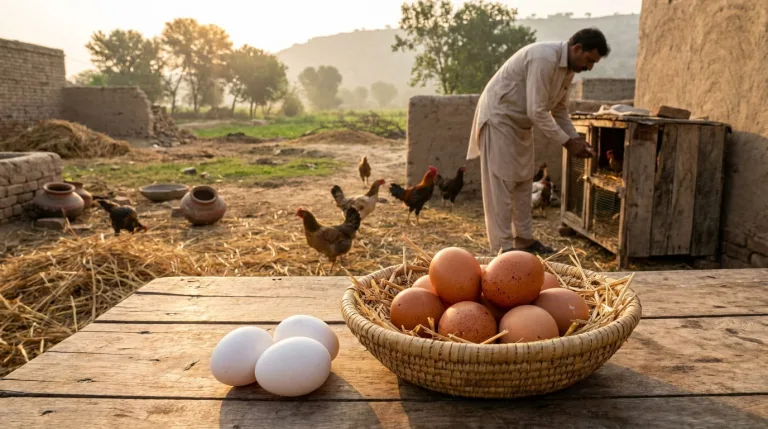
Have you ever cracked open an egg and noticed the yolk looked almost orange instead of pale yellow? That’s usually the first sign you’re holding a desi egg, not the kind of egg you’d grab off a regular supermarket shelf. If you’ve been searching for desi eggs for sale, you’ve probably already noticed they look, cost, and even taste a little different. Desi eggs come from local, free-roaming hens that have been part of Pakistani households and farms for generations, long before large commercial poultry farms became common. These hens are often called desi chickens, simply meaning native or local breed, as opposed to the fast-growing broiler breeds raised for mass egg and meat production. In this article, we’ll walk through what actually makes a desi egg different, why people are willing to pay more for them, and how to tell a genuine desi egg from one that’s just labeled that way to charge a higher price.
What Exactly Is a Desi Egg?
A desi egg simply comes from a desi hen, a local breed that spends most of its day walking around a yard or open space, pecking at grains, insects, and whatever else it finds along the way. This is very different from commercial hens, which are usually kept indoors in large numbers and fed a controlled, fast-growth diet. Think of it like the difference between a tomato grown in someone’s backyard versus one grown in a massive greenhouse, same basic vegetable, but the growing conditions change the end result. Because desi hens move around more and eat a varied, natural diet, their eggs tend to be smaller and have noticeably thicker shells. The yolk is also usually a deeper, richer orange color, which comes from the natural pigments in the plants and insects the hen has been eating.
How Desi Eggs Differ From Regular Farm Eggs
Side by side, the differences become pretty obvious once you know what to look for. Regular commercial eggs are larger, with pale yellow yolks and thinner shells, since these hens are bred specifically for fast, high volume egg production. Desi eggs, on the other hand, are smaller, have firmer shells, and carry that deep orange yolk color we mentioned earlier. There’s also a noticeable taste difference. Many people who grew up eating desi eggs describe the flavor as richer and slightly more “eggy,” almost the same way homemade bread tastes different from the mass produced loaf at a regular store. The texture of the yolk tends to be a bit thicker too, which makes a real difference in dishes where the egg is the main flavor, like a simple fried egg or a desi style omelette.
Why Are Desi Eggs Considered Healthier?
This is where a lot of people get curious, and it’s worth being honest about what we actually know. Many households believe desi eggs are more nutritious because of the hen’s natural diet and active lifestyle, and a deeper yolk color is often associated with a more varied, plant rich diet. That said, exact nutrition can vary from hen to hen, so it’s smarter to think of desi eggs as a more natural, traditionally raised option rather than a guaranteed health upgrade. What is fairly well agreed on is that free range hens generally experience less stress and more natural living conditions compared to crowded commercial setups. For families who care about how their food is raised, not just what’s in it, that alone is often reason enough to choose desi eggs.
How to Spot Genuine Desi Eggs When Buying
Here’s something worth knowing before you buy, not every egg labeled “desi” in the market actually comes from a desi hen. Some sellers simply use the label because it sells well, even when the eggs come from regular commercial breeds. A few quick ways to check:
- Size: genuine desi eggs are noticeably smaller than standard supermarket eggs
- Shell texture: desi eggs usually have a slightly rougher, thicker shell
- Yolk color: crack one open, a deep orange yolk is a strong sign of a genuine desi egg
- Seller transparency: trustworthy sellers are usually happy to explain where and how their hens are raised If a seller can’t tell you anything about where the eggs actually come from, that’s a fair reason to be a little skeptical.
Why Desi Eggs Often Cost More
It’s easy to wonder why a smaller egg costs more than a larger commercial one, but the pricing actually makes sense once you understand how desi hens are raised. Desi hens lay fewer eggs overall compared to commercial breeds, since they aren’t bred or fed specifically to maximize egg output. They also need more space to roam, which means farmers can’t raise nearly as many hens in the same area. Add in the cost of natural feed and the extra time it takes to manage free range flocks, and you end up with a product that simply costs more to produce. In a way, it’s similar to comparing a small batch, handmade product to something made on a massive automated assembly line, the smaller scale almost always comes with a higher price tag.
Best Ways to Use Desi Eggs in Cooking
Desi eggs really shine in simple dishes where the egg itself is the star. A basic fried egg, sunny side up, lets you actually see and taste that rich orange yolk. They also work beautifully in:
- Traditional desi style omelettes with onions, green chilies, and tomatoes
- Boiled eggs for a quick, protein packed snack
- Egg curry, where the firmer yolk holds up well in the sauce
- Classic sweet dishes like egg halwa, where the deep yolk color adds to the final look of the dish Because the flavor is naturally richer, you often don’t need to add much extra seasoning to make a desi egg dish taste satisfying.
Bringing It All Together
So the next time you spot desi eggs for sale, you’ll know exactly what you’re looking at, and what to check before buying. From the deeper yolk color to the firmer shell and richer taste, desi eggs offer a noticeably different experience from the standard eggs most people are used to. Whether you’re after a more natural option, a stronger flavor, or just curious to try something closer to how your grandparents likely ate, desi eggs are worth a try. Have you ever compared a desi egg side by side with a regular one? The difference might surprise you more than you expect.
Looking for genuine, farm fresh desi eggs sourced directly from local hens around Multan? Visit Multanfarms.com to check out our current selection of desi eggs for sale.