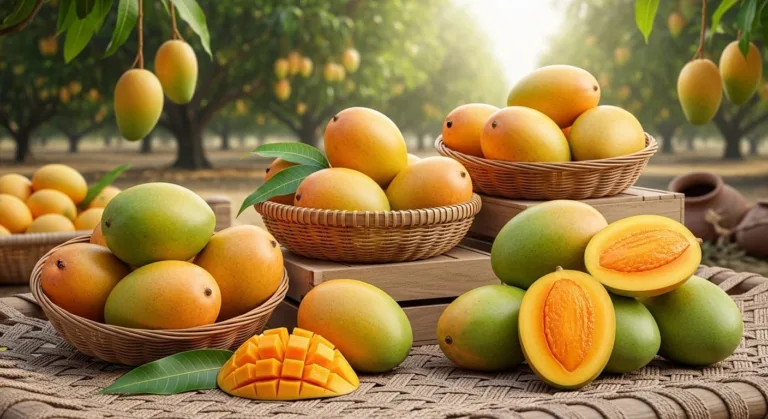
Close your eyes and imagine biting into a perfectly ripe mango. The sweet juice drips down your chin, the flesh is soft and golden, and for a moment, nothing else matters. Now, what if I told you that Pakistan grows some of the world’s most amazing mangoes, and there are over 300 different types? That’s right, 300! From the super sweet Sindhri to the famous Chaunsa, Pakistan’s mangoes are basically celebrities in the fruit world.
Pakistan isn’t just any mango-growing country. It’s one of the top five mango producers on the entire planet! The country’s hot summers and rich soil create the perfect conditions for growing these delicious fruits. But here’s the really cool part: each type of mango has its own unique flavor, texture, and even smell. Some are perfect for eating fresh, while others are amazing in smoothies or desserts. Let’s dive into the wonderful world of Pakistani mangoes and discover what makes each variety so special.
The Crown Jewel: Sindhri Mangoes
If mangoes had a royal family, Sindhri would definitely wear the crown. This variety is often called the “queen of mangoes,” and once you try it, you’ll understand why. Sindhri mangoes are huge (they can weigh up to a kilogram each!), and they have this beautiful golden-yellow color when they’re ripe. The flesh inside is completely fiberless, which means no annoying strings getting stuck in your teeth.
What really sets Sindhri apart is its incredible sweetness. Imagine the sweetest honey you’ve ever tasted, then multiply that by ten. That’s basically what a Sindhri mango tastes like! These mangoes grow mainly in the Sindh province, especially around areas near Mirpur Khas. They’re usually available from mid-June to mid-July, so people wait all year just to get their hands on these golden beauties. Fun fact: Sindhri mangoes are so juicy that eating one is almost like drinking mango juice straight from nature’s cup!
The People’s Favorite: Chaunsa Mangoes
If Sindhri is the queen, then Chaunsa is definitely the people’s champion. This is probably the most popular mango variety in Pakistan, and it’s loved by millions of people. Chaunsa mangoes are medium-sized with a beautiful greenish-yellow skin that turns golden when perfectly ripe. The name “Chaunsa” actually has a historical connection to a battle won by Emperor Sher Shah Suri, which is pretty cool when you think about it.
What makes Chaunsa special is its perfect balance of sweetness and that slightly tangy flavor. It’s like eating sunshine mixed with a hint of tropical paradise. These mangoes are super aromatic too, which means you can smell their delicious scent from across the room! Chaunsa comes in different sub-varieties, including the White Chaunsa and the Black Chaunsa. The season for these amazing mangoes runs from July to September, making summer in Pakistan absolutely incredible.
The Export Star: Anwar Ratol
Have you ever heard of a mango so special that it gets shipped all around the world? That’s Anwar Ratol for you! This variety is small in size but huge in flavor. We’re talking about mangoes that are only about 150-250 grams each, but don’t let their size fool you. Anwar Ratol packs more flavor per bite than almost any other mango variety.
These little powerhouses are known for their bright orange flesh and incredibly sweet taste. They’re also completely fiberless, which makes them perfect for eating. Anwar Ratol mangoes grow mainly in Punjab, particularly around Sheikhupura and Lahore. They ripen early in the season, usually from late May to mid-June, which makes them some of the first mangoes people get to enjoy each year. Countries all over the world import Anwar Ratol because of its exceptional quality and taste.
The Aromatic Wonder: Langra Mangoes
Langra might have a funny name (it actually means “limping” in Urdu, referring to the person who first grew this variety), but there’s nothing funny about how delicious these mangoes are! Langra mangoes are unique because they stay greenish even when they’re perfectly ripe. If you’re used to thinking that yellow means ripe, Langra will surprise you.
What really makes Langra stand out is its amazing smell. When these mangoes ripen, they fill the entire room with a sweet, tropical fragrance that’s absolutely mouthwatering. The flesh is firm yet juicy, with a sweet-tangy flavor that’s different from other varieties. Langra mangoes are also great for making mango shakes and desserts because they hold their shape well. These mangoes are available from July to August and are especially popular in the northern regions of Pakistan.
The Late-Season Hero: Dusehri Mangoes
Just when you think mango season is ending, Dusehri mangoes arrive to save the day! This variety is medium-sized with a beautiful golden-yellow color and an oval shape. Dusehri originated from a small town called Dusehr near Lucknow, but it found its true home in Pakistan, especially in the Punjab region.
Dusehri mangoes have a unique flavor that’s wonderfully sweet with just a touch of sourness, kind of like how a perfect lemonade tastes. The texture is smooth and creamy, making these mangoes perfect for eating fresh or making into traditional desserts. What’s really interesting is that Dusehri trees are super productive, which means one tree can give you tons of mangoes! These mangoes are available from June to July and are loved by people who prefer a less intensely sweet mango.
Other Amazing Varieties You Should Know
Pakistan’s mango diversity doesn’t stop at these five! There are so many other incredible varieties that deserve attention. Saroli mangoes are known for their early ripening and are usually the first to hit the markets in May. Totapuri mangoes have a distinctive parrot-beak shape (that’s what “tota” means in Urdu) and are perfect for making pickles and chutneys. Fajri mangoes are another early variety that’s super popular in local markets.
Then there’s the Neelam mango, which stays available almost until winter and has a unique flavor that’s both sweet and slightly sour. Sufaid Chaunsa (White Chaunsa) is extra creamy and melts in your mouth like butter. Each of these varieties brings something special to the table, whether it’s unique flavor, perfect texture, or the ability to grow in specific regions of Pakistan.
Why Pakistan’s Climate Makes the Perfect Mango Paradise
You might be wondering, why does Pakistan grow such amazing mangoes? The answer lies in the country’s climate and geography. Pakistan has hot, dry summers with temperatures that can reach 40-45 degrees Celsius (that’s over 100 degrees Fahrenheit!). While that might sound uncomfortable for us humans, mango trees absolutely love it!
The combination of intense heat, plenty of sunshine, and rich soil in regions like Punjab and Sindh creates ideal conditions for mangoes to develop their intense sweetness and flavors. It’s like nature designed these areas specifically for growing mangoes. The different regions also have slightly different climates, which is why certain varieties grow better in specific areas. For example, Sindhri loves the hot climate of Sindh, while Anwar Ratol thrives in the slightly different conditions of Punjab.
Wrapping It All Up
From the massive, honey-sweet Sindhri to the small but mighty Anwar Ratol, Pakistan’s mango varieties are truly something special. Each type has its own personality, flavor profile, and perfect time to shine during the summer months. Whether you prefer super sweet mangoes or ones with a tangy kick, there’s definitely a Pakistani mango variety that’s perfect for you.
These mangoes aren’t just delicious fruits, they’re a big part of Pakistan’s culture and economy. Families wait all year for mango season, farmers take pride in growing the best fruit, and the country exports millions of mangoes to people around the world who can’t get enough of their amazing taste. Next time you bite into a mango, think about all the sunshine, care, and natural magic that went into making it so delicious. So, which Pakistani mango variety are you most excited to try?