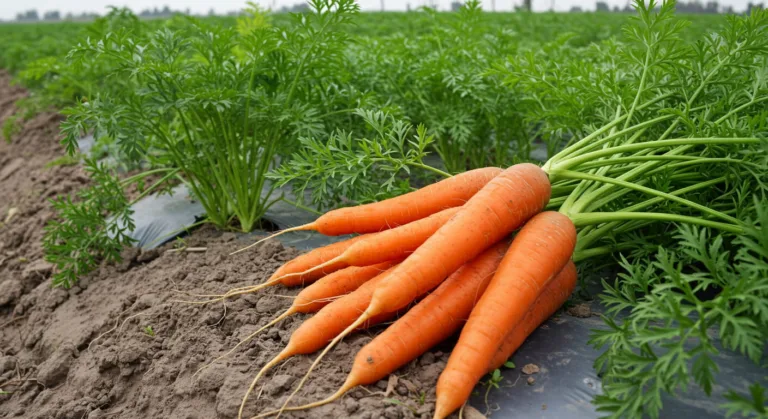
Have you ever wondered why your family’s vegetable vendor has the sweetest, crunchiest carrots during certain months but they’re nowhere to be found in summer? It’s not magic, it’s all about timing! Just like how you might prefer staying indoors during scorching July heat, carrots have their favorite weather too. In Pakistan, these bright orange gems have very specific preferences about when they want to grow.
Understanding when carrots grow best in Pakistan isn’t just useful for farmers, it’s fascinating science that shows how plants adapt to their environment. By the time you finish reading this, you’ll know exactly why Pakistani carrots are at their absolute best during certain months, and you might even want to try growing some yourself!
Pakistan’s Carrot Calendar: Winter is When the Magic Happens
Here’s something that might surprise you: carrots are winter vegetables in Pakistan, with the best sowing time being September and October, producing fresh carrots until February and March. Think of it like this, if vegetables had favorite seasons like people have favorite subjects in school, carrots would definitely choose winter as their number one pick.
The best colored carrots are produced when temperatures during the growth stage range between 15°C and 20°C. This is perfect weather for carrots because it’s not too hot and not too cold, just like how Goldilocks found the porridge that was “just right.” When temperatures go above or below this sweet spot, carrot color develops slowly and tends to be rather yellow instead of that vibrant orange we all love.
During Pakistan’s winter months, the weather conditions are absolutely perfect for carrots to develop their characteristic sweet taste and bright orange color. It’s like nature has created the perfect recipe for growing the most delicious carrots possible.
Why Carrots Hate Pakistan’s Summer Heat
You know how uncomfortable you feel when you’re stuck outside on a blazing hot day in June? Well, carrots feel the same way about hot weather! Carrots are cool season vegetables and are moderately frost tolerant. This means they actually prefer cooler weather and can even handle a little bit of frost without getting damaged.
During Pakistan’s intense summer months, when temperatures soar above 35°C, carrots simply can’t develop properly. The heat stress causes them to become woody, bitter, and lose that sweet crunch we associate with fresh carrots. It’s like trying to concentrate on homework when it’s unbearably hot in your room, you just can’t perform at your best.
This is why you’ll rarely see fresh, locally grown carrots in Pakistani markets during the summer months. The ones you might find are either stored from the winter harvest or imported from cooler regions.
The Perfect Growing Conditions: What Carrots Really Want
Carrots thrive best on deep, loose loamy soil with a pH of 5.5 to 6.5. Think of soil like a comfortable bed for carrots. Just as you sleep better on a soft, comfortable mattress, carrots grow better in loose, well-prepared soil that allows their roots to expand easily.
The soil preparation is crucial because carrot seeds are incredibly tiny. Since carrot seed is rather small, a finely pulverized seedbed is important so that maximum number of soil particles may contact the seed to facilitate germination. Imagine trying to plant a seed the size of a pinhead, you’d need the soil to be perfectly smooth and fine for it to have the best chance of sprouting.
Farmers in Pakistan spend considerable time preparing their fields for carrot cultivation. Thorough cultivation to a depth of 25 to 30 cm is essential, and roots will be forked if grown in poorly prepared soil. This means if the soil isn’t prepared properly, the carrots will grow all twisted and funny-looking instead of straight and smooth.
From Seed to Harvest: The Carrot Journey in Pakistan
The journey of a Pakistani carrot from tiny seed to crunchy vegetable is quite remarkable. When farmers plant carrot seeds in September and October, they’re essentially setting up a slow-cooking process that will take several months to complete.
During the cooler months of November, December, and January, the carrot plants focus on developing their leafy tops while their roots slowly grow underground. It’s like building a house, you need a strong foundation (the root system) before you can see the impressive structure above ground.
The harvesting period typically runs from late January through March, which is when you’ll find the freshest, most delicious carrots in Pakistani markets. These carrots have had the perfect amount of time to develop their sweetness and achieve that satisfying crunch.
Regional Variations: Different Areas, Different Timing
Pakistan’s diverse climate means that carrot growing seasons can vary slightly depending on where you live. In the northern areas where it gets quite cold, farmers might start planting a bit earlier in August to take advantage of the longer cool season. In southern coastal areas like Karachi, where the weather stays milder, the growing season might extend a bit longer.
There are certain exceptions varying from crop to crop, and different varieties exist for different seasons. This means that smart farmers choose specific types of carrot seeds that are perfectly adapted to their local climate conditions.
It’s similar to how different people have adapted to live in different climates around the world. Just as Inuit people have adapted to cold Arctic conditions while people in tropical regions have adapted to hot, humid weather, different carrot varieties have adapted to thrive in specific growing conditions.
Why This Matters: The Science Behind Seasonal Eating
Understanding carrot seasons teaches us an important lesson about eating with nature’s rhythm. When you eat carrots during their natural growing season in Pakistan (winter months), you’re getting vegetables at their nutritional peak. These carrots have had the perfect growing conditions to develop maximum vitamin A, fiber, and natural sugars.
Carrots are a good source of vitamin K and vitamin B6, and when grown in ideal conditions during their preferred season, these nutritional benefits are maximized. It’s like getting the best value for your money, you’re getting the most nutrition and the best taste when you eat seasonal produce.
This seasonal approach to eating also connects us to traditional farming practices that have sustained communities for generations. Our grandparents instinctively knew when to expect the best vegetables, and this knowledge helped them stay healthy and well-nourished throughout the year.
Conclusion: Embracing Nature’s Timeline
The next time you bite into a sweet, crunchy carrot during Pakistan’s winter months, you’ll know you’re experiencing something special. You’re tasting the result of perfect timing, ideal weather conditions, and thousands of years of agricultural wisdom.
Understanding when carrots grow best in Pakistan helps us appreciate the intricate relationship between climate, soil, and food production. It also reminds us that the best things in life often come to those who wait, just like these perfectly timed winter carrots that need months of cool weather to reach their full potential.
Have you ever noticed how much better vegetables taste when they’re in season? Next winter, pay attention to the carrots in your local market and see if you can taste the difference that perfect growing conditions make!