Imagine trying to grow tomatoes in the middle of winter or planting wheat during the hottest days of summer. Sounds pretty crazy, right? Well, that’s because every crop has its perfect time to grow, and farmers need to know exactly when to plant their seeds. In Pakistan, a country where agriculture feeds millions of people and powers a huge part of the economy, knowing the right crop seasons isn’t just important, it’s absolutely essential!
Pakistan’s farmers are like expert timekeepers, working with nature’s calendar to grow everything from golden wheat fields to juicy mangoes. But here’s the really cool part: Pakistan doesn’t just have one growing season. It actually has multiple crop seasons throughout the year! This means farmers are almost always planting, growing, or harvesting something. It’s like having a garden that never sleeps.
So when exactly do these crop seasons happen? What grows when, and why does timing matter so much? Let’s explore the fascinating world of Pakistan’s agricultural calendar and discover how farmers use the seasons to feed an entire nation. Trust me, by the end of this article, you’ll never look at your dinner plate the same way again!
Understanding Pakistan’s Two Main Crop Seasons
Pakistan’s farming year is divided into two major seasons, and they have special names that might sound unfamiliar at first. The first is called Kharif, and the second is called Rabi. These aren’t just random words, they’re Urdu terms that have been used by farmers for centuries!
The Kharif season runs from April to October. Think of it as the summer growing season. During this time, farmers plant crops that love heat and can handle the intense Pakistani summer. The monsoon rains, which usually arrive between July and September, provide much-needed water for these thirsty plants. It’s like nature’s own irrigation system kicking in right when the crops need it most! Major Kharif crops include rice, cotton, sugarcane, and vegetables like tomatoes and peppers.
The Rabi season, on the other hand, runs from November to April. This is the winter growing season, and it’s perfect for crops that prefer cooler weather. Imagine plants that would get too hot and uncomfortable in the summer heat, they wait for Rabi season to grow strong and healthy. The most important Rabi crop is wheat, which is basically Pakistan’s staple food. Other Rabi crops include chickpeas, lentils, mustard, and various vegetables like carrots and peas.
What Makes Each Season Special?
You might be wondering, “Why can’t farmers just grow everything all year round?” Great question! The answer has to do with temperature, rainfall, and what each plant needs to thrive. It’s kind of like how you might want ice cream in summer and hot chocolate in winter, plants have their preferences too!
During Kharif season, temperatures can soar above 40°C (that’s over 104°F!). Crops like cotton and rice actually love this heat. Cotton needs long, hot days to develop its fluffy white bolls, and rice grows best in warm, flooded fields. The monsoon rains are crucial during this season because they provide natural irrigation. Without these rains, farmers would need to use much more water from wells and canals, which can be expensive and isn’t always available.
Rabi season brings cooler temperatures, ranging from about 10°C to 25°C (50°F to 77°F). Wheat, the superstar of Rabi crops, actually needs this cooler weather to develop properly. If wheat grows in extremely hot conditions, the grains don’t fill out properly, and the quality drops. The cooler nights help the plants develop strong roots, and the moderate daytime temperatures are perfect for steady growth. At MultanFarms.com, farmers understand these seasonal patterns deeply and use this knowledge to produce high-quality crops year after year.
The Major Crops of Kharif Season
Let’s talk about what’s actually growing during those hot summer months. Rice is probably the most water-loving crop of the Kharif season. In provinces like Punjab and Sindh, you’ll see vast fields flooded with water where rice plants grow in neat rows. It’s pretty amazing to see what looks like a huge lake, but it’s actually a rice field! Rice needs about 4-5 months to grow from tiny seedling to harvest-ready crop.
Cotton is another Kharif superstar, and Pakistan is actually one of the world’s largest cotton producers. This crop is super important because it’s used to make fabric for clothes, and it also provides cottonseed oil for cooking. Cotton plants produce beautiful white or cream-colored bolls that look like fluffy clouds when they’re ready to harvest. Farmers typically plant cotton in April or May and harvest it from September through November.
Sugarcane is the marathon runner of Kharif crops. Unlike rice or cotton, sugarcane takes about 12-18 months to fully mature! Farmers plant it during February to April, and it grows throughout the Kharif season and beyond. The tall, thick stalks can grow up to 12 feet high, and they’re packed with sweet juice that’s processed into sugar. Pakistan produces millions of tons of sugar each year, and most of it comes from these hardworking sugarcane fields.
The Major Crops of Rabi Season
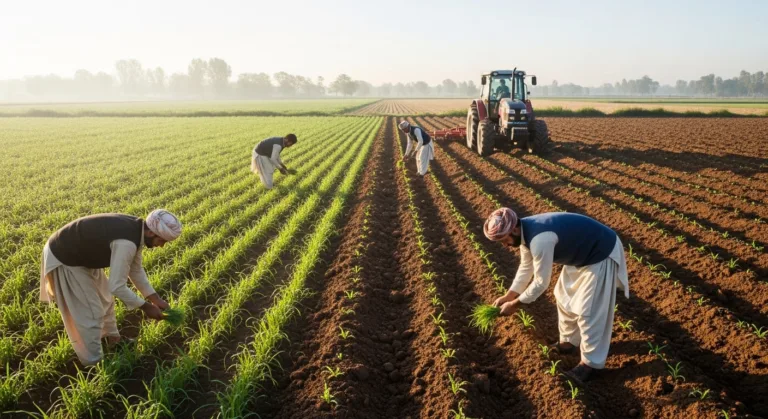
Now let’s switch gears and talk about what happens when the weather cools down. Wheat is absolutely the king of Rabi season. Pakistan grows so much wheat that it’s one of the top wheat-producing countries in the world! Farmers plant wheat seeds in October or November, and the crop grows slowly through the cool winter months. By April or May, the fields turn golden yellow, signaling that it’s harvest time. Wheat is used to make flour for roti, bread, and countless other foods that Pakistani families eat every single day.
Chickpeas, also called chana, are another important Rabi crop. These protein-packed legumes are planted around the same time as wheat and harvested in March or April. They’re super nutritious and used in tons of delicious dishes. What’s cool about chickpeas is that they actually help improve soil quality by adding nitrogen, which is like a natural fertilizer. It’s nature’s way of recycling nutrients!
Vegetables like potatoes, onions, carrots, and cauliflower also thrive during Rabi season. Have you noticed that certain vegetables taste better or are more available during different times of the year? That’s because they’re being grown during their ideal season. These winter vegetables can handle frost and actually develop better flavor in cooler temperatures. They’re usually planted in November or December and ready to harvest between February and April.
How Climate and Geography Affect Crop Seasons
Pakistan is a pretty big country with diverse geography, and this means crop seasons can vary depending on where you are. In the northern mountains of Gilgit-Baltistan, the growing season is much shorter because it’s so cold. Farmers there might only have a few months to grow crops before winter snow arrives. It’s like trying to garden with a much tighter deadline!
In southern Sindh and Balochistan, where it’s hotter and drier, farmers rely heavily on irrigation systems to water their crops. The Indus River and its canal network are like the country’s lifeline, carrying water to millions of acres of farmland. Without this water, growing crops would be nearly impossible in many areas. Think of it as a massive plumbing system that keeps Pakistan’s farms alive!
Punjab province, often called Pakistan’s breadbasket, has the most ideal conditions for both Kharif and Rabi crops. The soil is fertile, there’s decent rainfall, and the canal system provides reliable irrigation. This is why Punjab produces the majority of Pakistan’s wheat, rice, and cotton. The region around Multan, for instance, is famous for producing exceptional crops thanks to the combination of good soil, climate, and farming expertise.
Modern Challenges and Solutions
Farming in Pakistan today isn’t quite the same as it was decades ago. Climate change is making weather patterns less predictable. Sometimes the monsoon rains arrive late or are weaker than expected, which can be devastating for Kharif crops. Other times, unexpected heat waves or cold snaps can damage crops that are just starting to grow.
Pakistani farmers are adapting in creative ways. Many are using weather forecasting apps on their smartphones to plan when to plant and irrigate. Some are trying new crop varieties that are more resistant to drought or heat. Drip irrigation systems, which deliver water directly to plant roots and waste less water, are becoming more popular too. It’s like farmers are combining traditional knowledge with modern technology to face new challenges.
Organizations and agricultural platforms like MultanFarms.com are helping farmers stay connected with the latest farming techniques and market information. This helps them make smarter decisions about what to plant and when to sell their crops. Knowledge is power, especially in agriculture!
Conclusion
Understanding crop seasons in Pakistan is like understanding the heartbeat of the country. These carefully timed planting and harvesting cycles feed over 220 million people and support millions of farming families. The Kharif and Rabi seasons aren’t just agricultural terms, they represent centuries of farming wisdom passed down through generations.
Next time you eat a chapati made from Pakistani wheat or wear a cotton shirt, remember the farmers who planted those crops at exactly the right time, nurtured them through months of growth, and harvested them at their peak. Their expert timing and hard work make it all possible. So here’s something to think about: How would your life be different if farmers didn’t understand these crop seasons? What would happen to our food supply if everyone planted everything at the wrong time?