Eggs are one of those things most of us take for granted. You crack one into a pan, and breakfast is ready in minutes. But have you ever thought about the hen that laid it, the breed, how it lives, or why some hens produce an egg almost every single day while others lay only a handful each month?
If you’re thinking about starting a small poultry setup at home or want to understand what goes into the eggs you eat every morning, you’re in the right place. Pakistan is home to millions of egg-laying hens, and choosing the right breed makes all the difference between a productive flock and a disappointing one.
Let’s break down the best egg-laying hen breeds in Pakistan, what makes each one special, and how to pick the right one for your situation.
What Makes a Hen a Good Egg Layer?
Not every chicken is built for egg production. Some breeds are raised for their meat, some for both meat and eggs, and some are specifically bred over decades to lay as many eggs as possible. These are called layer breeds, and they’re the ones that farmers and backyard poultry keepers choose when eggs are the goal.
The key measurement is how many eggs a hen lays per year. A good layer can produce 280 to 320 eggs annually, which works out to roughly one egg almost every day. Compare that to a regular desi hen that might give you 100 to 150 eggs per year, and you can immediately see why breed selection matters so much.
Other factors that define a good egg-laying hen include feed efficiency (how much grain she needs to produce one egg), her temperament, how well she handles Pakistan’s hot summers, and how long she stays productive before her output drops.
The Top Commercial Layer Breeds in Pakistan
When it comes to high-volume egg production in Pakistan, three names dominate the market.
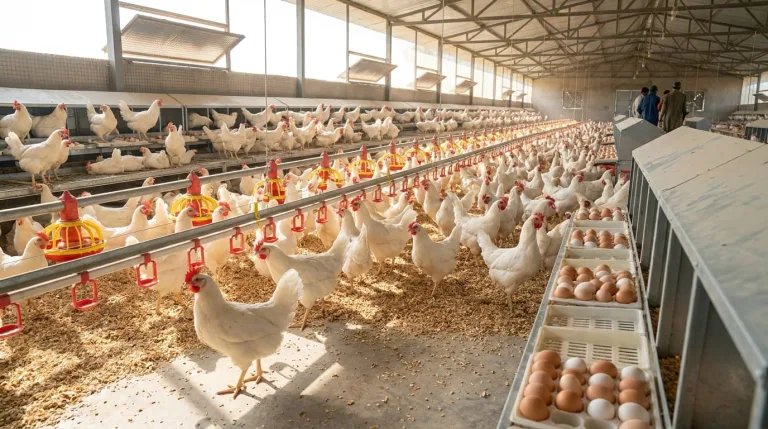
Lohmann Brown is arguably the most popular layer breed in Pakistan, and for good reason. This German-developed breed produces around 300 to 320 eggs per year, has excellent feed conversion (meaning it doesn’t eat excessively for the eggs it gives), and adapts well to both cage and free-range setups. The eggs are medium to large with a warm brown shell. If you walk into any commercial egg farm in Punjab, chances are Lohmann Browns are what you’ll find.
Hy-Line is another globally recognized layer breed that performs exceptionally in Pakistan’s poultry sector. There are different variants within the Hy-Line family, with Hy-Line W-36 being known for impressive white egg production and outstanding feed efficiency. Commercial farms that prioritize maximum output often choose Hy-Line because the numbers are hard to beat.
ISA Brown is a French-origin hybrid that has become increasingly common in Pakistan over the past decade. ISA Browns are friendly, calm birds that handle warmer climates reasonably well. They produce large brown eggs consistently and are a favorite among small-scale farmers because they’re easy to manage.
The Desi Hen: Pakistan’s Traditional Layer
No conversation about egg-laying hens in Pakistan is complete without mentioning the desi hen, the traditional, non-commercial breed that rural families have raised for generations.
Desi hens lay far fewer eggs than commercial hybrids, usually between 100 and 160 per year. But here’s the trade-off: desi eggs are noticeably richer in color and flavor. The yolk is a deeper orange, the white is firmer, and the overall taste is something commercial egg buyers often describe as more satisfying. This is largely because desi hens roam freely and eat a varied diet of insects, seeds, and scraps rather than formulated feed.
Desi hens are also significantly hardier. They don’t require the controlled temperature environments that commercial breeds need, they’re more resistant to common diseases, and they cost very little to maintain. For a family with a small backyard in rural Multan or a village in southern Punjab, a flock of desi hens is a practical and sustainable choice.
The Fayoumi: Built for Pakistan’s Heat
One breed that deserves more attention in Pakistan is the Fayoumi, originally developed in Egypt along the banks of the Nile. Egypt and Pakistan share something important in common: intense summers. The Fayoumi was bred specifically to thrive in extreme heat, which makes it a genuinely useful option for poultry keepers in Multan, Bahawalpur, and other areas where temperatures regularly cross 45 degrees Celsius.
Fayoumis are smaller birds that lay white eggs and produce around 150 to 180 eggs per year, so they don’t match the output of commercial hybrids. But their disease resistance and ability to hold production steady through a scorching summer make them worth considering for hot-climate regions. Think of them as the tough, adaptable option when other breeds might struggle and drop off sharply.
Rhode Island Red: The Reliable All-Rounder
If you want a hen that gives you both a decent number of eggs and usable meat when the time comes, the Rhode Island Red is the classic choice. Originating in the United States, this hardy breed has spread worldwide and performs reliably in Pakistan’s climate.
Rhode Island Reds produce around 200 to 250 eggs per year, which isn’t quite as high as a Lohmann Brown, but these are larger birds that also put on good weight. Farmers who want flexibility, eggs now and meat later, often choose Rhode Island Reds as a practical middle ground. They’re also calm and easy to handle, which makes them a smart pick for someone new to keeping poultry.
Choosing the Right Breed for Your Setup
So which breed is right for you? The answer depends entirely on what you’re trying to achieve.
If you’re running or planning a commercial operation with dozens or hundreds of birds, Lohmann Brown or ISA Brown will give you the best return on investment. Their feed efficiency and consistent output are designed for exactly this scale. If you have a small home setup in a hot region, the Fayoumi or desi hen will serve you well without requiring special infrastructure or climate-controlled housing. And if you want a reliable all-rounder that produces both eggs and meat, the Rhode Island Red is hard to argue with.
Pakistan’s poultry sector has grown enormously over the past two decades, and today there’s a genuinely good option for every kind of farmer, from a small family in rural Punjab to a large commercial operation. The right hen is simply the one that fits your climate, your budget, and your goals.
At Multanfarms.com, we’re passionate about connecting people with the best agricultural knowledge and natural food products from the heart of Pakistan. Whether you’re raising hens or simply making better choices about the food on your table, we’re here to help. Visit Multanfarms.com