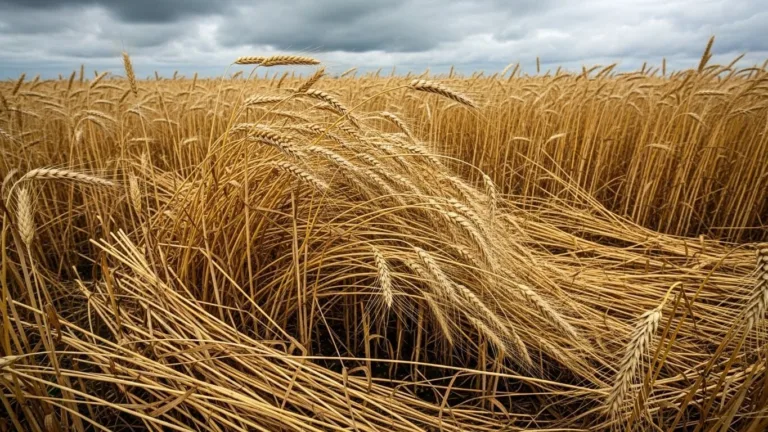
Have you ever seen a field of wheat that looks like it got knocked down by a giant pillow fight? Instead of standing tall and proud, the wheat plants are lying on their sides, tangled together like a messy pile of pickup sticks. Farmers have a special name for this problem: lodging. And trust me, it’s not the fun kind of lodging where you stay at a hotel!
Lodging wheat is actually a serious challenge that farmers face, and it can mean the difference between a great harvest and a disappointing one. When wheat plants fall over before they’re ready to harvest, it creates all sorts of headaches. But why does this happen, and what can farmers do about it? Let’s dive into this fascinating farming problem that affects the bread on your breakfast table.
What Exactly Is Lodging in Wheat?
Think of wheat plants like tall, skinny basketball players trying to stand in a strong wind. Lodging happens when wheat stems can’t support themselves anymore and they bend or break, causing the plants to fall over. It’s kind of like when you stack too many books on top of each other, and eventually the whole tower comes crashing down.
When wheat lodges, the plants don’t stand upright like they’re supposed to. Instead, they lean at weird angles or lie flat on the ground. This might not seem like a big deal, but imagine trying to pick up hundreds of thousands of tiny stalks that are all tangled together. That’s what farmers have to deal with when lodging happens, and their harvesting machines hate it!
Why Does Wheat Decide to Take a Nap?
There are several reasons why wheat plants might give up on standing tall. Understanding these causes helps farmers prevent lodging before it becomes a problem.
Too Much of a Good Thing
Believe it or not, one of the biggest causes of lodging is too much fertilizer, especially nitrogen. Nitrogen makes plants grow like crazy, shooting up tall and producing lots of green leaves. Sounds great, right? Well, here’s the catch: when wheat plants grow too fast and too tall, their stems don’t have enough time to develop strength. It’s like if you grew three feet taller overnight but your bones stayed the same strength. You’d probably have trouble standing up too!
Farmers who use too much nitrogen fertilizer end up with wheat that’s tall but weak. The stems become thin and can’t support the heavy grain heads that develop at the top. Plus, all those extra leaves make the plants top-heavy, which is a recipe for disaster when bad weather rolls in.
Weather Strikes Again
Mother Nature doesn’t always play fair with farmers. Heavy rain, strong winds, and hailstorms can all cause lodging. Picture this: you’re carrying a heavy backpack, and suddenly someone pushes you from behind while the ground is slippery. You’d probably fall over, right? That’s basically what happens to wheat during storms.
Wind is especially problematic because it can create a domino effect. Once a few plants start leaning, they push against their neighbors, and before you know it, whole sections of the field are lying down. Rain makes the soil soft and muddy, so the roots can’t grip as tightly. It’s like trying to stand on ice versus standing on concrete.
Crowded Living Conditions
When farmers plant their wheat seeds too close together, the plants have to compete for everything: sunlight, water, and nutrients. This competition makes them grow tall and skinny as they stretch toward the sun, kind of like how you might reach for the last cookie on a high shelf. But these stretched-out plants don’t develop thick, sturdy stems. They’re all height and no strength, which makes them easy targets for lodging.
How Does Lodging Hurt the Harvest?
You might be thinking, “So what if the wheat falls over? Can’t farmers just pick it up?” Well, it’s not that simple. Lodging causes several serious problems that can really hurt a farm’s bottom line.
First, harvesting lodged wheat is super difficult. Combine harvesters (the big machines that cut and collect wheat) work best when plants are standing upright. When wheat is lying on the ground, the harvester can’t cut it properly, and a lot of grain gets left behind in the field. Imagine trying to vacuum your floor when everything is stuck under furniture. That’s what harvesting lodged wheat feels like for farmers.
Second, lodged wheat often has lower quality. When the grain heads are touching the ground, they can get moldy, dirty, or start sprouting if there’s rain. Nobody wants to buy wheat that’s full of mold or has already started growing again! This means farmers might get paid less for their crop or might not be able to sell it at all.
Finally, lodging usually means less wheat overall. Studies have shown that severe lodging can reduce yields by 30% or more. That’s almost a third of the harvest gone, just because the plants couldn’t stay standing. For a farmer trying to make a living, that’s a huge loss.
Smart Solutions Farmers Use to Keep Wheat Standing Tall
The good news is that farmers aren’t helpless against lodging. They’ve developed several clever strategies to keep their wheat upright and healthy.
Choosing the Right Varieties
Just like some people are naturally stronger than others, some wheat varieties are better at staying upright. Plant breeders have worked hard to create wheat types with shorter, thicker stems that resist lodging. These varieties might not grow as tall, but they’re much tougher. It’s quality over quantity when it comes to stem strength!
Modern wheat varieties often have genes that make them naturally resistant to falling over. Farmers at places like Multanfarms.com carefully select wheat varieties that work best for their local conditions, choosing plants that can handle their typical weather patterns and soil types.
Getting the Fertilizer Balance Right
Remember how too much nitrogen causes problems? Smart farmers carefully measure how much fertilizer they apply. They give their wheat enough nutrients to grow strong but not so much that the plants get weak and lanky. It’s like feeding yourself: you need enough food to be healthy, but eating too much junk food makes you weak and sluggish.
Some farmers also use plant growth regulators, which are special chemicals that keep wheat plants shorter and stockier. These products don’t hurt the plant; they just help it develop stronger stems that can support the grain heads better.
Planting with Purpose
By controlling how many seeds they plant per acre, farmers can give each plant enough space to grow strong. This is called seeding rate, and getting it right is part science, part art. Too many plants, and they get weak and crowded. Too few plants, and the farmer doesn’t get enough wheat to make the harvest worthwhile.
The Bottom Line: Why This Matters to You
You might be wondering why you should care about wheat falling over in some farmer’s field. Here’s the thing: wheat is in so much of what we eat! Bread, pasta, cookies, crackers, cereal, and even some candies all contain wheat. When farmers lose wheat to lodging, there’s less wheat available, which can make prices go up at the grocery store.
Plus, farming is all about working with nature, and problems like lodging show us how complicated that relationship can be. Farmers have to think about plant biology, weather patterns, soil health, and economics all at the same time. It’s like being a scientist, weatherperson, and businessperson all rolled into one!
The next time you’re eating a sandwich or a bowl of cereal, think about the journey that wheat took to get to your plate. Somewhere along the way, a farmer made careful decisions about fertilizer, seed varieties, and planting methods to make sure those wheat plants stayed standing strong until harvest time. And that’s pretty amazing when you think about it!
So, what do you think? Could you handle the challenge of keeping millions of wheat plants standing upright through storms, heat, and all the other surprises nature throws at farmers?