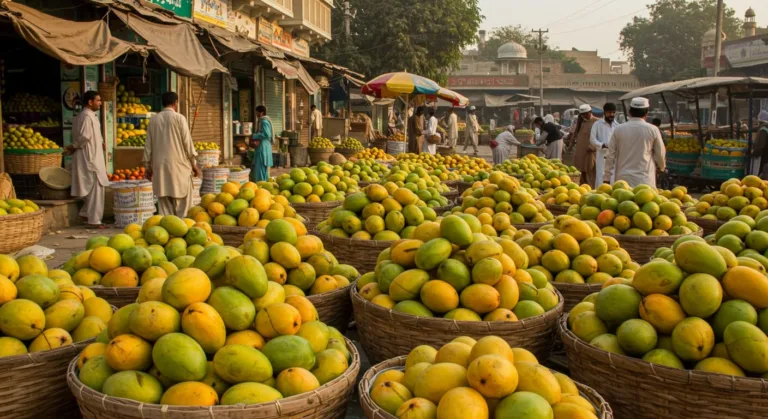
Have you ever bitten into a piece of fruit so delicious that it made you close your eyes and smile? That’s exactly what happens when you taste a mango from Multan, Pakistan! Imagine a fruit so sweet and juicy that people travel thousands of miles just to try it, and you’ll understand why this amazing city has earned the title of Pakistan’s “Mango Capital.”
Multan stands as the mango capital of Pakistan in addition to its other names. Multan is the main producer of mangoes in Punjab and is famous as Mango City of Pakistan. But what makes this city so special when it comes to mangoes? It’s not just luck or coincidence, there’s actually some serious science behind it.
Think of Multan as nature’s perfect mango laboratory. The city sits in southern Punjab, surrounded by flat, alluvial plain surrounded by orchards and deserts that is also used for mango farms. This isn’t just any ordinary farmland, it’s like a five-star hotel for mango trees. The soil here is incredibly rich and fertile, kind of like a nutritious smoothie for plants.
The Perfect Recipe: Why Multan’s Climate Creates Super Mangoes
Just like how you need the perfect ingredients to bake the best cookies, mango trees need exactly the right conditions to produce amazing fruit. Multan has hit the jackpot when it comes to mango-growing weather! The city enjoys long, hot summers and mild winters, which is like giving mango trees their favorite meal every single day.
Areas like Sindh, Multan, Rahim Yar Khan, and Bahawalpur have been cultivating mangoes for centuries due to their ideal soil and climate conditions. The summer temperatures in Multan can reach over 100°F, which might sound uncomfortable for us, but mango trees absolutely love it! It’s like they’re getting a warm hug from the sun that helps them grow big, sweet fruit.
However, mango farming isn’t always easy. According to a 2021 report published by the Mango Research Institute in Multan, heatwaves invariably reduce the fruit size in all varieties. Additionally, prolonged foggy conditions diminish flowering intensity and frost was found to damage young plants. This shows that even in the perfect mango city, farmers have to work hard and be smart about growing their crops.
Meet the Mango Superstars: Famous Varieties from Multan
There are more than 100 Types of Mangoes in Pakistan and the world loves Pakistani mangoes for their aroma and sweetness with Chaunsa being the favorite followed by Sindhri, Langra, and Anwar Ratol. It’s like having a whole family of delicious cousins, each with their own personality!
Chaunsa is probably the most famous mango superstar from Multan. Chaunsa is probably the most famous of all Pakistani mangoes. This golden beauty has such a sweet taste and amazing smell that some American chaunsa aficionados would travel to Canada in order to legally purchase the mango. Can you imagine loving a fruit so much that you’d travel to another country just to buy it?
There are actually four different types of Chaunsa mangoes: Mosami Chaunsa (Summer Bahisht), Kala Chaunsa (Black), Safaid chaunsa (White) and Azeem Chaunsa (Rattewala). It’s like having four different flavors of your favorite ice cream!
Anwar Ratol is another champion from the Punjab region. Anwar Ratol is primarily found in the Punjab province of Pakistan and has a distinctive sweet taste and fragrance with fibreless flesh. Due to high demand, it hits the markets for a very short duration in two bursts, once at the start of the mango season from May to June when it is thin-skinned. This mango is so popular that it’s only available for a short time, making it like the limited edition sneakers of the mango world!
A Journey Through History: Mangoes and Multan’s Past
Mangoes have been growing in the Multan region for thousands of years! Mangoes have been produced in Pakistan for well over two thousand years, and the country is now the sixth largest producer in the world behind India, China, Mexico, Indonesia and Thailand. That’s older than many famous monuments and buildings around the world!
During the Mughal era (16th–18th centuries), mango orchards flourished under imperial patronage. The Mughals are credited with developing and perfecting many mango varieties. Imagine kings and queens hundreds of years ago enjoying the same delicious mangoes that people in Multan grow today! The Mughal rulers were so impressed with these fruits that they made sure mango farming became a royal priority.
Even some mango varieties have fascinating historical stories. According to mythology, Sher Shah Suri gave this mango its current name after defeating the Mughal Emperor Humayun at Chausa, a district in Bihar, India. So when you eat a Chaunsa mango, you’re literally tasting a piece of history!
From Tree to Table: The Mango Journey in Multan
The process of growing mangoes in Multan is like watching magic happen in slow motion. First, farmers plant mango saplings in the rich soil, where they’ll grow for several years before producing fruit. During the growing season, which runs from March to August, the trees burst into beautiful flowers that eventually become the mangoes we love to eat.
The main mango growing districts are Multan, Bahawalpur, Muzzaffargarh and Rahim yar Khan. These areas work together like a team, each contributing to Pakistan’s impressive mango production. Multan leads the way, but it’s supported by neighboring districts that share similar growing conditions.
The harvest season is incredibly exciting for both farmers and mango lovers. Workers carefully pick each mango by hand, making sure they’re perfectly ripe but not too soft for shipping. The mangoes are then sorted by size and quality, with the best ones being packed for export to countries around the world.
Economic Sweet Spot: How Mangoes Help Multan Thrive
Mangoes aren’t just delicious fruit for Multan, they’re also a major source of income for thousands of families. The mango industry in Multan creates jobs for farmers, packers, truck drivers, exporters, and many other people. It’s like a giant economic engine powered by sweet, juicy fruit!
White Chaunsa Mango is Worlds Favorite mango. it’s price varies from 2000rs/10kg to 3500rs/10kg depending upon the quality it’s being sold in and from which store you’re buying from. These prices show just how valuable high-quality mangoes can be. For many farming families in Multan, a successful mango harvest can mean the difference between struggling and thriving.
The export market is particularly important. Pakistani mangoes, especially those from Multan, are shipped to countries in Europe, North America, and the Middle East. When someone in London or New York bites into a Pakistani mango, there’s a good chance it came from the orchards around Multan!
Modern Challenges and Future Innovations
Even though Multan has perfect conditions for growing mangoes, modern farmers face new challenges. Climate change is making weather patterns more unpredictable, and farmers have to adapt their growing methods to deal with these changes. Some are experimenting with new irrigation techniques to use water more efficiently, while others are trying different planting schedules to avoid extreme weather.
Scientists and researchers are also working to develop new mango varieties that can handle changing conditions while still tasting amazing. The Mango Research Institute in Multan is at the forefront of this research, helping farmers grow better mangoes using the latest agricultural science.
Technology is also changing how mangoes are grown and sold. Some farmers are using apps to monitor soil moisture and weather conditions, while others are selling their mangoes online to customers around the world. It’s like traditional farming meets the digital age!
The Global Mango Mission: Multan’s Fruit Diplomacy
Multan’s mangoes have become unofficial ambassadors for Pakistan, introducing people around the world to the country’s agricultural expertise. When someone in Germany tastes a perfectly sweet Chaunsa mango, they’re experiencing the best of what Pakistani farmers can produce.
Many of the world’s most popular varieties of mangoes for export, for example Chaunsa, Langra, Desi, Sindhu, preferred for their taste, texture and shelf life, are already being produced in Pakistan. This international reputation helps put Pakistan on the map as a serious agricultural producer and opens doors for other Pakistani products in global markets.
The success of Multan’s mango industry also inspires other farming communities in Pakistan and around the world. It shows how combining traditional knowledge with modern techniques can create products that compete on the global stage.
Multan’s title as Pakistan’s Mango Capital isn’t just about producing lots of fruit, it’s about creating something so special that people around the world crave it. From the perfect climate and soil to the dedicated farmers and centuries of expertise, everything comes together in Multan to create mango magic. The next time you enjoy a sweet, juicy mango, remember that somewhere in Multan, a farmer worked under the hot sun to grow something that brings joy to people thousands of miles away. What other foods from your local area do you think could become world famous like Multan’s mangoes?